

In The Media
David Rothkopf
{
  "authors": [
    "David Rothkopf"
  ],
  "type": "legacyinthemedia",
  "centerAffiliationAll": "",
  "centers": [
    "Carnegie Endowment for International Peace"
  ],
  "collections": [],
  "englishNewsletterAll": "",
  "nonEnglishNewsletterAll": "",
  "primaryCenter": "Carnegie Endowment for International Peace",
  "programAffiliation": "",
  "programs": [],
  "projects": [],
  "regions": [
    "North America",
    "United States"
  ],
  "topics": [
    "Political Reform"
  ]
}
Source: Getty
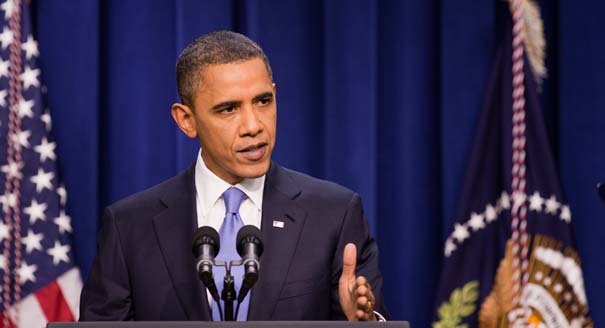
Despite campaign spending that could run into the billions, the United States may well see record-low voter turnout in November.
Source: Foreign Policy

In later years, the "surprises" have become ever more predictable, including an indictment that raised the specter of George H.W. Bush's Iran-Contra involvement days before his contest against Bill Clinton, the surfacing of a drunk-driving violation deep in the past of candidate George W. Bush, and announcements in the weeks leading up to the 2006 midterm elections both of congressional sex scandals and the conviction of Saddam Hussein. Shortly before the 2004 contest, Osama bin Laden famously produced a pre-election video directed at the American people and explicitly mentioning both President Bush and Democratic candidate John Kerry.
Given that such stunners are now as much a staple of U.S. elections as poolside fundraisers in the backyards of billionaires and broken campaign promises, it is worth considering what political rabbits the masterminds of this year's campaign may be inclined to pull out of the hats their bosses long ago threw into the ring -- or what mischief foreign leaders might be willing to manufacture to affect the outcome of this year's U.S. vote. Already, Washington insiders can be heard over their power breakfasts speculating whether some Middle Eastern leader might provoke a pre-election test of U.S. resolve or otherwise trigger a campaign season political reaction. Will Benjamin Netanyahu, who reportedly once said he "speaks English with a heavy Republican accent," create some kind of loyalty test for President Barack Obama that would either generate support for his coalition or help undermine the president with, say, Jewish voters in the key swing states of Florida and Pennsylvania? The obvious candidate for a crisis: Iran.
A more likely scenario is an old-fashioned political scandal. Perhaps Republicans are keeping their powder dry on investigations into national security leaks from the Obama White House until the fall, in the hope of convening hearings that might implicate or embarrass senior officials close to the president.
Democratic researchers, meanwhile, will almost certainly roll out new "revelations" about Mitt Romney's offshore finances or the activities of Bain Capital, his old firm, in the hope of countering voters' concerns about the economy with reasons to be suspicious of the Republican candidate.
Of course, other kinds of October surprises also have the White House worried -- the unexpected kind. Topping this list: major economic bad news that would support Republicans' narrative that the president is not up to fixing what ails America. A Wile E. Coyote moment in the eurozone, a sharp downturn in China, more bad jobs reports, or unrest triggered by high food prices could all fall into this category. So, too, could a terrorist attack or a Tet-like turn for the worse in Afghanistan, Iraq, or Pakistan.
My sense, however, is that we are in for a different sort of surprise, one that reflects not the gravity of issues being discussed but the banality of the personality-driven, money-intoxicated, big-ideas-light campaign that is being waged. This year's surprise will probably not happen in October, but in November, when -- despite campaign spending that could run into the billions (or perhaps because of it) -- we may well see record-low voter turnout. Perhaps this is all too predictable at a time when Americans increasingly view Washington politics as remote from their lives as the wave of elections in the far-off Middle East. A national yawn at a potential turning point in the history of the country would be more than an indictment of the cynical approach to politics that has come to dominate the hack brain trusts in both parties. It would be a watershed in the history of the United States and the world because this is not only a moment of profoundly important choices for America. It is also a moment of great opportunity, an inflection point at which America is well placed to reinvent itself yet again.
More than any country in the world right now, America is poised to lead and prosper in the century ahead. I say this noting all the economic grimness of the past several years, the growing inequality, and the dysfunction of American politics. Consider that the United States is in the midst of an energy revolution that can create jobs and lower the cost of energy, and thus help attract investment and reduce dependence on oil from dangerous places like the Middle East. The country has educational and legal systems that give it a special advantage in a world in which labor and materials are less and less important to competitiveness than the production -- and protection -- of intellectual capital. America is still the most stable, wealthy, capital-endowed economy on Earth. It has a chance to rebuild its infrastructure at record-low costs thanks to near-negative interest rates -- if only we were to open our eyes to the critical difference between investment and mere spending. And the rest of the world is faltering in ways that make America look even better.
Sadly, this year's November surprise might be that too many Americans just don't care anymore, are too alienated by tawdry politics, have given up. That might make this the first great moment of opportunity in U.S. history when America did not rise to the occasion. This is how great powers fall.
Of course, America needn't fumble. There is still the chance for one other kind of surprise this fall -- a surprise in which one or both of the presidential candidates actually recognizes that this is a moment of huge possibilities for America and that he has a plan for tapping into them. It will require that they eschew the food fights and name-calling and be willing to fight institutionalized power in Washington. It will require that they get specific and think big. It will require that they truly lead. But that, of course, would be something more than a November surprise -- it would be a real shocker, one just like two defibrillator paddles on the chest of a patient in an intensive care ward.
Former Visiting Scholar
David Rothkopf was a visiting scholar at the Carnegie Endowment as well as the former CEO and editor in chief of the FP Group.
Recent Work
David Rothkopf
David Rothkopf
Carnegie India does not take institutional positions on public policy issues; the views represented herein are those of the author(s) and do not necessarily reflect the views of Carnegie, its staff, or its trustees.
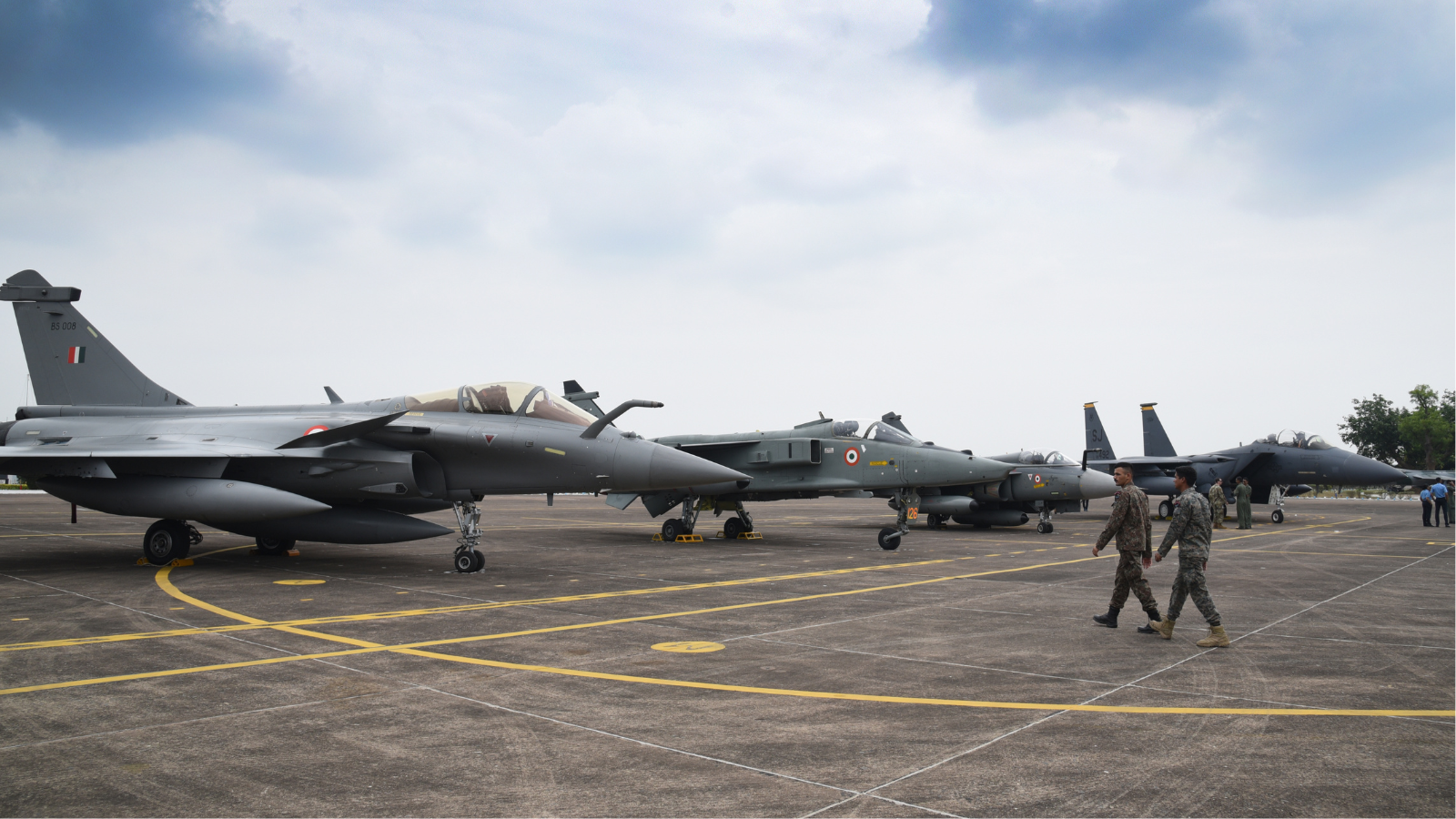
India and the United States are close to concluding a Reciprocal Defense Procurement Agreement (RDPA) that will allow firms from the two countries to sell to each other’s defense establishments more easily. While this may not remedy the specific grievances both sides may have regarding larger bilateral issues, an RDPA could restore some momentum, following the trade deal announcement.

Konark Bhandari

On the last day of the India AI Impact Summit, India signed Pax Silica, a U.S.-led declaration seemingly focused on semiconductors. While India’s accession to the same was not entirely unforeseen, becoming a signatory nation this quickly was not on the cards either.
Konark Bhandari

This piece examines India’s response to U.S. sanctions and tariffs, specifically assessing the immediate market consequences, such as alterations in import costs, and the broader strategic implications for India’s energy security and foreign policy orientation.

Vrinda Sahai
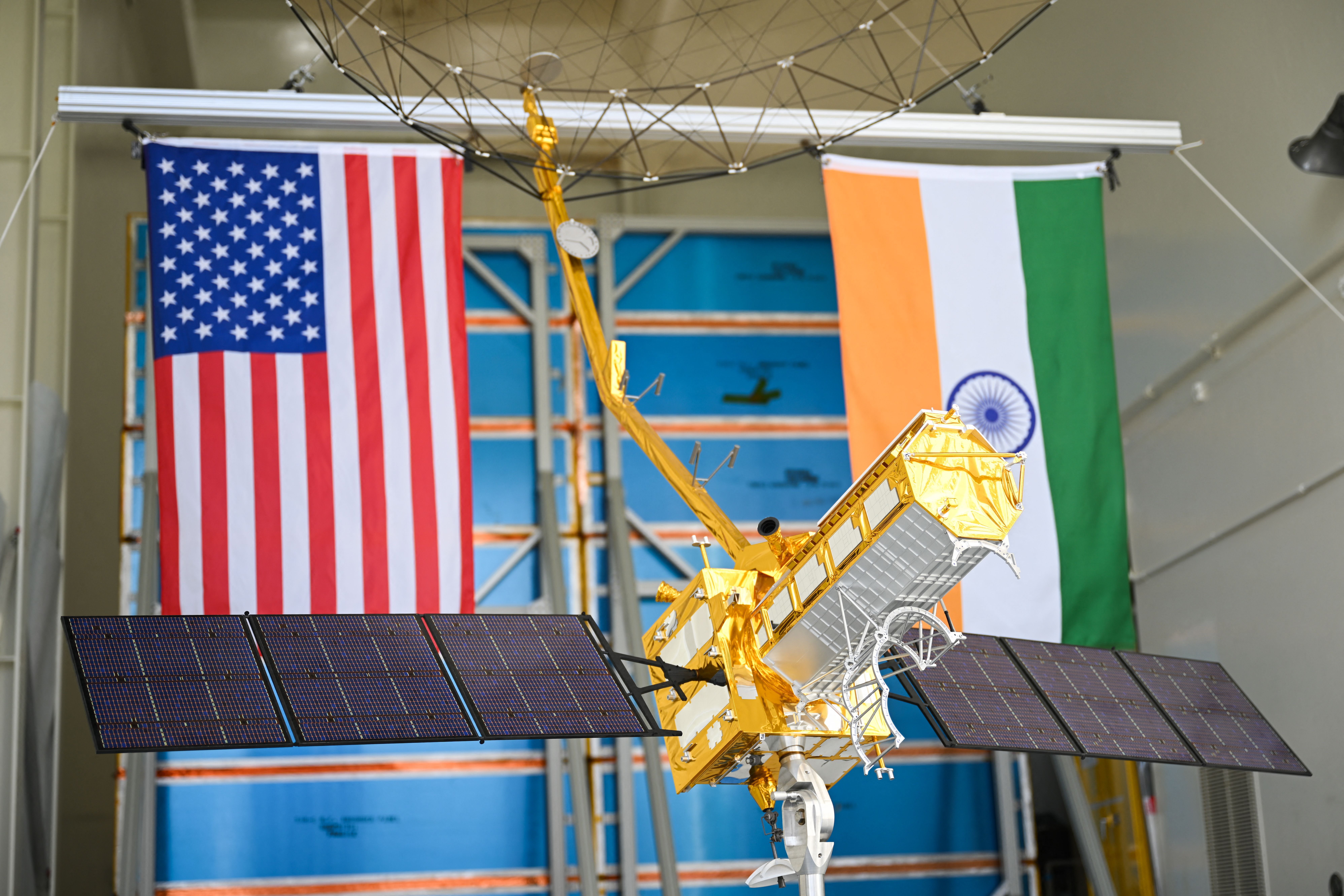
On July 30, 2025, the United States announced 25 percent tariffs on Indian goods. While diplomatic tensions simmered on the trade front, a cosmic calm prevailed at the Sriharikota launch range. Officials from NASA and ISRO were preparing to launch an engineering marvel into space—the NASA-ISRO Synthetic Aperture Radar (NISAR), marking a significant milestone in the India-U.S. bilateral partnership.

Tejas Bharadwaj
The India-U.S. relationship currently appears buffeted between three “Ts”—TRUST, Tariffs, and Trump.
Arun K. Singh