

In The Media
David Rothkopf
{
  "authors": [
    "David Rothkopf"
  ],
  "type": "legacyinthemedia",
  "centerAffiliationAll": "",
  "centers": [
    "Carnegie Endowment for International Peace"
  ],
  "collections": [],
  "englishNewsletterAll": "",
  "nonEnglishNewsletterAll": "",
  "primaryCenter": "Carnegie Endowment for International Peace",
  "programAffiliation": "",
  "programs": [],
  "projects": [],
  "regions": [
    "Middle East",
    "Israel"
  ],
  "topics": [
    "Political Reform",
    "Foreign Policy"
  ]
}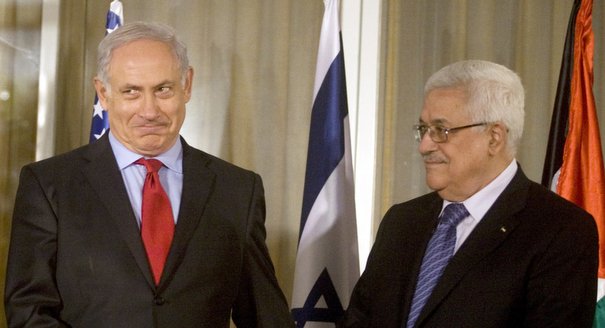
Source: Getty
Whatever U.S. lobby still exists for Israel, it neither lives up to its press clippings nor to what it may have been in the past.
Source: Foreign Policy

Fortunately, this New Year has begun auspiciously even for skeptics like me -- because it has been ushered in by a fierce debate that may finally have done in one of the most pernicious and enduring myths of our time: that of the existence of an all-powerful Israel Lobby. Neatly, providing just enough irony to offer the honey sweetening we Jews look for to start off each year, the myth has been done in by the most unlikely of perpetrators: Benjamin Netanyahu, prime minister of Israel.
The irony and even the deed may have been cloaked for many by the circumstances under which they occurred. That is due in part to the fact that there have been so many other stories dominating the headlines recently. For example, last week's story of Netanyahu's decision to publicly confront his most important ally and the resulting further decline in U.S.-Israel relations would have dominated the news at virtually any other time. But the attack on the U.S. consulate in Benghazi and the riots that spread across the Middle East forced it into the background. (Indeed, the confrontation between China and Japan over the disputed Diaoyu/Senkaku Islands would have been and should have been big news in any week in which those other two stories did not occur.)
But even the story of the murder of U.S. Ambassador to Libya Christopher Stevens and three other Americans did not end up dominating the news last week. Instead, that story was partially elbowed aside by the self-inflicted wounds Mitt Romney delivered to his campaign when he precipitously offered up a critique of the Obama administration in the middle of the breaking news of the tragic attack. Barack Obama would have had a bad week indeed if Romney had simply kept his mouth shut. Very real questions exist about embassy security and the intelligence that could have led the United States to secure its compounds in the region differently. The Israel rift is ill-timed. In fact, there is virtually not one single area of U.S. foreign policy in Middle East that is moving in the right direction at the moment. And all that would have had the president on the defensive if his luck in being confronted by one of the most inept challengers in recent presidential campaign history had not kicked in once again.
The bad advice Romney is getting and, more importantly, acting upon, brings us back to our exquisite New Year's irony. Because at least one of those giving bad advice to the Romney campaign is Dan Senor, former mouthpiece of the United States in Baghdad, "Morning Joe" talking head, and one of the original shoot-first, aim-later neocon functionaries who has undermined the GOP's once-solid claim to national security competence. In Sunday's New York Times, columnist Maureen Dowd cited Senor among others in her attacks on Romney for falling, as he has, under the thrall of the discredited far right of his party's foreign policy establishment. This triggered an avalanche of criticism from some, like my good friend Jeff Goldberg, who attacked her for her use of imagery that he asserted was anti-Semitic.
Goldberg is invariably smart, often witty, and typically right. But in this instance, he, like Romney, should have stood back and let silence do its work. Because the imagery to which he objected, that of "an old stereotype, that gentile leaders are dolts unable to resist the machinations and manipulations of clever and snake-like Jews," while tiresome, was really secondary to the bigger issue at stake. Through what seems to be careful if ill-considered collaboration, Netanyahu, Romney, Senor, and Co. were in the midst of blowing up one of the overarching myths of which the Jewish snake/Gentile dolt imagery was just one component.
And here we see the perils of believing your own hype -- apparently Bibi and friends actually believed the idea of the all-powerful Israel Lobby. Whether through Romney's bald-faced pandering to that perceived lobby with his ugly comments about the cultural inferiority of Palestinians or, more shockingly, through Netanyahu's decision to take sides in the 2012 presidential campaign, they seem to think that if they can portray Obama as "weak on Israel" they will materially advance their own causes. It's worth noting, of course, that those interests are different. For Romney, the approach only works if it undermines Obama in key states, notably Florida. For Netanyahu, it would work if the fear of losing Jewish support pushed Obama to get visibly tougher on Iran, to accept, for example, the Israeli leader's call for clearly demarked and more aggressive "red lines" with Iran.
Netanyahu, who dug in deeper this weekend with a high-profile showing on Meet the Press, seems to have swallowed the myth of the power of the Jewish Lobby so completely that he has bet his reputation and his country's future relationship with its most important ally on it. But here's the problem: Whatever lobby exists for Israel, it neither lives up to its press clippings nor to what it may have been in the past. And this week before Rosh Hashanah proved it.
In the first, instance, the Obama administration bravely kicked off last week with Secretary of State Hillary Clinton's outright rejection of the idea of red lines, a strong message that they would not be bullied, even in an election year, regardless of the political consequences. This was further underscored later in the week when the Obama administration allegedly rejected a meeting with Netanyahu. The rejection was leaked by the Israelis hoping the lobby would be outraged. The administration held its ground, in part because they knew something that Netanyahu did not: American Jews do not vote as a monolith, they don't vote Israel's interests first, they don't like foreign leaders trying to meddle in U.S. elections, and the polling results show it.
Since Romney and Netanyahu first started making their play to harness the power of "the lobby," their standing in the polls has slipped. In Florida, Obama has gained ground since this effort started and is up by as much as 5 points in the most recent NBC News poll for that state. In fact, even with Netanyahu making the rounds of the Sunday morning television shows this past weekend, he found his points being publicly rebuffed by U.S. Ambassador to the U.N. Susan Rice, showing yet again that the Obama team is not giving in to the power of the approach -- or that somehow AIPAC's puppet masters have lost their touch. Michele Bachmann may be calling for Obama to meet with Netanyahu. Paul Ryan may be howling. But here's the problem: Romney and Ryan and their cheerleader Bibi are very likely to end up on the wrong side of the November results.
In short, this year is getting off to a good start for those of us who have always found the notion of some dark Jewish conspiracy of super-K Streeters to be laughable. Jews are just as divided, just as sometimes impotent and sometimes successful as anyone else. Of course, if I said it, the list of commenters suggesting that somehow I was part of the cover operation for this lobby would be long. But when it is none other than the prime minister of Israel who proves once and for all the limitations of the lobby and, by November, will have proved that estimations of Jewish political influence of all types are overstated, well, then that's something worth celebrating.
And if the myth survives the drubbing the facts are giving it this fall, well, then it will at least prove once and for all that it is what many of us, like Jeff Goldberg and I, have been arguing for a long, long time: The Israel Lobby is just another boogie monster cooked up to serve the nasty agenda of people all too eager to sacrifice the truth on the altar of their prejudices.
Happy New Year, everybody.

Former Visiting Scholar
David Rothkopf was a visiting scholar at the Carnegie Endowment as well as the former CEO and editor in chief of the FP Group.
Recent Work
David Rothkopf
David Rothkopf
Carnegie India does not take institutional positions on public policy issues; the views represented herein are those of the author(s) and do not necessarily reflect the views of Carnegie, its staff, or its trustees.

After the chill in ties between 2020 and 2024 that brought India–China relations to their lowest point in several decades, the two countries have engaged each other afresh. This paper argues that there are predominantly four imperatives guiding India’s approach to China, and they exist in an order of priority.

Saheb Singh Chadha

This piece argues that India’s central challenge is not managing a single flashpoint but resolving the underlying tension between expansion and institutional coherency of the BRICS grouping.

Vrinda Sahai

A partnership between India, a country of subcontinental size, and Africa, a continent of fifty-four countries, may seem asymmetric until one notes that both are home to nearly the same number of people—1.4 billion. This essay spells out the existing challenges to the partnership, its optimal potential, and the possible pathways to realize it over the next quarter-century.

Rajiv Bhatia

The India–EU Free Trade Agreement (FTA) is shaping up to be one of the most consequential trade negotiations, both economically and strategically. But, what’s in the agreement, what’s missing, and what will determine its success in the years ahead
Vrinda Sahai, Nicolas Köhler-Suzuki

Trump 2.0 has unsettled India’s external environment—but has not overturned its foreign policy strategy, which continues to rely on diversification, hedging, and calibrated partnerships across a fractured order.



Milan Vaishnav, ed., Sameer Lalwani, Tanvi Madan, …