

Commentary
Judy Dempsey
{
  "authors": [
    "Judy Dempsey"
  ],
  "type": "legacyinthemedia",
  "centerAffiliationAll": "",
  "centers": [
    "Carnegie Endowment for International Peace",
    "Carnegie Europe"
  ],
  "collections": [
    "Brexit and UK Politics"
  ],
  "englishNewsletterAll": "",
  "nonEnglishNewsletterAll": "",
  "primaryCenter": "Carnegie Europe",
  "programAffiliation": "",
  "programs": [],
  "projects": [],
  "regions": [
    "Europe"
  ],
  "topics": [
    "Foreign Policy"
  ]
}
Source: Getty
In Britain, fears are growing that a proposed deal would orient the British military industry away from the United States and toward Europe, endangering the special relationship.
Source: New York Times

Now, both sides are talking.
If the deal goes ahead — and there are many hurdles before governments will give the final green light — analysts say the consequences could be far-reaching.
“It could create a genuine defense-aerospace industrial champion for Europe,” said Alexander Nicoll, military expert at the International Institute for Strategic Studies in London. “Indeed, the deal would be a natural reaction to the prospect of shrinking defense-equipment markets.”It could also give Europe’s military industry and governments the motivation to radically reassess the way they organize a sector in which nation-states still compete against one another rather than work toward building a coherent European military policy.
“The BAE-EADS deal could be a big advantage for Europe,” said Joachim Schild, a professor of comparative politics at Trier University in Germany. “It could lead to more integration of Europe’s defense sector to Europe’s benefit.”
The complex negotiations between these two giant companies, which had combined revenues last year of €72 billion, or $92 billion, coincide with a sharp decline in military budgets across Europe.
Since 2010, military spending among most European countries has fallen between 8 percent and 30 percent, according to NATO.
Europe’s two biggest and most important military powers — Britain, which has already cut its spending 8 percent, and France — are seeking more ways to cooperate on projects in order to save and create efficiencies. The French president, François Hollande, is preparing a white paper on the military. Substantial cuts are expected.
So great is the pressure on governments to find savings that there is a real danger that the cuts could lead to “the demilitarization of Europe.” Defense companies would be driven abroad to seek orders.
“Demilitarization would have a hugely negative impact on Europe’s security and defense ambitions,” said Claudia Major, a defense analyst at the German Institute for International and Security Affairs in Berlin.
“European governments do understand how serious the situation has become,” she added. The question is what they are doing about it. This is where the BAE-EADS deal could have an impact. It shows the urgent need for much closer integration of Europe’s military companies.
“Maybe the talks around this merger can serve as a catalyst for more consolidation in the European defense industrial base,” said Guy Ben-Ari, an expert on military industries at the Center for Strategic and International Studies in Washington. “There’s just too much duplication of weapons systems.”
The United States has long urged the Europeans to consolidate the military sector to reduce duplication but also to focus on equipment the Europeans really need so that they can take on a bigger share of the burden.
The NATO mission last year in Libya, in which the Europeans boasted that the United States had led from behind, again confirmed Washington’s worst fears. The Americans had to provide most of the intelligence and refueling aircraft as well as the missiles and bombs.
Pledges since then by NATO and E.U. countries to “pool and share” resources have been largely rhetorical.
Some governments, like Poland and Sweden or Britain and France, are cooperating. Yet, as analysts point out, pooling and sharing, while difficult enough, does not solve Europe’s problems as long as the Europeans refuse to link the consolidation of the military sector to a genuine security strategy.
Even the United States’ strategic and military shift toward the Asia-Pacific region has prompted little debate in Europe about how it should arrange its security and military policy. Somehow, Europeans still believe the old trans-Atlantic relationship is intact.
“In the United States, there is much less focus on Europe,” Mr. Ben-Ari said. “From the American perspective, there is no E.U.-wide vision for security and defense policy or for the defense industry.”
The view that the Europeans do not want to even consider a new, common security strategy means that European governments might squander the benefits of a BAE-EADS merger.
In Britain, fears are growing that the BAE-EADS deal would orient the British military industry away from the United States and toward Europe, endangering the special relationship.
“An alliance of BAE and EADS does not mean that we are marching further towards a common European defense policy,” Liam Fox, a Conservative British lawmaker and former defense minister, wrote in The Daily Telegraph, a British newspaper.
“There are many of us who would resist this by every means possible, but without a merger, we risk losing our influence and the great benefits that we have in BAE.”
Yet that may be the smaller price to pay if the result could be a decisive push toward a more consolidated European military industry and a clearer European security strategy.

Nonresident Senior Fellow, Carnegie Europe
Judy Dempsey is a nonresident senior fellow at Carnegie Europe
Recent Work
Judy Dempsey
Judy Dempsey
Carnegie India does not take institutional positions on public policy issues; the views represented herein are those of the author(s) and do not necessarily reflect the views of Carnegie, its staff, or its trustees.

After the chill in ties between 2020 and 2024 that brought India–China relations to their lowest point in several decades, the two countries have engaged each other afresh. This paper argues that there are predominantly four imperatives guiding India’s approach to China, and they exist in an order of priority.

Saheb Singh Chadha

This piece argues that India’s central challenge is not managing a single flashpoint but resolving the underlying tension between expansion and institutional coherency of the BRICS grouping.

Vrinda Sahai
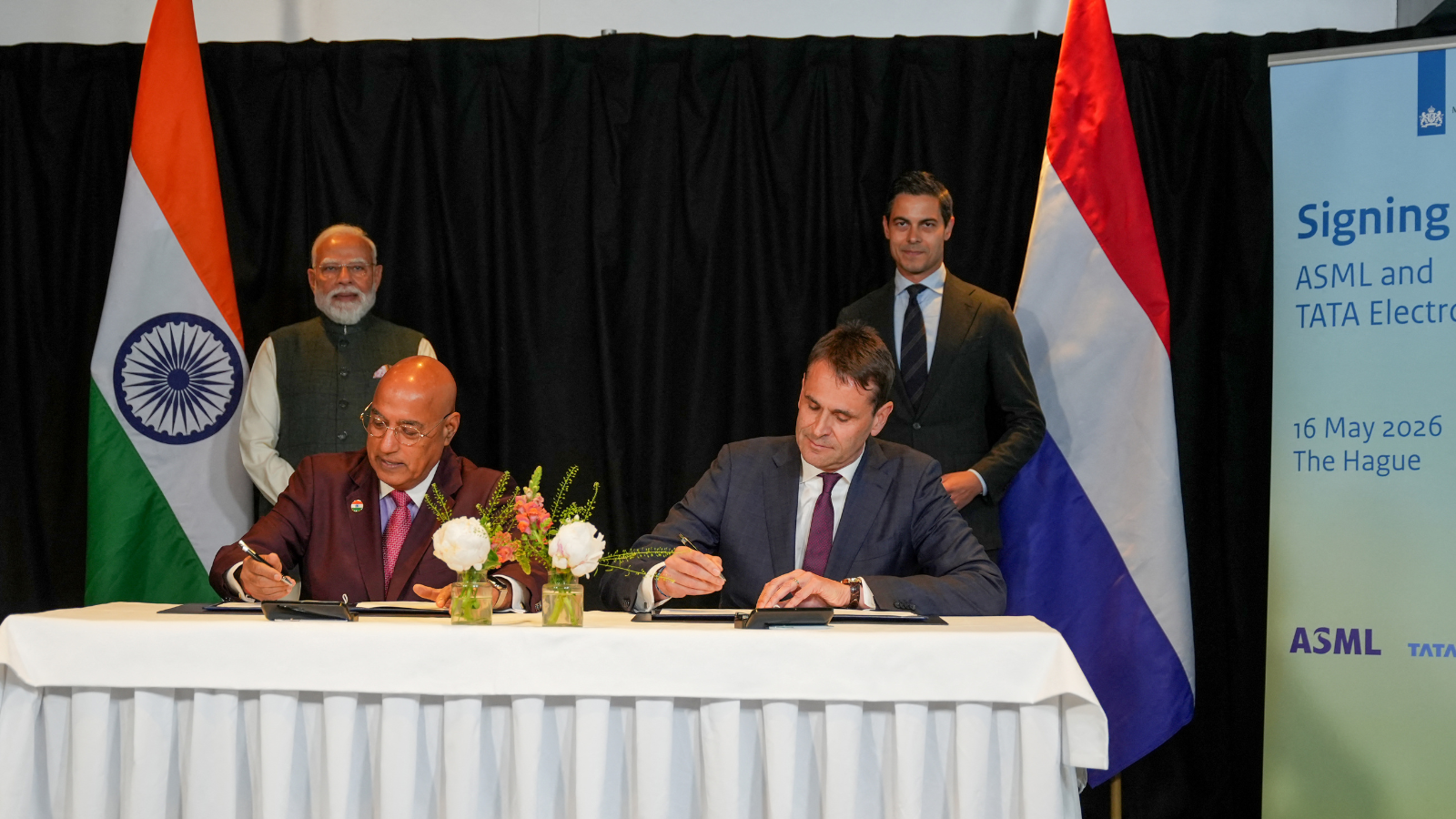
The ASML MoU with Tata Electronics is an indicator of how far the Indian semiconductor ecosystem has come. This ecosystem has been years in the making and represents real commercial logic.

Konark Bhandari

A partnership between India, a country of subcontinental size, and Africa, a continent of fifty-four countries, may seem asymmetric until one notes that both are home to nearly the same number of people—1.4 billion. This essay spells out the existing challenges to the partnership, its optimal potential, and the possible pathways to realize it over the next quarter-century.

Rajiv Bhatia

The India–EU Free Trade Agreement (FTA) is shaping up to be one of the most consequential trade negotiations, both economically and strategically. But, what’s in the agreement, what’s missing, and what will determine its success in the years ahead
Vrinda Sahai, Nicolas Köhler-Suzuki