

Commentary
Judy Dempsey
{
  "authors": [
    "Judy Dempsey"
  ],
  "type": "legacyinthemedia",
  "centerAffiliationAll": "",
  "centers": [
    "Carnegie Endowment for International Peace",
    "Carnegie Europe"
  ],
  "collections": [],
  "englishNewsletterAll": "",
  "nonEnglishNewsletterAll": "",
  "primaryCenter": "Carnegie Europe",
  "programAffiliation": "",
  "programs": [],
  "projects": [],
  "regions": [
    "Europe"
  ],
  "topics": [
    "Foreign Policy"
  ]
}
Source: Getty
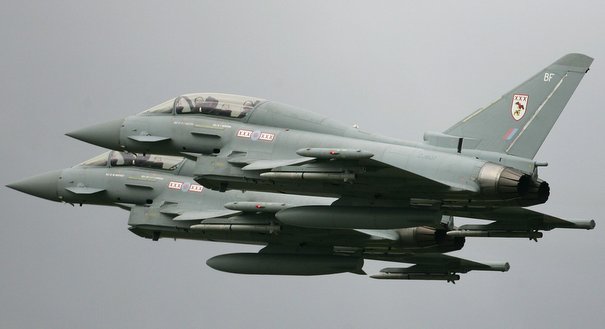
A merger between the European aerospace giant EADS and its British rival, BAE Systems, could be a catalyst for Europe taking a hard look at not only its defense but also its research and development sectors.
Source: New York Times

With the British government now so extraordinarily anti-European, it is hard to see any future BAE-EADS tie-up making a difference.
BAE has had a special relationship with the United States as one of the few European defense manufacturers to supply the Defense Department with cutting-edge military equipment.
Yet with defense spending being cut, even in the United States, BAE is now looking to EADS for growth, especially in the civil aircraft sector.What an irony for BAE, which a few years ago sold its share in EADS.
A merger should surely provide BAE and the British government with some influence over the future direction of EADS. BAE would only hold a minority stake and one would only expect lots of political interference by France and Germany in the joint company. Along with Spain, they are the shareholders in EADS — and famous for wrangling to get the maximum of jobs in their own countries.
But, say analysts, there is a bigger, strategic interest at stake for Europe and for Britain: A merger would make Europe a very serious competitor to the United States, a point I make in my column this week.
Boeing, the American aerospace giant, is already a fierce competitor with Airbus. But with BAE’s state-of-the-art military technology, Europe could find new markets in Asia and elsewhere.
A merger could, in the longer term, also be a catalyst for Europe taking a hard look at not only its defense but also its research and development sectors. The former is hampered by duplication, the latter by a lack of funding. Both have been a brake on Europe’s ability to decide what kind of security and defense policy it needs for the 21st century.
Of course, British conservative lawmakers would balk at the idea that a BAE-EADS deal could lead to a more integrated European defense policy.
Yet Britain’s conservative government is pushing the deal because it knows that it presents the only hope for keeping a national stake in a major aerospace company.
British conservative prime ministers, from Edward Heath to John Major, have found over time that their country could not do without Europe. The BAE-EADS deal may be a similar moment of truth for David Cameron.

Nonresident Senior Fellow, Carnegie Europe
Judy Dempsey is a nonresident senior fellow at Carnegie Europe
Recent Work
Judy Dempsey
Judy Dempsey
Carnegie India does not take institutional positions on public policy issues; the views represented herein are those of the author(s) and do not necessarily reflect the views of Carnegie, its staff, or its trustees.

After the chill in ties between 2020 and 2024 that brought India–China relations to their lowest point in several decades, the two countries have engaged each other afresh. This paper argues that there are predominantly four imperatives guiding India’s approach to China, and they exist in an order of priority.

Saheb Singh Chadha

This piece argues that India’s central challenge is not managing a single flashpoint but resolving the underlying tension between expansion and institutional coherency of the BRICS grouping.

Vrinda Sahai
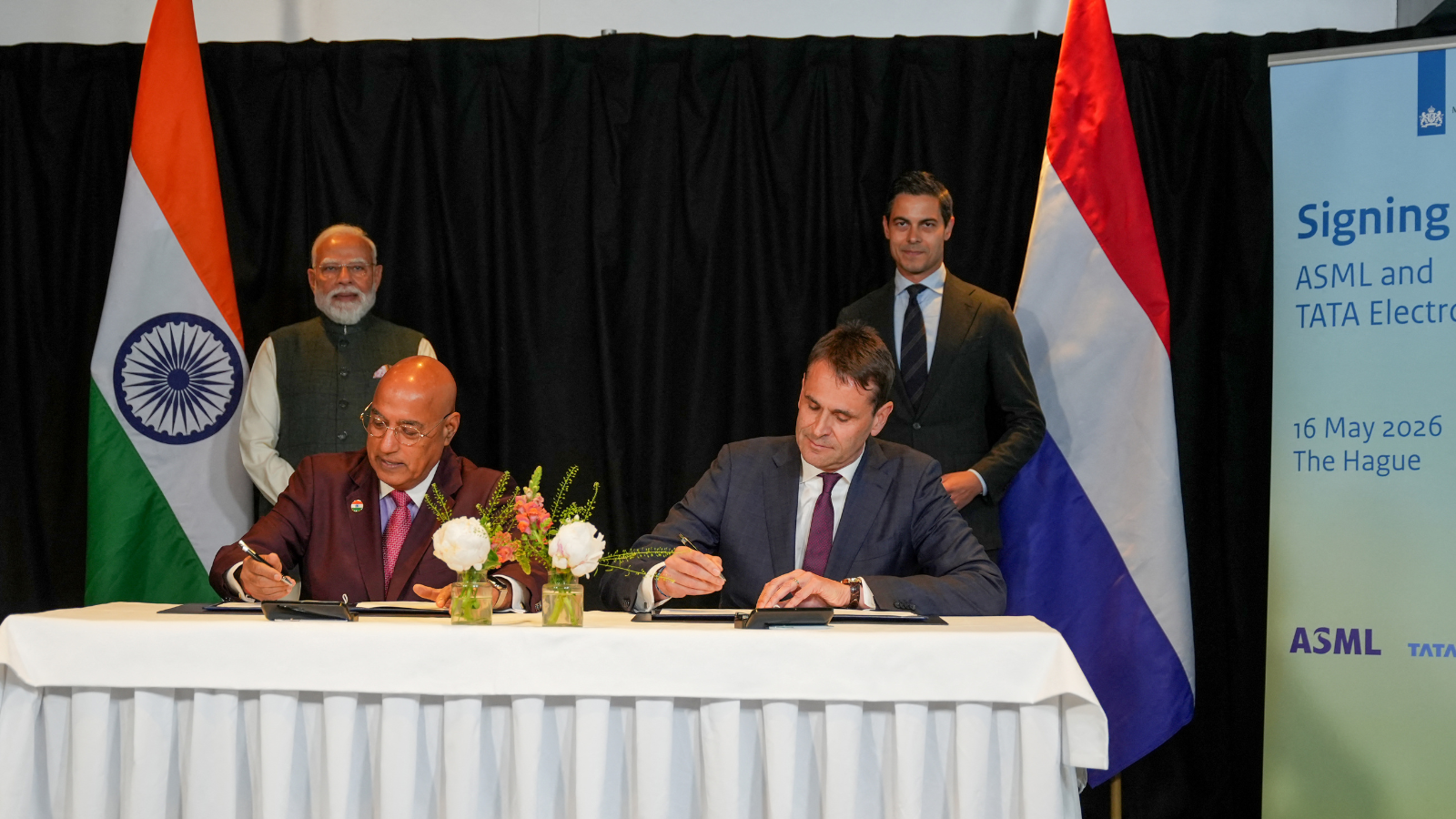
The ASML MoU with Tata Electronics is an indicator of how far the Indian semiconductor ecosystem has come. This ecosystem has been years in the making and represents real commercial logic.

Konark Bhandari

A partnership between India, a country of subcontinental size, and Africa, a continent of fifty-four countries, may seem asymmetric until one notes that both are home to nearly the same number of people—1.4 billion. This essay spells out the existing challenges to the partnership, its optimal potential, and the possible pathways to realize it over the next quarter-century.

Rajiv Bhatia

The India–EU Free Trade Agreement (FTA) is shaping up to be one of the most consequential trade negotiations, both economically and strategically. But, what’s in the agreement, what’s missing, and what will determine its success in the years ahead
Vrinda Sahai, Nicolas Köhler-Suzuki