

Research
- +10
Rosa Balfour, Frances Z. Brown, Yasmine Farouk, …
{
  "authors": [
    "Moisés Naím"
  ],
  "type": "legacyinthemedia",
  "centerAffiliationAll": "",
  "centers": [
    "Carnegie Endowment for International Peace"
  ],
  "collections": [],
  "englishNewsletterAll": "",
  "nonEnglishNewsletterAll": "",
  "primaryCenter": "Carnegie Endowment for International Peace",
  "programAffiliation": "",
  "programs": [],
  "projects": [],
  "regions": [
    "North America",
    "South America"
  ],
  "topics": [
    "Economy",
    "Trade"
  ]
}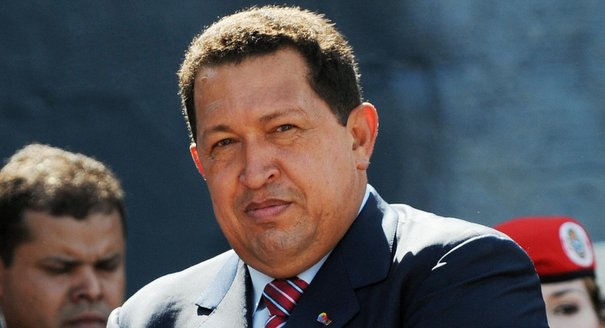
Source: Getty
Venezuela’s unsettled leadership faces an economic crisis of historic proportions due to enormous government spending, mounting foreign debt, and a mismanaged oil industry.
Source: New York Times

Maduro is correct. Crushing headaches will soon be inevitable across the country, including within the private sector but especially among the poor. President Chávez has bequeathed the nation an economic crisis of historic proportions.
The crisis includes a fiscal deficit approaching 20 percent of the economy (in the cliff-panicking United States it is 7 percent), a black market where a U.S. dollar costs four times more than the government-determined exchange rate, one of the world's highest inflation rates, a swollen number of public sector jobs, debt 10 times larger than it was in 2003, a fragile banking system and the free fall of the state-controlled oil industry, the country's main source of revenue.
Oil-exporting countries rarely face hard currency shortages, but the Chávez regime may be the exception. Mismanagement and lack of investment have decreased oil production. Meanwhile oil revenue is compromised partly because of Chávez’s decision to supply Venezuelans with the country's most valuable resource at heavily subsidized prices. Thus a large and growing share of locally produced oil is sold domestically at the lowest prices in the world (in Venezuela it costs 25 cents to fill the tank of a mid-sized car).
Another share of the oil output is shipped abroad to Cuba and other Chávez allies, and to China, which bought oil in advance at deeply discounted prices (apparently the revenue from China has already been spent). Most of the crude left to be exported at market prices is sold to Venezuela's best client, and, ironically, Chávez's main foe: the United States. Yet, as a result of America's own oil boom, U.S. imports of Venezuelan oil have recently hit a 30-year low.
Moreover, due to an explosion in its main refinery, Venezuela is now forced to import gasoline. The Financial Times reckons that for each 10 barrels of crude it sells to the US, it has to import back (at a higher price) two barrels of oil refined abroad. Meanwhile, the nation's total imports have jumped from 13 billion dollars in 2003 to over $50 billion dollars currently. Paying for those imports and servicing its huge debt requires more hard currency than Venezuela's weakened economy can generate.
Yes, huge headaches are looming.
This article was originally published in the New York Times.

Distinguished Fellow
Moisés Naím is a distinguished fellow at the Carnegie Endowment for International Peace, a best-selling author, and an internationally syndicated columnist.
Recent Work



Rosa Balfour, Frances Z. Brown, Yasmine Farouk, …
Moisés Naím
Carnegie India does not take institutional positions on public policy issues; the views represented herein are those of the author(s) and do not necessarily reflect the views of Carnegie, its staff, or its trustees.

On March 10, 2026, India’s Union Cabinet approved amendments to Press Note 3, a regulation that mandated government approval on all foreign direct investment (FDI) from countries sharing a land border with India. This amendment raises questions primarily about whether its stated benefits will materialize and if the risks have been adequately weighed. This piece will address the same.

Konark Bhandari

This piece examines India’s response to U.S. sanctions and tariffs, specifically assessing the immediate market consequences, such as alterations in import costs, and the broader strategic implications for India’s energy security and foreign policy orientation.

Vrinda Sahai

This paper examines the evolution of India-China economic ties from 2005 to 2025. It explores the impact of global events, bilateral political ties, and domestic policies on distinct spheres of the economic relationship.

Santosh Pai
The India-U.S. relationship currently appears buffeted between three “Ts”—TRUST, Tariffs, and Trump.
Arun K. Singh
This article argues that the geopolitical circumstances have never been more conducive, not merely for the early conclusion of the free trade agreement (FTA) between India and the EU, but also for crafting a substantive and comprehensive strategic partnership.

Mohan Kumar