

Article
C. Raja Mohan, Darshana M. Baruah
{
  "authors": [
    "C. Raja Mohan"
  ],
  "type": "legacyinthemedia",
  "centerAffiliationAll": "dc",
  "centers": [
    "Carnegie Endowment for International Peace",
    "Carnegie India"
  ],
  "collections": [],
  "englishNewsletterAll": "ctw",
  "nonEnglishNewsletterAll": "",
  "primaryCenter": "Carnegie India",
  "programAffiliation": "SAP",
  "programs": [
    "South Asia"
  ],
  "projects": [],
  "regions": [
    "South Asia",
    "India",
    "Afghanistan",
    "Pakistan"
  ],
  "topics": [
    "Foreign Policy"
  ]
}
Source: Getty
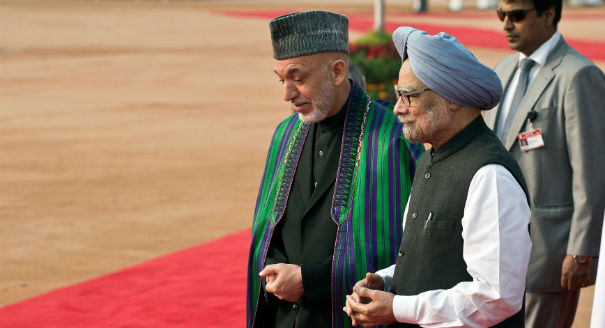
Instead of wringing its hands over the Western withdrawal from Afghanistan, India should do what it can to advance its interests after 2014.
Source: Indian Express
As America and Britain prepare to leave Afghanistan by 2014, Delhi appears to have gone into a sulk. Instead of objecting to the inevitable Anglo-American retreat, India must deepen the dialogue with Washington and London on the future of Afghanistan.
Skeptics in Delhi wonder if Washington and London, in the rush for Afghan exits, want to talk to India at all. Delhi has two important diplomatic opportunities this week to find out. Talks are scheduled on Tuesday with senior American and Afghan officials who will attend the second round of the trilateral dialogue. Afghanistan will also figure at the top of Prime Minister Manmohan Singh's conversation today with the British premier, David Cameron. Together, they should give Delhi first-hand accounts of the current efforts in Washington, London and Kabul to seek reconciliation with the Taliban with the help of the Pakistan army.Earlier this month, after a trilateral summit in London with Pakistan's President Asif Ali Zardari and the Afghan leader, Hamid Karzai, Cameron raised hopes that peace might break out in the next six months. Some in Delhi are deeply wary of London's Af-Pak delusions. They think Cameron is trying to present Western genuflection to Rawalpindi as a big breakthrough for the Afghan peace process. Others have convinced themselves that the new U.S. Secretary of State, John Kerry, is ready to pay any price—including the handing over of parts of Afghanistan to the Taliban and the ISI—in return for a mere promise from General Ashfaq Kayani to make the Western retreat smooth.
A calmer Indian approach, however, would begin by acknowledging that the Fifth Afghan War, which began with American occupation at the end of 2001, is coming to an end. The British Raj fought the first three Afghan Wars in the 19th and early 20th centuries. The fourth was when the West promoted jihadi extremism in response to Soviet Russia's occupation of Afghanistan between 1979 and 1989. Under Taliban rule, Afghanistan became the home for international terrorism and the base from which al-Qaeda launched attacks on the United States on September 11, 2001. The ferocious American response to 9/11 came in the form of the Fifth Afghan War.
India had a great run in Afghanistan as America sought to rebuild the war-torn nation. But that moment is coming to an end. India must prepare for a difficult period as the Afghan people try and cope with the resurgence of the Taliban, backed by Pakistan and the imminent steep decline in the Western military footprint. As it adapts to life after the Fifth Afghan War, the last thing Delhi would want to do is remind its Anglo-American friends that they have been had by the Pakistan army.
Delhi might be accurate in pointing out that America lost the war in Afghanistan because it could not stop the Pakistan army from nurturing the Taliban and other militant groups that destabilized Kabul and killed American troops. But Indian diplomacy, one hopes, is not in the business of telling the truth about other people's strategic blunders. Instead, it must recognize what is inevitable in Afghanistan, find some common ground with the West, limit the potential damage to India's interests where it can, and counter the unacceptable trends where it must.
After the 9/11 attacks, we might recall, Atal Bihari Vajpayee's government offered all possible help to the US, although it knew very well that the geographic imperative would compel Washington to reach out to Rawalpindi. In refusing to accept the logic of a zero-sum-game with the US and Pakistan, Vajpayee laid the foundation for a strong relationship with Washington. Prime Minister Manmohan Singh too resisted the temptation to protest the resumption of American arms supplies to Pakistan in March 2005. Manmohan Singh's focus on India's bilateral cooperation at that moment led to the historic civil nuclear initiative that ended India's prolonged nuclear isolation.
India's new approach must begin with the recognition that political support for the occupation of Afghanistan has all but evaporated in the West. Second, India must acknowledge the importance of engaging the Taliban and underline its own readiness to talk to its leaders when they come out of the Pakistan army's shadow. At the same time, India must remind its Western interlocutors that appeasing the Taliban will break the fragile internal balance between the Pashtuns and the non-Pashtun minorities and that Delhi will be compelled to make choices of its own. Third, India must signal its recognition that any durable political settlement in Afghanistan would require addressing Pakistan's legitimate interests, but will not accept their definition by Rawalpindi. Fourth, India should welcome the prospects of a genuine reconciliation between Pakistan and Afghanistan, so critical for the stability of its north-western frontiers.
India must hear out the formal arguments from London, Washington, and Kabul that there is a significant shift in the attitude of the Pakistani army, and that it is ready for peace in the region. Although this proposition might not seem credible, dismissing it out of hand is not smart diplomacy. India must reaffirm that it is not in competition with Pakistan in Afghanistan and is prepared to address Islamabad's concerns about India's policy in Afghanistan and consider a new framework for trilateral economic and political cooperation between Delhi, Islamabad and Kabul. If the Pakistan army continues to derail those possibilities and revives Afghanistan as a base from which to mount attacks on India, Delhi has no choice but to mount a countervailing coalition.
As a new phase begins in the tragic history of its north-western marches, sulking can't be Delhi's strategy. India must keep an open mind, engage all the major Afghan formations, intensify the dialogue with all the regional and international stakeholders, and find ways to influence the outcomes.
Former Nonresident Senior Fellow, Carnegie India
A leading analyst of India’s foreign policy, Mohan is also an expert on South Asian security, great-power relations in Asia, and arms control.
Recent Work

C. Raja Mohan, Darshana M. Baruah


Alexander Gabuev, Paul Haenle, C. Raja Mohan, …
Carnegie India does not take institutional positions on public policy issues; the views represented herein are those of the author(s) and do not necessarily reflect the views of Carnegie, its staff, or its trustees.

This collection of essays by scholars from Carnegie India’s Technology and Society program traces the evolution of the AI summit series and examines India’s framing around the three sutras of people, planet, and progress. Scholars have catalogued and assessed the concrete deliverables that emerged and assessed what the precedent of a Global South country hosting means for the future of the multilateral conversation.



Nidhi Singh, Tejas Bharadwaj, Shruti Mittal, …

On March 10, 2026, India’s Union Cabinet approved amendments to Press Note 3, a regulation that mandated government approval on all foreign direct investment (FDI) from countries sharing a land border with India. This amendment raises questions primarily about whether its stated benefits will materialize and if the risks have been adequately weighed. This piece will address the same.

Konark Bhandari
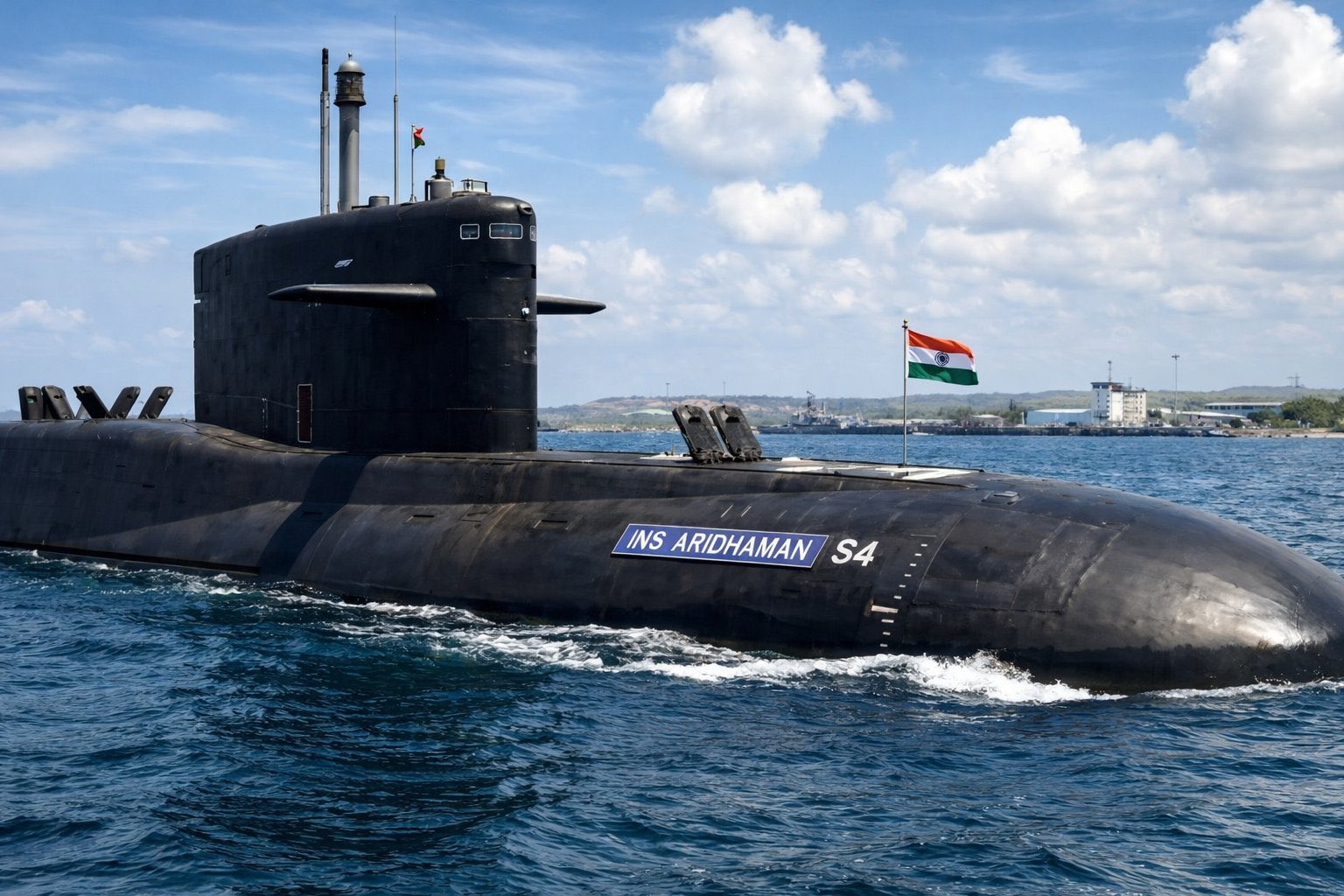
The induction of INS Aridhaman, which features several technological enhancements, now gives India the third nuclear ballistic missile submarine to ensure continuous at-sea deterrent.

Dinakar Peri

This piece argues that the present Indian strategy, based on opportunistic diversification and utilization of limited strategic reserves, remains inadequate when confronting supply disruptions. It evaluates India’s options in the short, medium, and long terms.

Vrinda Sahai
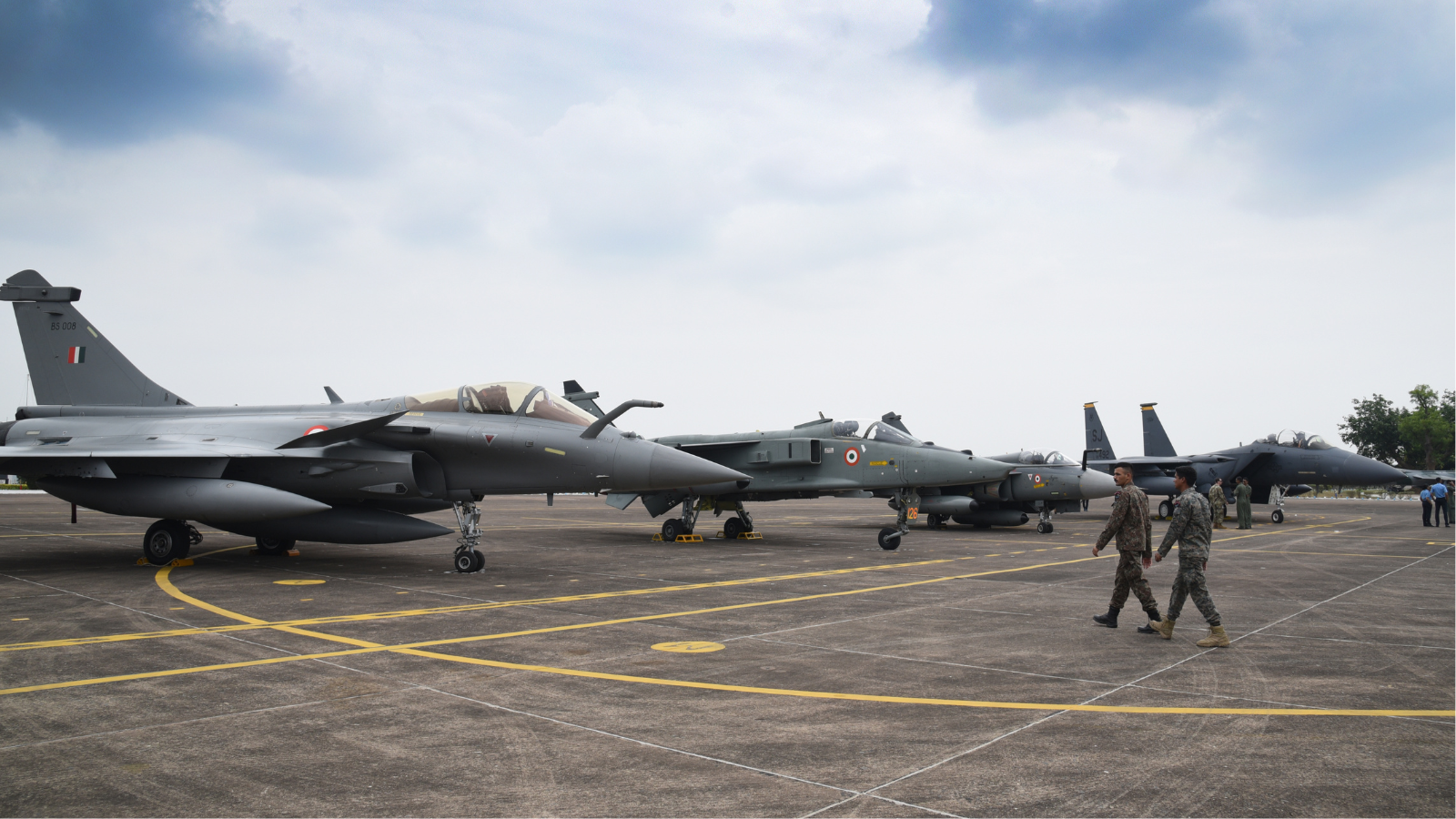
India and the United States are close to concluding a Reciprocal Defense Procurement Agreement (RDPA) that will allow firms from the two countries to sell to each other’s defense establishments more easily. While this may not remedy the specific grievances both sides may have regarding larger bilateral issues, an RDPA could restore some momentum, following the trade deal announcement.
Konark Bhandari