

In The Media
David Rothkopf
{
  "authors": [
    "David Rothkopf"
  ],
  "type": "legacyinthemedia",
  "centerAffiliationAll": "",
  "centers": [
    "Carnegie Endowment for International Peace",
    "Carnegie China"
  ],
  "collections": [
    "China’s Foreign Relations",
    "U.S.-China Relations"
  ],
  "englishNewsletterAll": "",
  "nonEnglishNewsletterAll": "",
  "primaryCenter": "Carnegie Endowment for International Peace",
  "programAffiliation": "",
  "programs": [],
  "projects": [],
  "regions": [
    "North America",
    "United States",
    "East Asia",
    "China"
  ],
  "topics": [
    "Security"
  ]
}
Source: Getty
The Cool War, a successor to the Cold War, also does not involve hot conflict on the battlefield, but is different in the nature and expectations surrounding the way it is conducted.
Source: Foreign Policy
We are now in the midst of what could be called the Cool War. This successor to the Cold War shares the trait that it does not involve hot conflict on the battlefield, but is different in the nature and expectations surrounding the sub-rosa thrusts and parries by which it is conducted.
This new war is “cool” rather than “cold” for two reasons. On the one hand, it is a little warmer than cold because it seems likely to involve almost constant offensive measures that, while falling short of actual warfare, regularly seek to damage or weaken rivals or gain an edge through violations of sovereignty and penetration of defenses. And on the other, it takes on the other definition of “cool,” in that it involves the latest cutting-edge technologies in ways that are changing the paradigm of conflict to a much greater degree than any of those employed during the Cold War—which was, after all, about old-fashioned geopolitical jockeying for advantage in anticipation of potential old-school total warfare.The Cool War is largely different not only because of the participants or the nature of the conflict, but also because it can be conducted indefinitely—permanently, even—without triggering a shooting war. At least that is the theory.
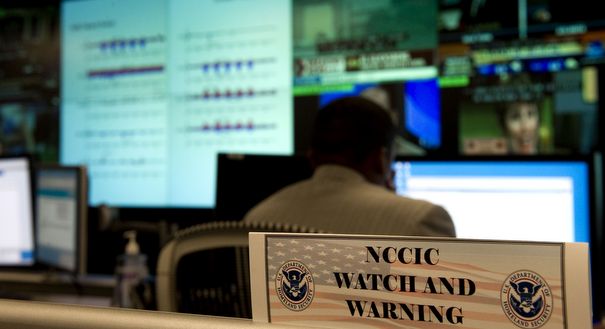
The latest sign that this war is on-going is Tuesday’s New York Times story focusing on the revelations produced by a U.S. cyber-security firm called Mandiant regarding China’s People Liberation Army Unit 61398, a Shanghai-based operation that has allegedly been conducting “an overwhelming percentage” of recent attacks on U.S. companies and government agencies, according to the Times account.
What is striking about the story is that it has such a “dog bites man” feel to it. Everyone who is paying attention knows the Chinese are doing this—as are other countries from Russia to Iran and beyond—and no one has any sense that such attacks will cause the kind of rupture to the U.S.-China relationship that might have been expected in the era of spy scandals past. This feeling is pervasive, damaging, and, save for periodic demarches and statements of outrage from high officials, likely only to produce more business for companies like Mandiant and more resources for cyber-units in the U.S. Department of Defense to counter the nerd armies of our adversaries and rivals.
Via these attacks, the Chinese gain access to valuable U.S. intellectual property, insights into how the U.S. economy works, and an increasing ability to interrupt the functions of individual companies, important elements of our critical infrastructure and significant sources of America’s strength and security. And while we will publicly denounce them, we are tempered in our criticism because we know we are doing the same thing worldwide. The most famous illustration of these is the “Olympic Games” initiative against the Iran nuclear program—better known as Stuxnet—which was designed by the U.S. and our allies to do via streams of electrons what did not wish to do with commandos or bombers and that is disrupt Iran’s progress toward creating an atom bomb. Almost certainly, the successor to Olympic Games is now in play or will be ratcheted up as we seek to find ways to both “engage” and pressure the Iranians simultaneously.
And as we do that to them, they will also seek to do it back to us. When you drop a bomb on a country, it not only devastates its target—it also disintegrates. But when you launch a worm against a facility, that worm or its elements remain intact and discoverable and thus re-usable by the victim of the attack. In other words, while cyber conflict may avoid “hot” exchanges, it has to date produced almost constant escalation.
It should also be noted that cyber intrusions will become ever more effective and difficult to defend against in the world of big data and “the Internet of things” that we are entering. With the combination of ubiquitous sensors and data-gathering mechanisms, unlimited memory and massive processing capabilities, the planet’s ocean of bits and bytes is growing ever larger and each and every company is becoming a data company. Each will have ever-greater data assets to protect, and each will face ever-greater data liabilities should it fail to protect them. That is why so many companies that have never been engaged in these issues are now not only looking to hire companies like Mandiant, they are becoming deeply interested in the future of cyber policies—from the White House’s recent executive order to issues like Internet governance and privacy protection.
The Cool War is of course, not just limited to the possibility of permanent phantom warfare via cyber attacks. It goes further, to the ongoing discussion of the use of unmanned agents of surveillance and destruction, such as drones. All these new technologies make it easier for the technologically empowered to strike out against and dominate adversaries without putting human lives or hard military assets at risk—or to give their traditional forces special advantages when they do enter conflict, thus reducing risk. The purpose of the Cold War was to gain an advantage come the next hot war or, possibly, to forestall it. The purpose of Cool War is to be able to strike out constantly without triggering hot war while also making hot wars less desirable (much as did nuclear technology during Cold War days) or even necessary.
That’s not to say there will be no hot wars. But it does suggest that in the world of Cool War, they will be fewer and they will take place against a backdrop of a new, different, constant kind of warfare. Instead of killing adversaries, the new technologies allow for the possibility of just giving them a nasty fever, of reducing their capacity, of confusing them, of depriving them of key assets when necessary. It also, of course, gives technologically advanced countries a great edge over those without the same resources.
It’s early days. It’s a new game. Undoubtedly, it is one that will involve many twists and turns and may undercut some of the assumptions that have led Chinese and U.S. planners to think that playing at this new game is indeed safer than old approaches. But it is impossible to read stories like the one in Tuesday’s Times without concluding that we are in the midst of a sea change in the way nations project force.

Former Visiting Scholar
David Rothkopf was a visiting scholar at the Carnegie Endowment as well as the former CEO and editor in chief of the FP Group.
Recent Work
David Rothkopf
David Rothkopf
Carnegie India does not take institutional positions on public policy issues; the views represented herein are those of the author(s) and do not necessarily reflect the views of Carnegie, its staff, or its trustees.

In any defense establishment, change is an ongoing process. However, despite the best of intentions, existing bureaucracies, bound by habit and years of socialization, have their limits in implementing transformative change.

Anit Mukherjee

How is AI reshaping space security, creating governance challenges, and where does international diplomacy stand today?


Tejas Bharadwaj, Almudena Azcárate Ortega

After the chill in ties between 2020 and 2024 that brought India–China relations to their lowest point in several decades, the two countries have engaged each other afresh. This paper argues that there are predominantly four imperatives guiding India’s approach to China, and they exist in an order of priority.

Saheb Singh Chadha

This piece argues that India’s central challenge is not managing a single flashpoint but resolving the underlying tension between expansion and institutional coherency of the BRICS grouping.

Vrinda Sahai

The U.S.–India semiconductor cooperation story is well-stocked with top-level strategic intent. What remains unresolved, however, are some underlying challenges that will determine whether the cooperation actually functions. Three such friction points stand out.

Shruti Mittal