

Research
- +10
Rosa Balfour, Frances Z. Brown, Yasmine Farouk, …
{
  "authors": [
    "Moisés Naím"
  ],
  "type": "legacyinthemedia",
  "centerAffiliationAll": "",
  "centers": [
    "Carnegie Endowment for International Peace",
    "Carnegie Europe"
  ],
  "collections": [],
  "englishNewsletterAll": "",
  "nonEnglishNewsletterAll": "",
  "primaryCenter": "Carnegie Endowment for International Peace",
  "programAffiliation": "",
  "programs": [],
  "projects": [],
  "regions": [
    "North America",
    "United States",
    "Western Europe",
    "United Kingdom",
    "Germany"
  ],
  "topics": [
    "Economy",
    "EU"
  ]
}
Source: Getty
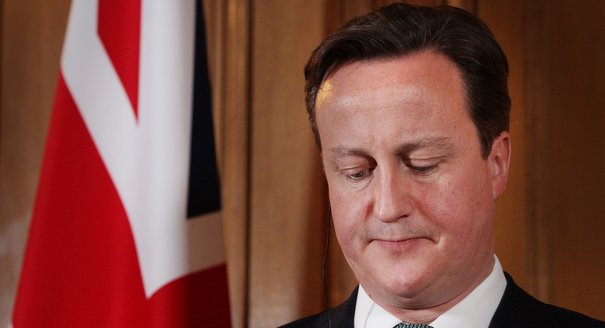
The British tabloids wield enormous influence on public opinion and could have an impact on the future of the UK’s participation in the European integration process.
Source: El País
IMGXYZ15903IMGZYXAngela Merkel is surely one of the world's most powerful people. Rupert Murdoch, the owner of News Corporation, one of the world’s largest media conglomerates, is also quite powerful. Of course, their respective sources of power are very different, as are the ways in which they use the influence they have, and the objectives and interests that guide their conduct. Merkel is the leader of an important nation while Murdoch leads a large multinational corporation. Moreover, Murdoch maintains that he does not use the power of his media to pressure governments or influence politics. His critics reject this claim, and insist that Murdoch and his media properties are influential political actors. In the United States, his detractors accuse Fox News of being closely aligned with the Republican Party, and more recently a main supporter of the Tea Party.
In the United Kingdom, Murdoch recently had to appear before a parliamentary commission investigating the journalistic practices of tabloids. “I have never asked anything of any prime minister,” he stated. Yet, before that same commission, the former Prime Minister John Major revealed that, at a 1997 dinner, Murdoch asked him to change his policy on Europe, warning that his newspapers would not support him if he failed to do so. “This is a conversation that is hard to forget,” said Major. “It is not often someone sits in front of a prime minister and says to him 'I would like you to change your policy or my organization cannot support you'," Major added. Ed Miliband, the leader of the British Labour Party, also stated to that parliamentary commission that, in his opinion, Murdoch’s conglomerate “had a sense of power without responsibility, due to the fact that it controls 37 percent of the newspaper market in the United Kingdom, as well as the BSkyB television network.”What has all of this to do with Angela Merkel? A lot. And even more with the future of Europe.
As we know, the British prime minister, David Cameron, has just announced that he plans to hold a referendum on the United Kingdom’s remaining in the European Union. This is to take place before the end of 2017. Before the referendum, Cameron will try to obtain both specific concessions for the United Kingdom, and broad reforms in the way the 27 member states operate as a collective — federal — entity. In particular, he has indicated that he wishes to recover Britain’s decision-making power on certain issues that are now ruled on in Brussels by EU organs. Cameron intends to initiate extensive and ambitious negotiations with the EU, including the review of current European-wide policies on agriculture, fisheries, social policy, banking regulation, the environment, immigration and defense, among others.
The interpretations of Cameron’s objectives, and the consequences of his bold initiative, are many and varied. For some it is a transparent gambit to separate Britain from a Europe weakened by the crisis and declining in global influence. For others, it is an attempt to extort advantages from Europe. And for others, such as the former German vice-chancellor, Joschka Fischer, it is a mere act of irrationality that is not good either for the United Kingdom or for the EU, and is driven mostly by narrow interests and Cameron’s short-sighted political calculations. There are also those who think that for the British the cost of leaving the EU is prohibitively high, and that in the end they will not vote for the exit option. This, of course, assumes that British public opinion is impartially and fully informed of the costs and benefits of staying or leaving the EU. This, however, has not been the case in the past. The British tabloids (including most of those not owned by Murdoch), which wield enormous influence on public opinion, have persistently shown a rabid, and at times even tendentious, opposition to the UK’s participation in the European integration process.
On the other side of all this is Angela Merkel. She will certainly do all she can to avoid going down in history as the leader under whom the project of European unification collapsed. Though the continent may continue its process of integration without British participation, there is no doubt that the withdrawal of the UK would be a severe blow. Besides, if the 2017 referendum leads to that outcome, the anti-integrationist movements in other countries would gain strength, and there might even be a continent-wide contagion of separatist referenda. For this and other good reasons, Merkel will do her best to prevent the exit of the United Kingdom. We can only wait and see who has more power, the chancellor or the media mogul.

Distinguished Fellow
Moisés Naím is a distinguished fellow at the Carnegie Endowment for International Peace, a best-selling author, and an internationally syndicated columnist.
Recent Work



Rosa Balfour, Frances Z. Brown, Yasmine Farouk, …
Moisés Naím
Carnegie India does not take institutional positions on public policy issues; the views represented herein are those of the author(s) and do not necessarily reflect the views of Carnegie, its staff, or its trustees.

How is AI reshaping space security, creating governance challenges, and where does international diplomacy stand today?


Tejas Bharadwaj, Almudena Azcárate Ortega

The U.S.–India semiconductor cooperation story is well-stocked with top-level strategic intent. What remains unresolved, however, are some underlying challenges that will determine whether the cooperation actually functions. Three such friction points stand out.

Shruti Mittal

On March 10, 2026, India’s Union Cabinet approved amendments to Press Note 3, a regulation that mandated government approval on all foreign direct investment (FDI) from countries sharing a land border with India. This amendment raises questions primarily about whether its stated benefits will materialize and if the risks have been adequately weighed. This piece will address the same.

Konark Bhandari

India and the United States are close to concluding a Reciprocal Defense Procurement Agreement (RDPA) that will allow firms from the two countries to sell to each other’s defense establishments more easily. While this may not remedy the specific grievances both sides may have regarding larger bilateral issues, an RDPA could restore some momentum, following the trade deal announcement.
Konark Bhandari

On the last day of the India AI Impact Summit, India signed Pax Silica, a U.S.-led declaration seemingly focused on semiconductors. While India’s accession to the same was not entirely unforeseen, becoming a signatory nation this quickly was not on the cards either.
Konark Bhandari