

Q&A
Matt Ferchen
{
  "authors": [
    "Matt Ferchen"
  ],
  "type": "legacyinthemedia",
  "centerAffiliationAll": "",
  "centers": [
    "Carnegie Endowment for International Peace",
    "Carnegie China"
  ],
  "collections": [
    "China and the Developing World",
    "China’s Foreign Relations"
  ],
  "englishNewsletterAll": "",
  "nonEnglishNewsletterAll": "",
  "primaryCenter": "Carnegie China",
  "programAffiliation": "",
  "programs": [],
  "projects": [],
  "regions": [
    "North America",
    "South America",
    "East Asia",
    "China"
  ],
  "topics": [
    "Economy"
  ]
}
Source: Getty
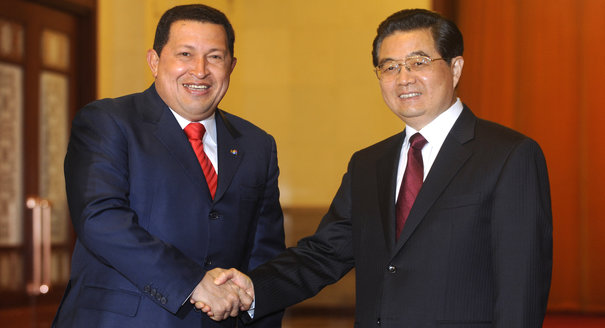
After a decade-long partnership, Hugo Chávez’s withdrawal from Venezuelan politics has led many to question what the future may hold for Chinese investments and companies in the country.
Source: Latin America Advisor
Inter-American Dialogue: India’s Reliance Industries is reportedly still considering investments totaling more than $2 billion in Venezuela’s oil industry, despite uncertainty about the future of President Hugo Chávez’s leadership. Private investors have driven up demand for PDVSA bonds on the bet that the sector will open up, while some of Venezuela’s allies, including China, are withholding additional funding until the political situation becomes clear. What does Chávez’s absence mean for the country’s oil sector? If Chávez steps down, how would that affect energy relations with China and other state partners? Is China too heavily invested in the country? Are there bright spots for private companies and investors?
Matt Ferchen: Venezuela, China faces its first major crisis management test in over a decade of booming ties with Latin America. China’s unprecedented build-up of oil-related finance and investment in Venezuela has overlapped with Hugo Chávez’s rise to almost complete domination of Venezuelan politics and economics. Chávez was eager to have China as a “socialist” ally, including as an alternative source of oil demand so that Venezuela could diversify exports away from reliance on the United States. The Chinese government has been reluctant to cooperate with Chávez’s anti-American rhetoric, but its state-owned banks, oil companies and construction firms have more than compensated for cautious diplomacy with bold, some might say reckless, financial initiatives in Venezuela. Now that Chávez’s treatment for cancer in Cuba has thrown Venezuelan politics into a slow-motion crisis, China and its firms face tough economic and diplomatic challenges. On the economic front, while the China Development Bank claims that its nearly $40 billion in loans are insulated from Venezuelan political risk, such public confidence obscures a much deeper anxiety about how a post-Chávez government will treat Chinese banks, oil firms and other companies. Ultimately, through its state-owned firms’ behavior, China has come to be seen by many inside and outside of Venezuela as an ally of Chávez and this leaves China economically and diplomatically exposed to the vicissitudes of post-Chávez politics. A post-Chávez government will almost certainly seek to alter some elements of the political and economic relationship with China. However, it is instability—the not knowing what will come after Chávez—that is the deepest cause of anxiety for Chinese officials and firms. Having aligned themselves with the absolute leader of Venezuela, China’s crisis management skills will be tested by a potentially leaderless Venezuela.

Former Nonresident Scholar, Carnegie-Tsinghua Center for Global Policy
Ferchen specializes in China’s political-economic relations with emerging economies. At the Carnegie–Tsinghua Center for Global Policy, he ran a program on China’s economic and political relations with the developing world, including Latin America.
Recent Work
Matt Ferchen
Matt Ferchen, Anarkalee Perera
Carnegie India does not take institutional positions on public policy issues; the views represented herein are those of the author(s) and do not necessarily reflect the views of Carnegie, its staff, or its trustees.

This piece argues that India’s central challenge is not managing a single flashpoint but resolving the underlying tension between expansion and institutional coherency of the BRICS grouping.

Vrinda Sahai

On March 10, 2026, India’s Union Cabinet approved amendments to Press Note 3, a regulation that mandated government approval on all foreign direct investment (FDI) from countries sharing a land border with India. This amendment raises questions primarily about whether its stated benefits will materialize and if the risks have been adequately weighed. This piece will address the same.

Konark Bhandari

This piece examines India’s response to U.S. sanctions and tariffs, specifically assessing the immediate market consequences, such as alterations in import costs, and the broader strategic implications for India’s energy security and foreign policy orientation.
Vrinda Sahai

This paper examines the evolution of India-China economic ties from 2005 to 2025. It explores the impact of global events, bilateral political ties, and domestic policies on distinct spheres of the economic relationship.

Santosh Pai
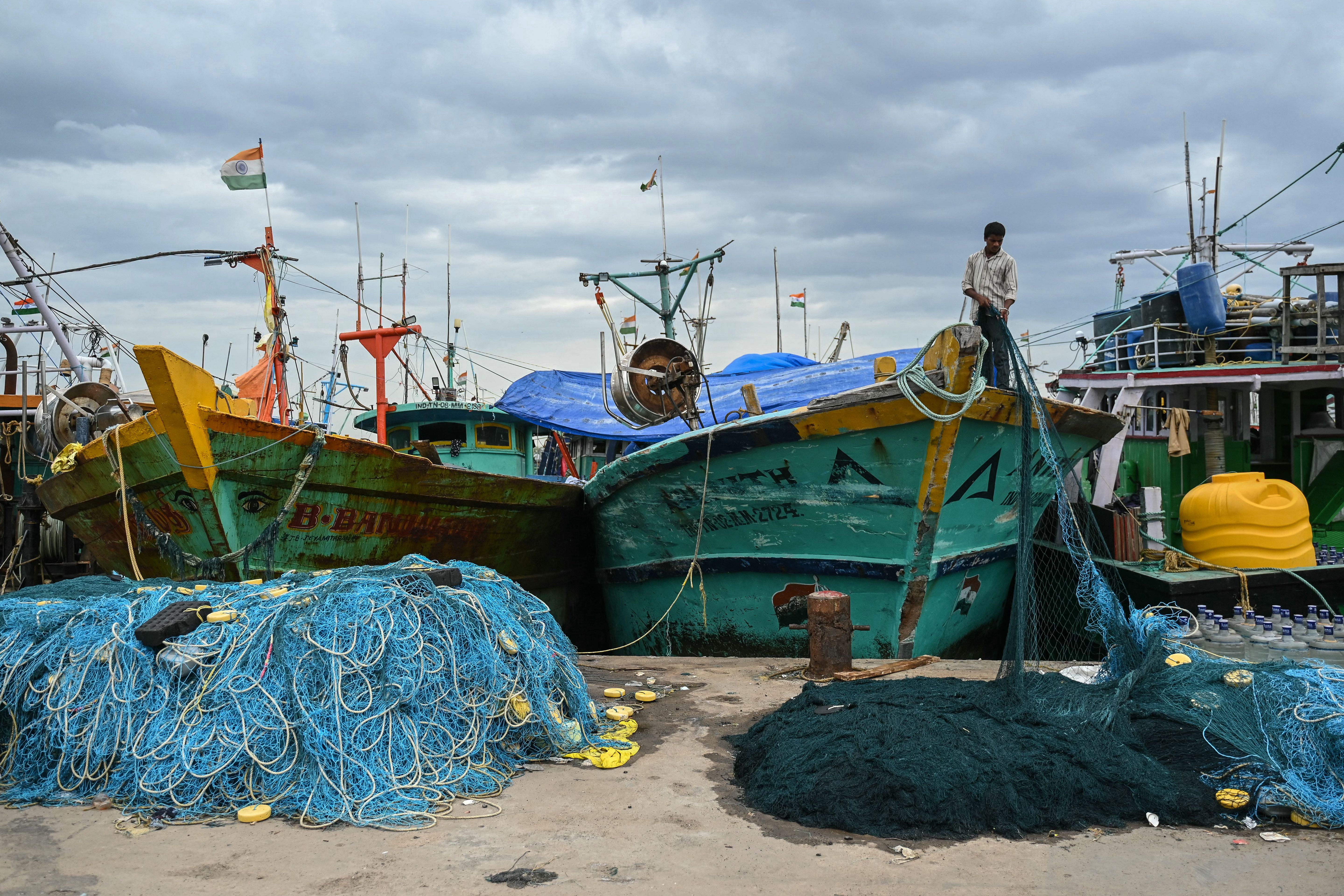
This article examines the scale and impact of Chinese IUU fishing operations globally and identifies the nature of the challenge posed by IUU fishing in the Indian Ocean Region (IOR). It also investigates why existing maritime law and international frameworks have struggled to address this growing threat.

Ajay Kumar, Charukeshi Bhatt