

In The Media
John Judis
{
  "authors": [
    "John Judis"
  ],
  "type": "legacyinthemedia",
  "centerAffiliationAll": "",
  "centers": [
    "Carnegie Endowment for International Peace",
    "Carnegie Russia Eurasia Center"
  ],
  "collections": [],
  "englishNewsletterAll": "",
  "nonEnglishNewsletterAll": "",
  "primaryCenter": "Carnegie Endowment for International Peace",
  "programAffiliation": "",
  "programs": [],
  "projects": [
    "Eurasia in Transition"
  ],
  "regions": [
    "North America",
    "United States"
  ],
  "topics": [
    "Security",
    "Religion"
  ]
}
Source: Getty
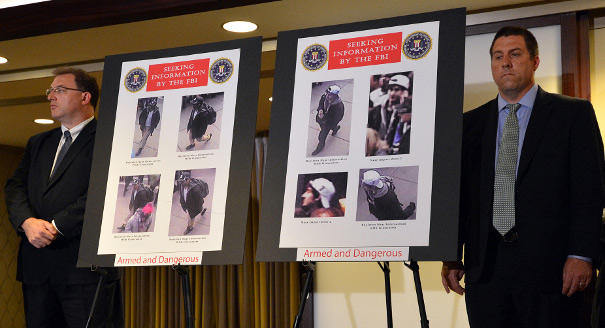
Islam may not have been the primary motivation behind the Tsarnaev brothers’ bombing in Boston; what they wanted was to make headlines.
Source: New Republic
Olivier Roy has a different view of radical Islam from many of the experts you find writing in the American press. Roy, now 63, first went to Central Asia as a 19-year-old high school dropout, but eventually become a leading expert on Islamic politics. He has been a consultant to the French Foreign Ministry and United Nations and is currently a professor at the European University Institute in Florence, Italy. Several of his books are landmarks in the field, including The Failure of Political Islam and Globalized Islam: The Search for a New Ummah.
Roy’s view is relevant in understanding the alleged Boston marathon bombers. A decade ago, Roy was pointing out that al Qaeda was drawing many of its recruits from Western Europe rather than from Saudi Arabia or Palestine or Pakistan. He saw al Qaeda as a product of the failure of Arab nationalism and Marxism-Leninism to establish viable popular societies. Its tactics and outlook derived from the Red Army Faction or Red Brigades or the secular Popular Front for the Liberation of Palestine rather than from the Koran or from religious factions within Islam. Al Qaeda, Roy wrote in The Illusions of September 11, is “a junction of a radicalized Islam with a shrill anti-imperialism reshaped by globalization.”
Accordingly, Roy rejected the idea that al Qaeda’s adherents in Europe were simply products of Islam and that their motivation should be seen as religious. Instead, he believed, they sought what he called an “imaginary Ummah,” a radical community of belief that was not strictly speaking part of the ordinary world of Islamic belief. That’s where I thought Roy’s analysis might be relevant to understanding Boston and the Tsarnaev brothers.
It seemed to me that the suspected brothers could be understood as further extensions of Roy’s thesis. Like the Fort Hood terrorist, Nidal Malik Hasan, they don’t appear to be products of organized religion or organized politics. They represent, in effect, the reductio ad absurdum of al Qaeda’s global politics, which never had a realistic objective to begin with. A new caliphate? With Hasan or the Tsarnaevs, the act itself becomes the objective – an awful theaterical spectacle in which the terrorists are directors and stars. I called Roy to ask him about Boston, and here is what he said:
I wanted to ask you about the two brothers, Tamerlan and Dzhokhar Tsarnaev, who allegedly set off the two bombs at the Boston Marathon. In your book, Globalized Islam, you recounted how many terrorists who act in the name of Islam were brought up in Western Europe rather than in the Middle East and who are often provoked by events outside the Middle East. Are these two brothers, who were largely raised in the United States, more evidence for your thesis?
Yes, my idea from the beginning was that Al Qaeda and the people who used the mark of Al Qaeda were not really concerned with the core—with the Middle East, the Middle East of Palestine. They were more concerned by the periphery of the Middle East than the core of the Middle East. They were usually more concerned with Bosnia and Afghanistan, Chechnya at the end of the ‘90s; it is now Mali, Mauritania and Yemen, which is the only place where they are strong. Most of these guys have a global trajectory, they were born in one place, they go to fight somewhere else. These guys were born in Kyrgyzstan, they went to Dagestan, they speak Russian, they came to the United States very young, they were educated in the United States, they speak English without an accent and so on.
And they seemed to have discovered Islam in the United States rather than in Dagestan or Kyrgyzstan?
Same thing with Mohammed Merah, the killer in Toulouse last year. They are self-radicalizing in a Western environment.
In your book, and also in your previous book on political Islam, you describe a transition from the nationalist and Marxist-Leninist movements in the Middle East after World War II to a stateless movement like Al Qaeda. Now we have something beyond that, where the terrorists may not even belong to, or be under orders from a specific group, but may only have been influenced by a radical preacher they heard. I am thinking of the Army Major Nidal Malik Hasan who killed thirteen people at Fort Hood in 2009.
Yes, globalization and individualization are the two terms. Instead of organization, they connect through the Internet. They connect to a virtual Ummah not to a real society. For instance, most of them didn’t socialize in a Western community. They may have gone to mosques, but they were never an integral part of a congregation, they have no real life, social life. Their social life is through the Internet, all of them.
That seems very characteristic of the older brother Tamerlan. The only connection to any organized movement is that he went back to Dagestan in 2012.
Of course, the security services are looking to find the thread. And many of the security people are convinced there should be a thread, but it doesn’t seem to be the important thing. They may find a connection here and there, of course. The decision to become radical, the decision to become a terrorist, and the planning of the coup is their own. They didn’t get instruction, do this and that at this time.
There might have been a motive, but it is not clear they had a strategy for affecting history.
No, they want to make headlines. That’s the point. They want to become a hero. It’s why I compare them with many of the guys who did the Columbine sort of terrorist attacks against a school. They were very young guys, probably loners and slightly suicidal. They want to end in beauty, they want to do something extraordinary.
What would you say to someone who said these attacks were the product of the spread of Islam globally?
The main motivation is not religious. Most of the guys, they were normal, they were not especially religious. One of them who went to Tehran became religious. It is not the process of Islamicization, through going to mosque, through studying the Koran. They go for action, they take the al Qaeda thing because If you do that in name of Al Qaeda, you will have a far hotter act than if you do that in the name of something else. They are disconnected in fact from the Muslim community. Many security officials thought the best way to spot these guys was to use the local Muslim communities to control the radical mosques, to engage mainstream imams to ask for help. And most of them comply with that, they want to help but they can’t comply because they guys are not part of these communities. They are loners. And that is the big problem of Muslim mainstream communities. They don’t know what to do. Strictly speaking, they have no access to these guys. That’s a big problem.
This article was originally published by the New Republic.
Former Visiting Scholar
As a visiting scholar at Carnegie, Judis wrote The Folly of Empire: What George W. Bush Could Learn from Theodore Roosevelt and Woodrow Wilson.
Recent Work
John Judis
John Judis
Carnegie India does not take institutional positions on public policy issues; the views represented herein are those of the author(s) and do not necessarily reflect the views of Carnegie, its staff, or its trustees.

In any defense establishment, change is an ongoing process. However, despite the best of intentions, existing bureaucracies, bound by habit and years of socialization, have their limits in implementing transformative change.

Anit Mukherjee

How is AI reshaping space security, creating governance challenges, and where does international diplomacy stand today?


Tejas Bharadwaj, Almudena Azcárate Ortega

After the chill in ties between 2020 and 2024 that brought India–China relations to their lowest point in several decades, the two countries have engaged each other afresh. This paper argues that there are predominantly four imperatives guiding India’s approach to China, and they exist in an order of priority.

Saheb Singh Chadha

The U.S.–India semiconductor cooperation story is well-stocked with top-level strategic intent. What remains unresolved, however, are some underlying challenges that will determine whether the cooperation actually functions. Three such friction points stand out.

Shruti Mittal

This piece argues that the present Indian strategy, based on opportunistic diversification and utilization of limited strategic reserves, remains inadequate when confronting supply disruptions. It evaluates India’s options in the short, medium, and long terms.

Vrinda Sahai