

Commentary
Nathalie Tocci, Jan Techau
{
  "authors": [
    "Jan Techau"
  ],
  "type": "other",
  "centerAffiliationAll": "",
  "centers": [
    "Carnegie Endowment for International Peace",
    "Carnegie Europe"
  ],
  "collections": [],
  "englishNewsletterAll": "",
  "nonEnglishNewsletterAll": "",
  "primaryCenter": "Carnegie Europe",
  "programAffiliation": "",
  "programs": [],
  "projects": [],
  "regions": [
    "Asia",
    "Europe",
    "East Asia",
    "China",
    "Western Europe",
    "Germany"
  ],
  "topics": [
    "Foreign Policy",
    "EU",
    "Economy",
    "Trade"
  ]
}
Source: Getty
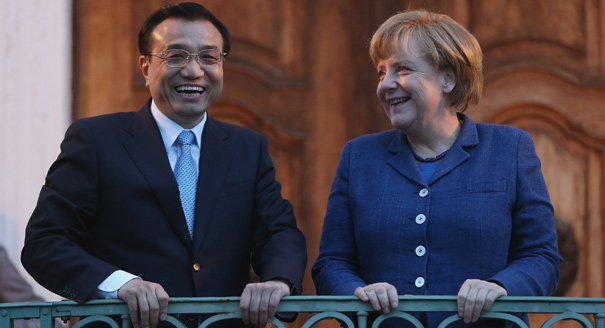
Germans and Europeans at large are in a very similar economic situation to the Chinese in many ways.
Source: Global Times
China sees Germany as having a strong dominating role and as the key power in Europe. It sees Germany as the country with which China has the strongest trade relationship in Europe.
China has for a long time dealt with Europe primarily though the member states, not so much through Brussels. When it looks at the member states and it has to pick only one, it picks Germany.
Trade concerns are by far the biggest concerns in the Sin0-German relationship. China is very smart in realizing that Germany is not a geopolitical player plays a big role in the Middle East or the Eastern Europe, or in Asia or in Africa. But it's a player in its development agenda.In fact, China is looking at Europe as a whole, not so much as a geostrategic player. The Chinese don't see Europe as a power that is a global power in its power projection reach, they see Europe primarily as an economic force, a financial force and trade force.
This is why the economic relationship is by far the most dominant. So the geopolitical interests of Europe are much smaller than the trade influence.
However, there are risks there with the bilateral relationship getting increasingly close, especially in the trade field.
Trade policies in Europe are truly communalized policy, which means individual countries don't have trade policies anymore. The trade policies are negotiated by the EU for all its member states.
However, when it comes to foreign direct investments and specific kinds of investments agreements, individual countries could still cultivate their relationship with China.
Germany is in a good position because it's such a strong exporter. That Germany feels strong enough to try to impose some of its own interests on Europe creates frictions on the European side.
Germans and the Europeans at large are in a very similar situation to the Chinese in many ways. Both Chinese and Europeans rely on a global system that we don't ourselves guarantee. We are not the ones who keep it in place. Somebody else does that, and it's the US for the most part.
But as the US is getting weaker, both the Chinese and Europeans are asked to become pillars of the system. We are both facing a strategic dilemma. Both China and Europe need to become stronger stakeholder, but at the same time, both are tied down by domestic constraints.
Currently, the European crisis makes many European countries focus on how to survive. Both leaderships are very much inward looking, but there is a strong demand in the outside to become more globalized, not only economically but politically.
Director, Europe Team, Eurasia Group
Techau is director with Eurasia Group's Europe team, covering Germany and European security from Berlin. Previously, he was director of Carnegie Europe.
Recent Work

Nathalie Tocci, Jan Techau
Jan Techau
Carnegie India does not take institutional positions on public policy issues; the views represented herein are those of the author(s) and do not necessarily reflect the views of Carnegie, its staff, or its trustees.

After the chill in ties between 2020 and 2024 that brought India–China relations to their lowest point in several decades, the two countries have engaged each other afresh. This paper argues that there are predominantly four imperatives guiding India’s approach to China, and they exist in an order of priority.

Saheb Singh Chadha

This piece argues that India’s central challenge is not managing a single flashpoint but resolving the underlying tension between expansion and institutional coherency of the BRICS grouping.

Vrinda Sahai
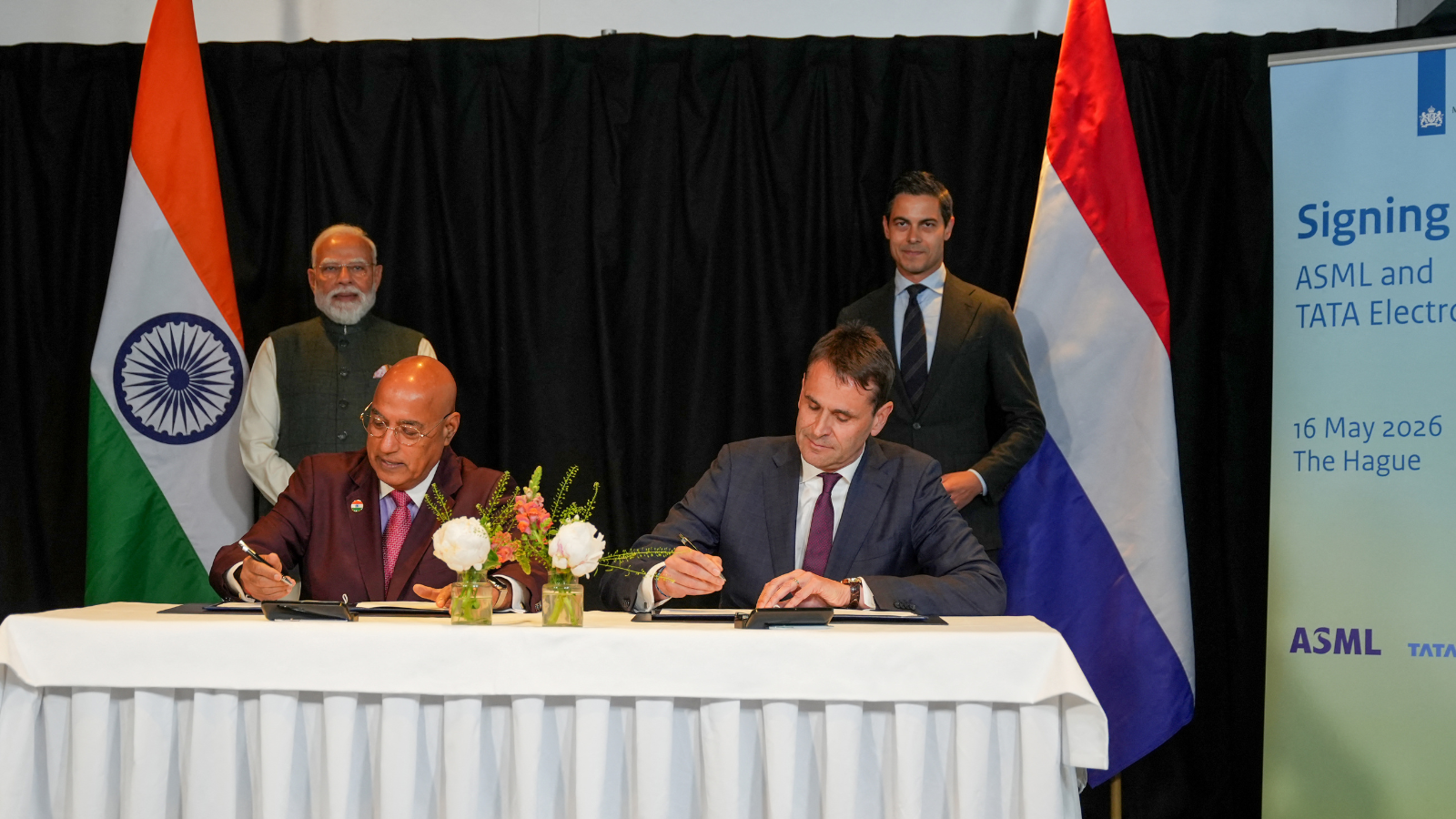
The ASML MoU with Tata Electronics is an indicator of how far the Indian semiconductor ecosystem has come. This ecosystem has been years in the making and represents real commercial logic.

Konark Bhandari

A partnership between India, a country of subcontinental size, and Africa, a continent of fifty-four countries, may seem asymmetric until one notes that both are home to nearly the same number of people—1.4 billion. This essay spells out the existing challenges to the partnership, its optimal potential, and the possible pathways to realize it over the next quarter-century.

Rajiv Bhatia

The India–EU Free Trade Agreement (FTA) is shaping up to be one of the most consequential trade negotiations, both economically and strategically. But, what’s in the agreement, what’s missing, and what will determine its success in the years ahead
Vrinda Sahai, Nicolas Köhler-Suzuki