

Article
Deborah Gordon, Stephen D. Ziman
{
  "authors": [
    "Deborah Gordon"
  ],
  "type": "legacyinthemedia",
  "centerAffiliationAll": "dc",
  "centers": [
    "Carnegie Endowment for International Peace"
  ],
  "collections": [],
  "englishNewsletterAll": "ctw",
  "nonEnglishNewsletterAll": "",
  "primaryCenter": "Carnegie Endowment for International Peace",
  "programAffiliation": "SCP",
  "programs": [
    "Sustainability, Climate, and Geopolitics"
  ],
  "projects": [
    "Carnegie Oil Initiative"
  ],
  "regions": [
    "North America",
    "United States"
  ],
  "topics": [
    "Climate Change"
  ]
}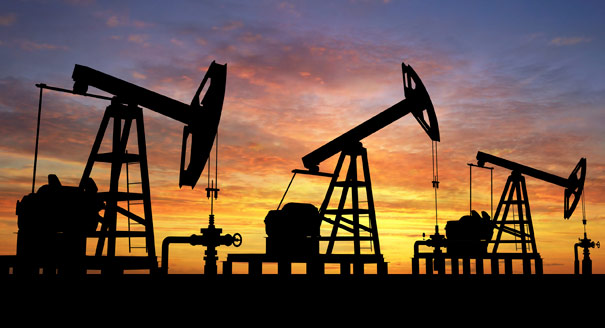
Source: Getty
Filling information gaps, developing robust energy policies, and ultimately pricing carbon will be critical to managing the unconventional oil and gas boom.
Source: Scientific American
Unconventional oil and gas plays are becoming the new normal. At current market prices technically recoverable oil reserves are transformed—58 percent of today’s oils require unconventional extraction techniques or have entirely different physical and chemical characteristics than yesterday’s crude oil. Looking to the future, at a minimum, the oil in place globally could amount to 24 trillion barrels, three-quarters of which is unconventional. At current consumption levels, that’s enough oil to last 500 years.
Natural gas is also caught up in this resource reversal. The so-called shale gale brought on by hydraulic fracturing and horizontal drilling is overfilling American stocks. A decade ago there were 27 liquefied natural gas (LNG) import terminals in the planning stages and U.S. LNG imports were forecast to rise from 5 percent to 39 percent by 2010. Today there are 15 permit applications before the U.S. government to convert LNG import terminals to export LNG to Europe and Asia.
In addition to shale gas, there is growing awareness that massive quantities of methane hydrates are buried in hundreds of confirmed deposits in permafrost zones and marine sediments on the seabed. Some estimate that reserves of natural gas trapped in this frozen water the consistency of sherbet could contain up to 15 times the amount of gas as the world’s shale deposits and supplies could be twice as large as all other fossil fuels combined. The U.S. has been doing research in this area since the 1980s and Japan is currently leading the charge.Beyond the prospect of unfettered energy markets driving breakthrough technologies that unlock bounties of oil and gas which will need to be managed, there is a more shocking situation to contemplate.
It’s conventional wisdom that coal, oil, and gas are derived biologically from microbes fermenting ancient fossil life forms. Historically it has required millennia for fossils to turn into fuel feedstocks. But technology is being developed to accelerate time by rapidly transforming organic matter—undercooked kerogen in sedimentary rocks—into oil.
In addition to this non-renewable, prehistoric cache of fossil fuels, the Earth may actually be producing natural gas. In other words, we may actually be living on a natural gas machine. The meteorites that crashed, forming our planet, contained carbon along with simple hydrocarbons like methane. The heat in the Earth’s core is thought to liberate this primitive methane trapped in rocks. This outgassing may explain why there are lakes of liquid methane on Saturn’s moon. There is a theory that oil as well may be regenerating by chemical reaction. Ultra-deep supplies that may not have been created by biochemical processes are thought to serve as evidence.
The Earth may be like a sponge, filled with hydrocarbons that were formed together with the other substances of the deep Earth about four billion years ago. The theory goes, what we mistakenly call “fossil fuels” are a virtually unlimited resource from Earth’s deep interior.
If the current unconventional oil and gas boom tells us anything, it’s that there still remains a lot to be discovered about the fundamentals of hydrocarbon resources. Serious knowledge deficiencies also exist when it comes to the societal impacts of extracting, processing, and burning fossil fuels. These gaps in knowledge must be closed in order to find a way to balance the enormous economic value that oil and gas promise with the equally massive threats they could pose to the world’s already-at-risk climate and local environments.
Fossil fuels must be thought about in a whole new way. That will involve uncovering unknowns and investigating the technological, climate, economic, geopolitical, and policy uncertainties surrounding the twenty-first century of oil and gas. It will require new rules for new fuels. Now is the time to structure the role oil and gas supplies will play in the world’s collective energy future. Filling information gaps, developing robust energy policies, and ultimately pricing carbon will be critical.
This article was originally published in Scientific American.

Former Director and Senior Fellow, Energy and Climate Program
Gordon was director of Carnegie’s Energy and Climate Program, where her research focuses on oil and climate change issues in North America and globally.
Recent Work
Deborah Gordon, Stephen D. Ziman
Deborah Gordon, Smriti Kumble, David Livingston
Carnegie India does not take institutional positions on public policy issues; the views represented herein are those of the author(s) and do not necessarily reflect the views of Carnegie, its staff, or its trustees.

How is AI reshaping space security, creating governance challenges, and where does international diplomacy stand today?


Tejas Bharadwaj, Almudena Azcárate Ortega

The U.S.–India semiconductor cooperation story is well-stocked with top-level strategic intent. What remains unresolved, however, are some underlying challenges that will determine whether the cooperation actually functions. Three such friction points stand out.

Shruti Mittal

India and the United States are close to concluding a Reciprocal Defense Procurement Agreement (RDPA) that will allow firms from the two countries to sell to each other’s defense establishments more easily. While this may not remedy the specific grievances both sides may have regarding larger bilateral issues, an RDPA could restore some momentum, following the trade deal announcement.

Konark Bhandari

On the last day of the India AI Impact Summit, India signed Pax Silica, a U.S.-led declaration seemingly focused on semiconductors. While India’s accession to the same was not entirely unforeseen, becoming a signatory nation this quickly was not on the cards either.
Konark Bhandari

This piece examines India’s response to U.S. sanctions and tariffs, specifically assessing the immediate market consequences, such as alterations in import costs, and the broader strategic implications for India’s energy security and foreign policy orientation.

Vrinda Sahai