

In The Media
Lilia Shevtsova
{
  "authors": [
    "Lilia Shevtsova"
  ],
  "type": "commentary",
  "centerAffiliationAll": "",
  "centers": [
    "Carnegie Endowment for International Peace",
    "Carnegie Russia Eurasia Center"
  ],
  "collections": [],
  "englishNewsletterAll": "",
  "nonEnglishNewsletterAll": "",
  "primaryCenter": "Carnegie Russia Eurasia Center",
  "programAffiliation": "",
  "programs": [],
  "projects": [],
  "regions": [
    "Russia",
    "Western Europe",
    "Germany"
  ],
  "topics": [
    "Political Reform",
    "Foreign Policy"
  ]
}
Source: Getty
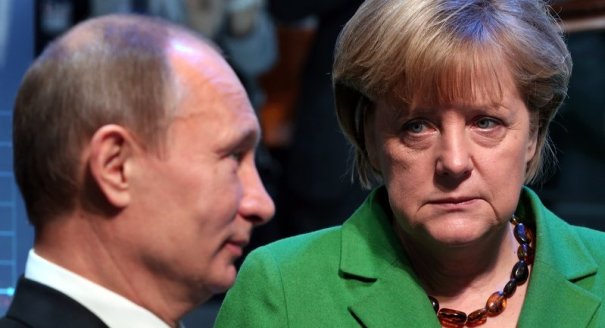
The negotiations on a grand coalition in the Bundestag between the Christian Democrats and the Social Democratic Party are underway, and it is not even clear who will be responsible for the foreign policy. Meanwhile, the current German policy on Russia, which has not changed regardless of who the chancellor may have been, can be summed up as follows, “Berlin must not irritate the Kremlin.”
The United Europe? Brussels? Forget about them. Brzezinski is right when he describes the EU as a “geriatric ward.” At least the EU policy on Russia is that of a geriatric ward. At this time, the choice that Germany will make is important to Russia. Will it continue to maintain its role of “an economic giant and a political dwarf,” as another political guru Henry Kissinger put it? Or perhaps Berlin will dare to take a more active role on the world stage? If the latter is to happen, will Berlin change its stance on Russia?
When I ask my German friends if the German stance on Russia will change, they keep telling me that there is no news on that front so far. The negotiations on a grand coalition between the Christian Democrats and the Social Democratic Party (SPD) are underway, and it is not even clear who will be responsible for the foreign policy. Meanwhile, the current German policy on Russia, which has not changed over the years regardless of who the chancellor may have been, can be summed up as follows, “Berlin must not irritate the Kremlin. Berlin may not jeopardize its economic ties with Moscow.”
Granted—some changes in Berlin’s attitude toward Russia are taking place. The Bundestag members—not only the Greens but also the ruling Christian Democrats—are now more critical of the Russian regime. Chancellor Merkel has at times been lukewarm when talking to Putin. But despite the rhetorical nuances and lack of chemistry between the two leaders, the substance of the bilateral relations has remained the same. Germany is still trying not to irritate the Kremlin and is not raising the normative issues. For its part, the Kremlin continues to use Germany to advance its interests and thwart any European initiatives which may contradict these interests.
But if the grand coalition between the Merkel party and the SPD does take shape, the Social Democrats may end up with either the Finance Minister or the Foreign Minister post, as has been the case in the past. The latter plays an important role in formulating foreign policy. So what will the Social Democrats contribute to Germany’s foreign policy? Most certainly, we are in for its continued “Schroederization”—that is the policy of embracing the Kremlin exemplified by the former Chancellor Gerhard Schroeder, who is currently a well-compensated official on Putin’s payroll. We are in for the legacy of Frank-Walter Steinmeier, former foreign minister during the last grand coalition, the most ardent advocate of the German embraces with Putin. It would mean pursuing the tradition of the Social Democrats’ foreign policy experts, like Gernot Erler, and their permanent mantra of “ending Russia-bashing,” which refers to the criticism of Putin’s regime.
Evidently, the very same Steinmeier—the Schroederization pulpiteer—has some chances to become the foreign minister. SPD leader Sigmar Gabriel, whose views on German-Russian relations are totally unknown, is another candidate. But considering German preference for the status quo, one may assume that Gabriel will continue the legacy of Schroederization. There are reasons to believe that under the SPD leadership, the German foreign ministry, which Daniel Brössler of Süddeutsche Zeitung called “a bastion of Russia sympathizers,” will continue its Ostpolitik approach.
Hans Kundnani of the European Council on Foreign Relations has recently come up with an interesting analysis. He explained that the German policymakers are distorting the substance of the policy once pursued by Willy Brandt and Egon Bahr in the 1970’s limiting it today to trade and economic exchange and hoping that this will bring “societal change” in the authoritarian societies.
Let me quote from Kundnani: “German policymakers should forget Ostpolitik and instead face up to the difficult questions thrown up by today’s interdependent, multipolar world.”
I would argue that one of the questions that arise in this world is how to promote liberal values and how to prevent the authoritarian regimes from using the West to promote their agenda?
Of course, one may hope that the disagreements between Merkel and her administration and the Foreign Ministry on the issue of Russia will continue. But will they facilitate the development of the new approach to Russia—the approach that will no longer legitimate the Putin regime? I doubt it.
Someone might retort that the foreign minister that represented the Green Party can hardly change the situation, citing the case of Joschka Fischer, under whose watch the Schroederization appeared.
This is all true, but I am torn by the question of why of all the political forces the German Social Democrats became the ones to establish and promote the most blatant policy of placating the corrupt Russian regime?
Let us hope that we are now entering a new stage when the German government will at least feel uncomfortable, if not ashamed, to embark on another round of Schroederization. Let us hope that Berlin will understand that engaging Russia does not mean creating favorable conditions for the corrupt Russian regime, nor does it allow the German politicians and businesspeople to act as rentiers in the regime’s shady deals.
Let us hope that the new coalition will set another goal for itself. This is how Ulrich Speck defined it: “…to lead on a new EU approach toward Russia that has become much more autocratic internally and more challenging in its attitude toward the West.”
Let us hope that Berlin will understand that there is another Russia, besides the Russia of Putin and Kremlin. This is not the Russia which was represented at the German-Russian St. Petersburg Dialogue. But this is the Russia of the future. Does Berlin really want this Russia to perceive Germany as Putin’s loyal partner and supporter?
Former Senior Associate, Russian Domestic Politics and Political Institutions Program, Moscow Center
Shevtsova chaired the Russian Domestic Politics and Political Institutions Program at the Carnegie Moscow Center, dividing her time between Carnegie’s offices in Washington, DC, and Moscow. She had been with Carnegie since 1995.
Recent Work
Lilia Shevtsova
Lilia Shevtsova
Carnegie India does not take institutional positions on public policy issues; the views represented herein are those of the author(s) and do not necessarily reflect the views of Carnegie, its staff, or its trustees.

This piece examines India’s response to U.S. sanctions and tariffs, specifically assessing the immediate market consequences, such as alterations in import costs, and the broader strategic implications for India’s energy security and foreign policy orientation.
Vrinda Sahai
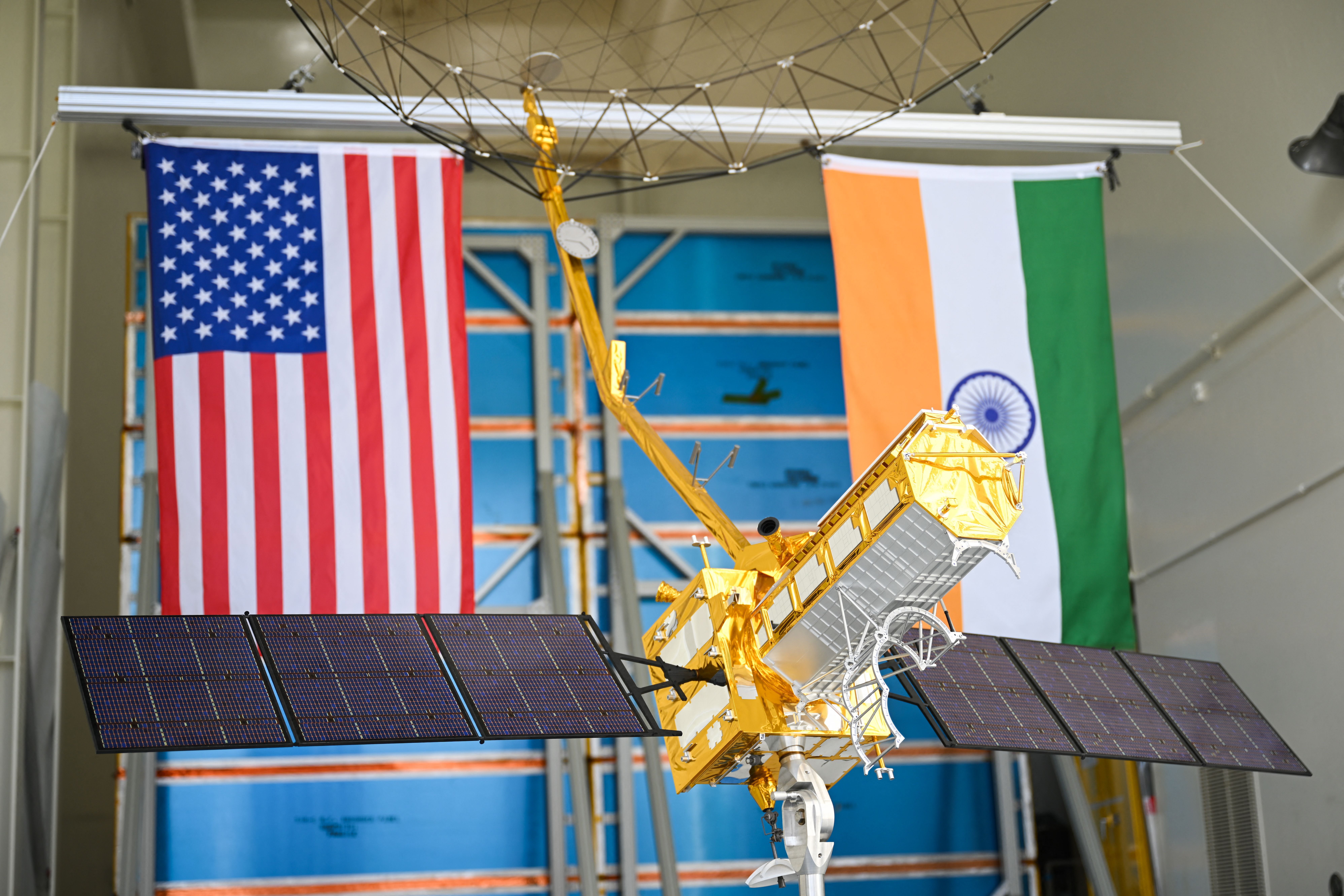
On July 30, 2025, the United States announced 25 percent tariffs on Indian goods. While diplomatic tensions simmered on the trade front, a cosmic calm prevailed at the Sriharikota launch range. Officials from NASA and ISRO were preparing to launch an engineering marvel into space—the NASA-ISRO Synthetic Aperture Radar (NISAR), marking a significant milestone in the India-U.S. bilateral partnership.

Tejas Bharadwaj
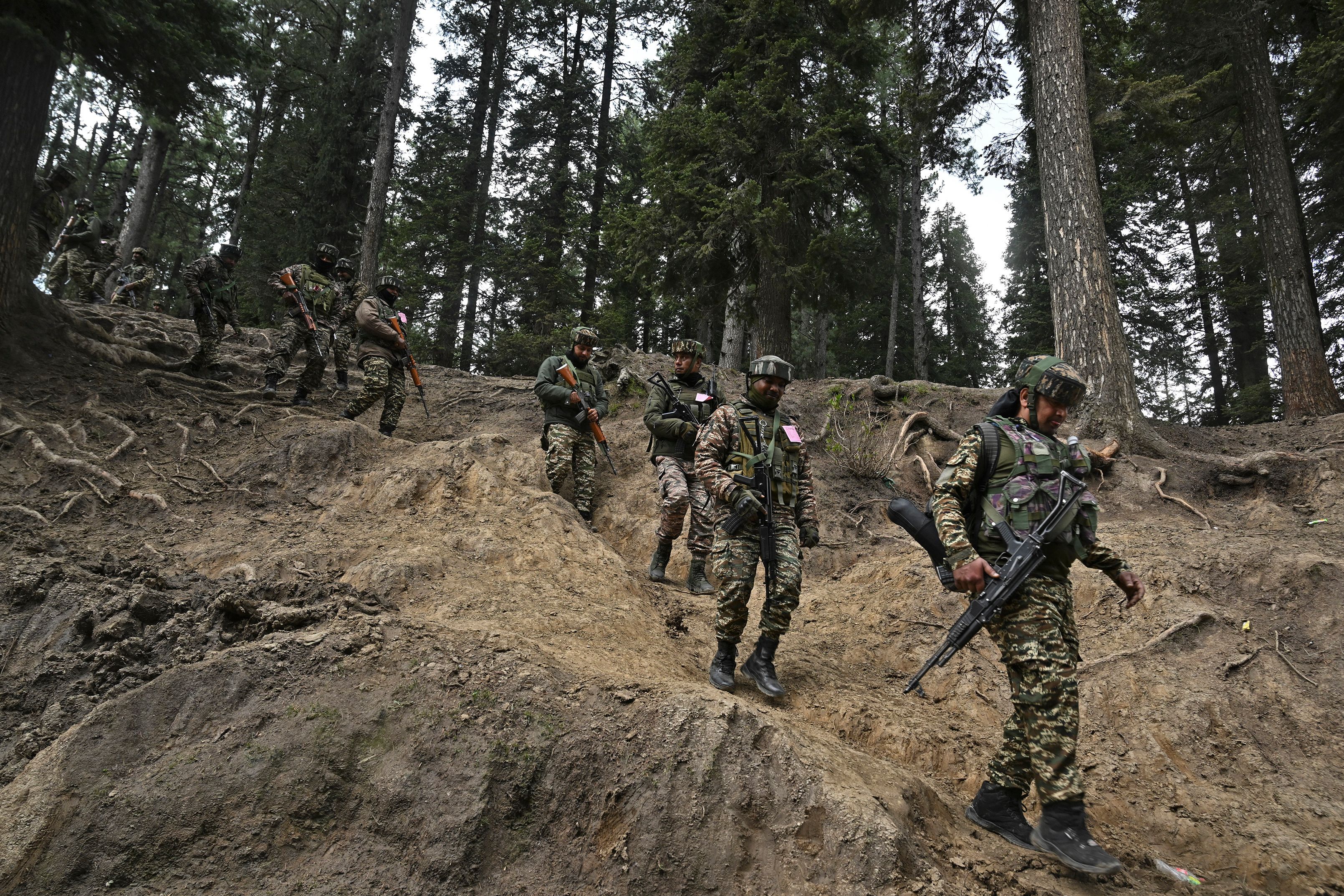
On May 7, 2025, between 1:05 and 1:30 a.m. (IST), airstrikes carried out by the Indian Air Force hit nine locations inside Pakistan and Pakistan occupied Kashmir (PoK). It was codenamed Operation Sindoor.

Rudra Chaudhuri

This compendium brings together three essays by scholars who participated in Carnegie India's Security Studies Dialogue in 2024, each examining a different aspect of China’s policies. Drawing on their expertise and research, the authors offer fresh perspectives on key geopolitical challenges.
Vijay Gokhale, Suyash Desai, Amit Kumar, …

As part of the TRUST initiative, leaders of the two countries committed to building trusted and resilient supply chains, including for semiconductors and critical minerals. India and the United States have made steady progress in this area over the years. This essay explores the takeaways from discussions on semiconductor supply chains that took place at Carnegie India’s 9th Global Technology Summit.

Konark Bhandari