

In The Media
Lilia Shevtsova
{
  "authors": [
    "Lilia Shevtsova"
  ],
  "type": "commentary",
  "centerAffiliationAll": "",
  "centers": [
    "Carnegie Endowment for International Peace",
    "Carnegie Russia Eurasia Center"
  ],
  "collections": [],
  "englishNewsletterAll": "",
  "nonEnglishNewsletterAll": "",
  "primaryCenter": "Carnegie Russia Eurasia Center",
  "programAffiliation": "",
  "programs": [],
  "projects": [],
  "regions": [
    "Russia"
  ],
  "topics": [
    "Political Reform",
    "Civil Society"
  ]
}
Source: Getty
The values put forward by Putin are not traditional values, but rather their imitations. These false offerings can only discredit the new values of freedom, solidarity, and mutual help that are taking root among some segments of the Russian population.
When debate starts on national identity, one can be sure: something wrong is happening with the country starting the debate. Either the society feels unhappy with how it is ruled, or the elite does not know where to lead the nation, or both. National identity crisis is not the tradition of only the transitional societies or societies lost in transition. Look at Europe: you will hardly find a nation today that is not thinking about its identity, trying to sort it out in times of globalization and massive migration that sweeps over the continent.
Russia demonstrates an example of a nation that dwells upon its national identity for centuries, and this has become its elites’ national hobby. Every time the Russian society faces a problem, the Kremlin starts a new campaign in search of a national identity. Putin returned to the national identity issue in 2012 and again at the Valdai Forum in September 2013, which has reconfirmed the axiom: Russia is again facing problems and the authorities are again trying to solve them by turning to a national identity search.
The Kremlin’s logic is transparent: it would be less threatening for the regime, the authorities apparently believe, if the society gets engaged in a new discussion on “Who are we?” than continues criticizing the authorities for corruption, helplessness, and pathetic governance. However, the model of the new “national identity” that Putin is offering Russia is devastating for the country. The national identity concept and the mechanisms that ought to strengthen it usually pursue the goal of consolidating the nation, increasing the feelings of “togetherness” among the people, and deepening the horizontal social networks. Vladimir Putin instead offers Russia to return to “traditional values” that in his view have been cementing the Russian civilization for centuries. The fact, however, is that the traditional values in Russia had been destroyed during the Stalin period. The Soviet nation that emerged in those times represented an artificial substance composed of individuals that lost ability or desire to create social ties. In fact, the Soviet and post-Soviet society—“the sand society”—is opposite to the Asian society. As Francis Fukuyama wrote in his brilliant essay “The Primacy of Culture,” the Asian society has succeeded to preserve “a deeply engrained moral code that is the basis for strong social structures and community life.” If Fukuyama is right, in Asia traditional authoritarian regimes could be relatively easily jettisoned and replaced “with variety of political institutions forms without causing the society to lose its essential coherence.”
This is not the case of Russia, which during the Soviet period lost social coherence. What Putin’s elite tries to offer Russia are not the traditional values, but their imitations, semblances that can only discredit the new values of freedom, solidarity, and mutual help that have started to take root among some segments of the Russian population. Putin’s “Russian national identity” has a clear agenda—undermine the process of transforming individuals into citizens and return the nation toward total submissiveness and the status of “poddanye,” that is the state slaves. The Russian authorities try to prevent any popular consolidation that could turn against the regime. We are dealing with a planned effort to push the nation to further degradation. The Kremlin team evidently believes that it would be easier to rule over a demoralized society. They forget the simple truth: society without norms and taboos inevitably turns into a Hobbesian society that follows predatory instincts. And the authorities can easily become victims of these instincts, too. Moscow rioting against corrupted police, local authorities, and migrants under nationalistic slogans on October 12 and 13 was a demonstration of how “national identity” is working in reality.
True, there is a glimpse of optimism at the end of this tunnel. The protest tide in Russia in 2011 and 2012 has proved that at least a part of the Russian population is ready to build its own national identity by opposing the state. But developing a new identity “code” from below—when the authorities from the top are trying to undermine all social cohesiveness—is a difficult process, indeed. The Asian society could have an easier fate.

Former Senior Associate, Russian Domestic Politics and Political Institutions Program, Moscow Center
Shevtsova chaired the Russian Domestic Politics and Political Institutions Program at the Carnegie Moscow Center, dividing her time between Carnegie’s offices in Washington, DC, and Moscow. She had been with Carnegie since 1995.
Recent Work
Lilia Shevtsova
Lilia Shevtsova
Carnegie India does not take institutional positions on public policy issues; the views represented herein are those of the author(s) and do not necessarily reflect the views of Carnegie, its staff, or its trustees.

This piece argues that India’s central challenge is not managing a single flashpoint but resolving the underlying tension between expansion and institutional coherency of the BRICS grouping.

Vrinda Sahai
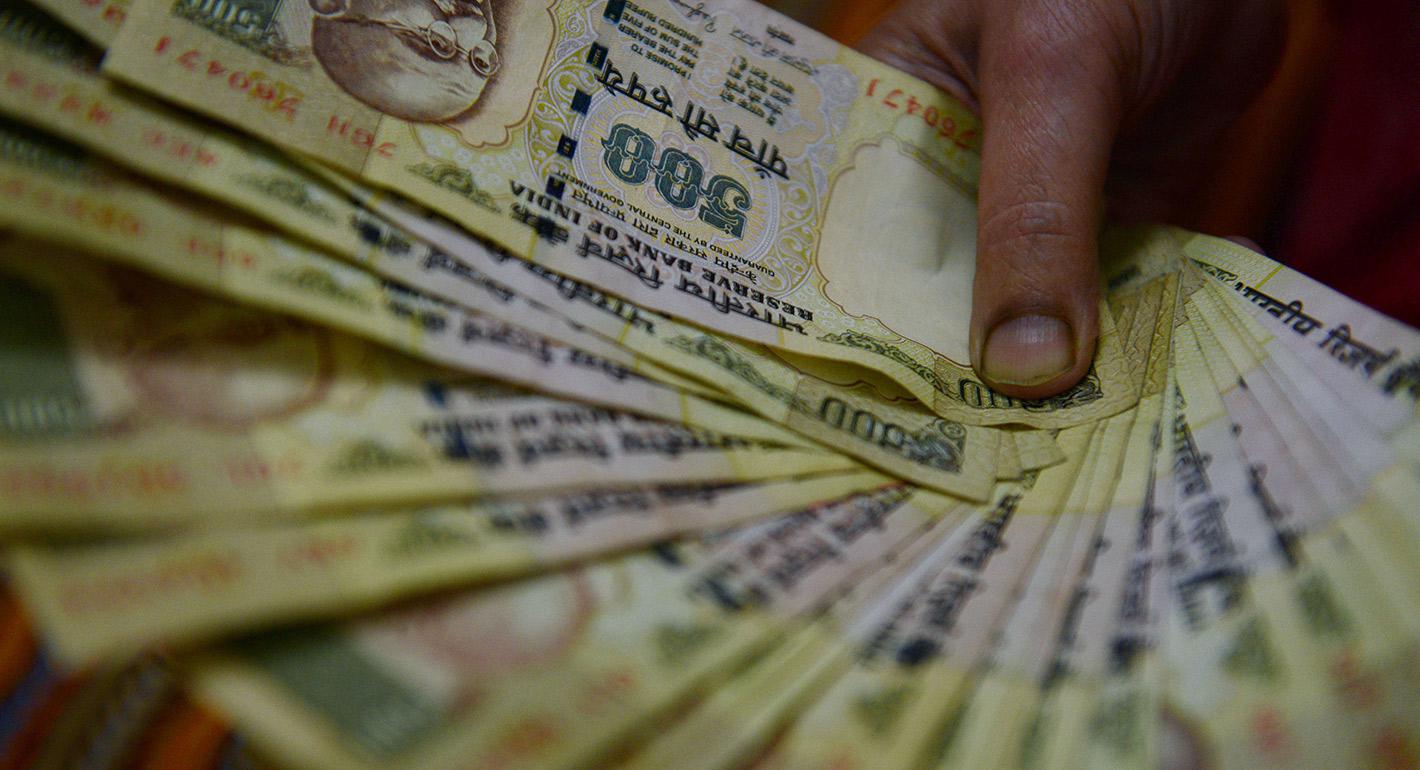
As India’s economy recovers from the coronavirus pandemic, Indian businesses need efficient financial structures to regain their ground. Key reforms to India’s Insolvency and Bankruptcy Code could fill these gaps.

Anirudh Burman

Access to cross-border data is an integral piece of the law enforcement puzzle. India is well placed to lead the discussions on international data agreements subject to undertaking necessary surveillance reforms.

Smriti Parsheera, Prateek Jha
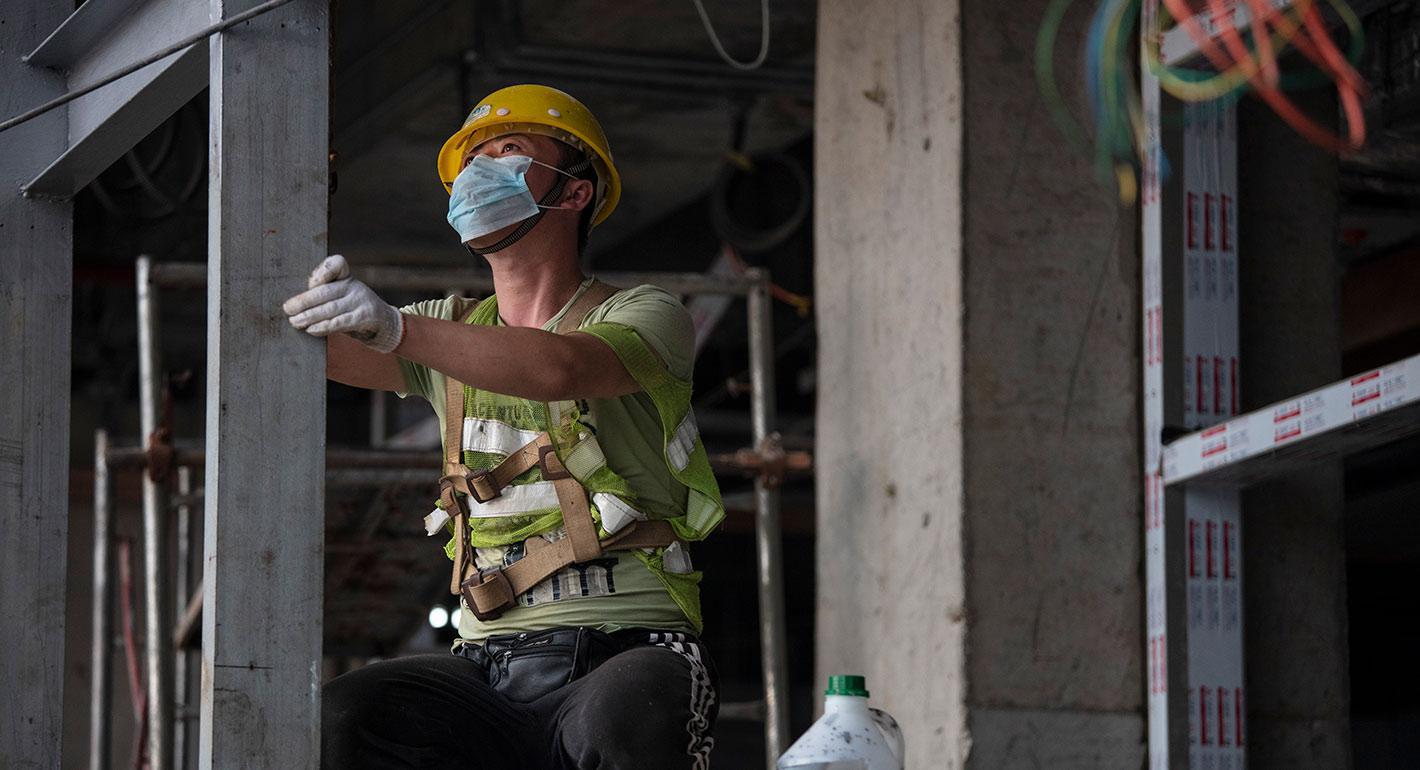
After the coronavirus pandemic wanes, how will China’s reorientation of the Belt and Road Initiative to address global health concerns influence its relationships with South Asian countries?
Deep Pal, Rahul Bhatia
Early in the outbreak, government researchers forecast several high-risk scenarios that were downplayed or ignored in public messaging.
Gautam I. Menon