

Q&A
Stephen Tankel
{
  "authors": [
    "Stephen Tankel"
  ],
  "type": "legacyinthemedia",
  "centerAffiliationAll": "dc",
  "centers": [
    "Carnegie Endowment for International Peace"
  ],
  "collections": [],
  "englishNewsletterAll": "ctw",
  "nonEnglishNewsletterAll": "",
  "primaryCenter": "Carnegie Endowment for International Peace",
  "programAffiliation": "SAP",
  "programs": [
    "South Asia"
  ],
  "projects": [],
  "regions": [
    "North America",
    "United States",
    "South Asia",
    "Pakistan"
  ],
  "topics": [
    "Security",
    "Military",
    "Foreign Policy"
  ]
}
Source: Getty
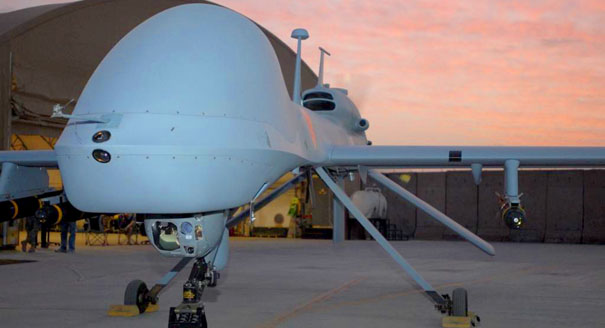
It is very unlikely that the U.S. decision to kill Hakimullah Mehsud will significantly set back U.S.-Pakistan relations, but drone strikes will remain an impediment.
Source: War on the Rocks
After a U.S. drone strike killed Baitullah Mehsud, the first leader of the Pakistani Taliban, in August 2009, I wrote that the decision to target him was low-hanging fruit. He was someone the United States and Pakistan could agree was a threat and killing him was a shared priority presumably worthy of an American breach of sovereignty. I also wrote that although one hoped his death could be a confidence building measure, the two countries had divergent strategic priorities and future targets would prove harder to agree upon. I did not imagine at the time, however, that killing Baitullah’s successor, a man responsible for the deaths of thousands of innocent Pakistanis, could trigger the type of anti-American backlash that occurred after a U.S. drone strike obliterated Hakimullah Mehsud last week.
Pakistan’s Interior Minister condemned the drone strike not only as a violation of sovereignty but also as an “attack on the peace process” in reference to the inchoate efforts to initiate a dialogue with the Pakistani Taliban. Imran Kkan, whose party heads the provincial government in Khyber Pukhtunkhwa, called for blocking NATO supply lines into Afghanistan. The United States and Pakistan have worked hard to repair their relationship since its 2011-12 nadir, when NATO supply lines were closed for nine months after the infamous Salala incident. It’s very unlikely that the U.S. decision to kill Hakimullah Mehsud will set back U.S.-Pakistan relations to the same degree, but equally obvious that drone strikes will remain an impediment. Yet the response to Hakimullah’s death says more about the disconnect between different actors in Pakistan over the causes of the insurgency and how to end it. This becomes obvious when we pose several important questions.Was this strike coordinated with Pakistan or unilateral? The short answer is we don’t know—or at least I don’t. Hakimullah was allegedly killed at a farmhouse purchased by Latif Mehsud, the Pakistani Taliban operative captured by the U.S. in Afghanistan last month where he was meeting with Afghan intelligence officers. It’s possible this was a tactical U.S. decision to kill Hakimullah, who we should recall was behind the deadly 2009 suicide bombing of a CIA base in Afghanistan. However, relations between the American and Pakistani security establishments have been on the mend and it’s questionable whether the U.S. would launch a strike against him without the Pakistani military’s knowledge and possibly its involvement. The Pakistani Taliban killed a serving Major General in the Pakistan army in mid-September and so one would not be surprised to find the higher echelons happy to extract some measure of revenge. Moreover, the military has been lukewarm to the idea of negotiations with the Pakistani Taliban and probably does not mind if they never come to fruition. Finally, it is worth noting that Nawaz Sharif had just finished his first official visit to Washington, DC since being elected Prime Minister. Whether he was informed and is kicking up a fuss for political reasons or was left in the dark is also unclear. Neither explanation is satisfying.
Would negotiations have been successful? If one defines success as an end to the insurgency in Pakistan without the government capitulating, then no. As I’ve written before, there is a widespread perception in Pakistan that the U.S. invasion of Afghanistan, pressure on Pakistan, and use of drone strikes catalyzed the insurgency. Hence, the notion that Pakistani Taliban members are sons of the soil who are reacting to the U.S. presence rather than committed jihadists who want to overthrow the regime in Islamabad and institute their version of Sharia. Many Pakistanis, including some in the security establishment, also believe that foreign powers (India, sometimes America, and, for good measure, Israel) are supporting the Pakistani Taliban. Leaving aside the conflict between these two narratives (and that if the latter conspiracy theory was actually true then the United States just killed one of its own or India’s proxies), the facts do not support these contentions.
The Pakistani Taliban is pursuing a revolutionary jihad intended to topple the government and pave the way for the implementation of Sharia. Hakimullah was pretty clear about this when he spoke to the BBC last month, explaining:
Friendship with America is only one of the two reasons we have to conduct jihad against Pakistan. The other reason is that Pakistan’s system is un-Islamic, and we want that it should be replaced with the Islamic system. This demand and this desire will continue even after the American withdrawal.
A formal delegation of Pakistani Ulema was reportedly planning to fly to Miramshah and extend a formal invitation for talks. Whether negotiations would have eventuated is unclear. Previous peace accords failed and if talks did begin then these probably would have foundered as well given the Pakistani Taliban’s maximalist stance and the fact that it was not operating from a position of weakness. The drone strike that killed Hakimullah probably either prevented or forestalled the inevitable failure of peace talks.
What are the politics behind this? The previous civilian government followed the military’s line on security-related issues, or at least created the appearance that they were in sync. Nawaz Sharif’s government has flexed its civilian authority, albeit cautiously, including by pursuing negotiations despite the fact that the military was not bullish about the prospects for peace talks. Sharif has pursued talks for several reasons worth noting—although there are certainly additional factors beyond these. First, the country is exhausted with war and momentum has built around the narrative of “give peace a chance” even though it does not stand a very good one. Second, like many other Pakistani elites he is keen to avoid escalating violence in the settled areas, especially Punjab province, which would likely result from a military offensive against the Pakistani Taliban. Third, Imran Khan poses a political challenge from the country’s religious right. He has been a big booster of peace talks and, more troublingly, the Pakistani Taliban. Pursuing talks and attacking America of drones are popular political stances. Ironically, the military is responsible for introducing the anti-drone narrative into the popular discourse and is widely suspected of supporting Imran Khan’s political campaign. For those interested, I’ve covered these issues in significantly greater depth here.
So should the United States have pulled the trigger? It’s difficult to argue that the world is not a better place without Hakimullah Mehsud and his death could create conditions for some of the groups under the Pakistani Taliban umbrella to split off and cut a separate deal. That said, for those who believe that peace talks were bound to fail it would have been far better for the US to hold its fire and enable them to do so. Their collapse could have helped mobilize support to take on the Pakistani Taliban. Instead, we’re served another round of conspiracy theories that the United States wants to see Pakistan in a perpetual state of war. Finally, this incident lays bare the challenges for Washington in terms of navigating the complex civil-military dynamic in Pakistan. Whereas Washington may have been on the same page as Rawalpindi, where the army is headquartered, it now appears out step with the civilian government in Islamabad. Whether that is really the case we may never know, but the optics are not pretty for either side.

Former Nonresident Scholar, South Asia Program
Tankel was a nonresident scholar at the Carnegie Endowment, where his research focuses on insurgency, terrorism, and the evolution of nonstate armed groups.
Recent Work
Stephen Tankel
Stephen Tankel
Carnegie India does not take institutional positions on public policy issues; the views represented herein are those of the author(s) and do not necessarily reflect the views of Carnegie, its staff, or its trustees.

In any defense establishment, change is an ongoing process. However, despite the best of intentions, existing bureaucracies, bound by habit and years of socialization, have their limits in implementing transformative change.

Anit Mukherjee

How is AI reshaping space security, creating governance challenges, and where does international diplomacy stand today?


Tejas Bharadwaj, Almudena Azcárate Ortega

After the chill in ties between 2020 and 2024 that brought India–China relations to their lowest point in several decades, the two countries have engaged each other afresh. This paper argues that there are predominantly four imperatives guiding India’s approach to China, and they exist in an order of priority.

Saheb Singh Chadha

This piece argues that India’s central challenge is not managing a single flashpoint but resolving the underlying tension between expansion and institutional coherency of the BRICS grouping.

Vrinda Sahai

A partnership between India, a country of subcontinental size, and Africa, a continent of fifty-four countries, may seem asymmetric until one notes that both are home to nearly the same number of people—1.4 billion. This essay spells out the existing challenges to the partnership, its optimal potential, and the possible pathways to realize it over the next quarter-century.

Rajiv Bhatia