

Article
- +1
Toby Dalton, Mark Hibbs, Nicole Grajewski, …
{
  "authors": [
    "Mark Hibbs"
  ],
  "type": "legacyinthemedia",
  "centerAffiliationAll": "dc",
  "centers": [
    "Carnegie Endowment for International Peace"
  ],
  "collections": [],
  "englishNewsletterAll": "ctw",
  "nonEnglishNewsletterAll": "",
  "primaryCenter": "Carnegie Endowment for International Peace",
  "programAffiliation": "NPP",
  "programs": [
    "Nuclear Policy"
  ],
  "projects": [],
  "regions": [
    "North America",
    "South America"
  ],
  "topics": [
    "Nuclear Policy"
  ]
}
Source: Getty
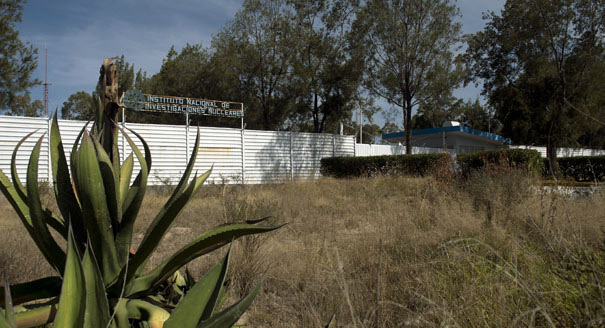
Lethal radioactive material spent two days on the loose in Mexico, when hijackers stole a truckload of the highly dangerous metal cobalt-60 as it was in transit from a hospital to a secure storage facility.
Source: Washington Post
Lethal radioactive material spent two days on the loose in Mexico, when hijackers stole a truckload of the highly dangerous metal cobalt-60 as it was in transit from a hospital to a secure storage facility. The incident certainly sounds scary – radioactive materials seized by criminals in a country struggling with violent drug cartels, not to mention the implicit threat of terrorism. It turns out that such incidents are alarmingly common, with more than 20 thefts or losses of nuclear materials in 2012 alone.
Should we be panicked? Or is this no big deal?
I put those questions to Mark Hibbs, a senior associate at the Carnegie Endowment for International Peace's nuclear policy program and a coolheaded analyst of all things nuclear risk. There is some cause for alarm, he told me, but not for the reasons we might immediately expect. It turns out that the greatest risk may be that unwitting locals in poorer communities could be poisoned or burned, rather than criminals or terrorists using the materials to make a bomb.We probably do not need to be worried about cobalt-60 or something like it being used to make a dirty bomb. "Theoretically it would be possible," Hibbs explained, "but there is one drawback. The stuff is incredibly hot. You could get a fatal dose in something like minutes if you hold it in your hand." And cobalt is a metal. Anyone who wanted to use it for a bomb would have to somehow crush or process it; doing that without immediately suffering fatal radiation poisoning would require sophisticated lab equipment and expertise.
"Could someone do that? If they were well prepared and organized, the answer is probably yes," Hibbs acknowledged. "But the point is that you don’t make a 'dirty bomb' with cobalt-60 by simply grabbing a chunk of the metal and wrapping some plastic explosives around it. If you do that, you'll most likely poison or kill yourself and you won't likely effectively disperse the cobalt."
The scenario Hibbs seems most worried about isn't a TV-ready plot about a dirty bomb or other large-scale attack. It's an accident borne of poor safety practices and too-scant public awareness of the dangers of nuclear materials.
It may not sound as scary as terrorism, but Hibbs warned that the real risk here may be when countries such as Mexico falter in safely and securely moving around nuclear materials in a way that risks exposing small numbers of innocent people. "The biggest threat is the environment where a source like this would get lost," he said, comparing Mexico to Thailand, which experienced a similar incident in 2000.
"In Thailand, the perpetrators were the victims. Someone found a source [of radioactive material] in a scrap pile, gathered that what was inside the locked box must be valuable, and cut it open," Hibbs recounted of the 2000 incident. "The cobalt was so hot that a couple of people got fatal doses after they handled the cobalt for a short period of time. Others had bad radiation burns. They had no idea that what was in that box could kill them."
There are parallels between what happened in Thailand and what's happening in Mexico. "Both are developing countries, lots of poverty, desperate people, public has little information about nuclear materials and their safety and security, maybe there are gaps in regulation and enforcement coverage," Hibbs explained. And that could be true of lots of other countries as well.
If insufficient public understanding of the risks of nuclear material can lead to an accident like this one, then attitudes can also whiplash in the other direction.
"Having an event like this can be a humbling experience for a country," Hibbs said. "Thailand was about to launch a nuclear power program when this accident happened. The accident exposed the dreadful lack of awareness about nuclear matters in that country’s population. Fear and superstition took over, was translated into anger at officials and authorities. The nuclear power program was set back maybe 20 years."
Hibbs said that incidents like this aren't driven so much by lawlessness or crime but are a "legacy of a past time decades ago when source users and governments had a devil-may-care attitude about radioactive sources."
In the 1980s, even here in the United States, there were tens of thousands of what are called "orphan" nuclear sources, used-up materials that are stored away somewhere or just misplaced. "In the old days, industrial and medical users might buy a source, use it over a number of years, and then just put it aside," Hibbs said. "In a lot of countries, there were no real effective regulations for managing and accounting for these sources." Some users would just "chuck them out."
"I can’t help concluding that this problem has to do mostly with uneven economic development, lack of public information, desperate people in mostly isolated places looking for an opportunity to get their hands on something that is valuable," Hibbs said. "When you bring into an environment like that nuclear materials that are not well protected and understood by people who are handling them, it looks like the recipe for an accident."
This interview was originally published in the Washington Post.
Nonresident Senior Fellow, Nuclear Policy Program
Hibbs is a Germany-based nonresident senior fellow in Carnegie’s Nuclear Policy Program. His areas of expertise are nuclear verification and safeguards, multilateral nuclear trade policy, international nuclear cooperation, and nonproliferation arrangements.
Recent Work


Toby Dalton, Mark Hibbs, Nicole Grajewski, …
Mark Hibbs
Carnegie India does not take institutional positions on public policy issues; the views represented herein are those of the author(s) and do not necessarily reflect the views of Carnegie, its staff, or its trustees.

This commentary explores the likely actions of the Trump administration and driving forces on issues of deregulation, the United States’ leadership in AI, national security, and global engagements on AI safety.

Shatakratu Sahu, Amlan Mohanty

Since its launch nearly a year ago, the INDUS-X has marked many milestones in the India-U.S. relationship. Much has been achieved, but there is room to further enhance defense cooperation between the two countries in the coming years.

Ajay Kumar, Tejas Bharadwaj
This article explicates what iCET is and what it should not be mistaken for. The initiative is not designed to deliver a single deal. Instead, it involves multiple streams for cooperation and collaboration between the United States and India on critical and emerging technologies.

Rudra Chaudhuri
Based on preliminary research and stakeholder discussions, this article features four areas of biosafety and biosecurity that could potentially become concrete agenda items for collaboration between the United States and India under the iCET.

Shruti Sharma
The article highlights critical takeaways from the unofficial discussions led by Carnegie India on the iCET with officials from both the countries, industry leaders, technologists, fund managers, entrepreneurs, and academics.

Rudra Chaudhuri, Konark Bhandari, Ashima Singh