

In The Media
John Judis
{
  "authors": [
    "John Judis"
  ],
  "type": "legacyinthemedia",
  "centerAffiliationAll": "",
  "centers": [
    "Carnegie Endowment for International Peace"
  ],
  "collections": [],
  "englishNewsletterAll": "",
  "nonEnglishNewsletterAll": "",
  "primaryCenter": "Carnegie Endowment for International Peace",
  "programAffiliation": "",
  "programs": [],
  "projects": [],
  "regions": [
    "North America",
    "United States"
  ],
  "topics": [
    "Political Reform",
    "Democracy"
  ]
}
Source: Getty
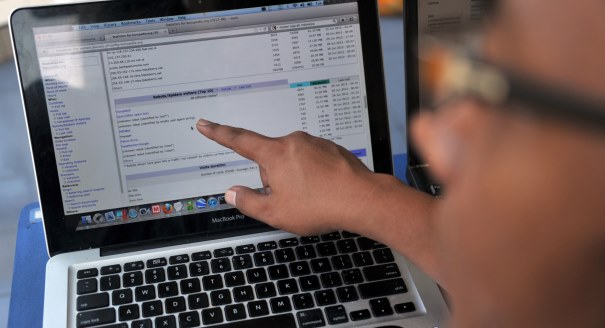
The recent Appeals Court ruling on net neutrality could be a blow to free speech on the internet.
Source: New Republic
Countries like China or Russia, with centuries-long traditions of authoritarian rule, revert to their past practices when confronted with any kind of novelty. The United States, with its tradition of frontier free marketism, reverts to the laissez-faire when confronted with the new. But the result in both cases the same: the radical constriction of popular democracy and freedom. A case in point is yesterday’s Appeals Court ruling on net neutrality.
The question is this: Can internet providers like Verizon and Comcast allow some web companies to provide better (that is, faster) service to their customers than their competitors by paying a higher price to the providers? Can Amazon knock an upstart by providing better service to its customers by paying off Verizon? Or can the Heritage Foundation’s web site provide better service than, say, that of the Economic Policy Institute by paying higher prices to Verizon? In 2010, the Federal Communications Commission (FCC) ruled that internet providers could not discriminate among web sites in this manner. Yesterday, the Appeals Court ruled that they could. That’s an obvious blow to consumers, who will suffer the usual effects of monopoly; but it could also be a blow to free speech on the internet.The obvious villain is the Appeals Court, but the damage was actually done earlier. In 2002, the FCC under chairman Michael Powell—the son of Colin Powell and reputedly an extremely decent person, but also a doctrinaire pro-business libertarian in the mold of the Koch brothers—issued a ruling that internet companies were “information services” and not “telecommunications companies.” That seemingly innocuous decision on wording held momentous consequences, because it meant that the internet could not be regulated like the public utility that it is. Phone companies, for instance, can’t by law provide static-free service to callers from a wealthy suburban area (at a price), but barely audible service to callers from the inner city, because they are regulated like a public utility. By the FCC’s ruling, internet providers could discriminate, and in 2005, the Supreme Court affirmed the FCC’s right to make this invidious distinction.
Obama’s first appointee as FCC chairman, Julius Genachowski, understood the damage that Powell’s ruling had done, and sought to undo it. In May 2010, Genachowski announced that he was redefining cable as a telecommunications service. That would have opened the door to re-regulating it. The cable and wireless industry stepped in. “He felt himself to be in a difficult position,” Susan Crawford, the author of Captive Mind and an expert on communications law, recalled. She said Genachowski feared that it would “be World War III. And the president didn’t need World War III.” So in December 2010, Genachowski announced that he would not attempt to counter Powell’s definition. That left any attempt to regulate broadband—including the net neutrality standards that the administration adopted—open to a court challenge. Verizon then proceeded to challenge the FCC’s right to set net neutrality standards, and yesterday it won, and the FCC and the American people lost.
Powell was happy about the ruling. He is now the President of the National Cable & Telecommunications Association in Washington, the industry’s chief lobbying arm. “It’s ironic that the big winner coming out of the court’s decision could end up being the one person who wasn’t a litigant—the consumer,” Powell declared. It’s unclear whether Genachowski’s successor as FCC chair, former industry lobbyist Tom Wheeler, will challenge the ruling. But if he doesn’t, and the ruling stands, the FCC can kiss goodbye its power to regulate the internet and the protect the rights of citizens and consumers against avaricious monopolies.

Former Visiting Scholar
As a visiting scholar at Carnegie, Judis wrote The Folly of Empire: What George W. Bush Could Learn from Theodore Roosevelt and Woodrow Wilson.
Recent Work
John Judis
John Judis
Carnegie India does not take institutional positions on public policy issues; the views represented herein are those of the author(s) and do not necessarily reflect the views of Carnegie, its staff, or its trustees.

The U.S.–India semiconductor cooperation story is well-stocked with top-level strategic intent. What remains unresolved, however, are some underlying challenges that will determine whether the cooperation actually functions. Three such friction points stand out.

Shruti Mittal

India and the United States are close to concluding a Reciprocal Defense Procurement Agreement (RDPA) that will allow firms from the two countries to sell to each other’s defense establishments more easily. While this may not remedy the specific grievances both sides may have regarding larger bilateral issues, an RDPA could restore some momentum, following the trade deal announcement.

Konark Bhandari

On the last day of the India AI Impact Summit, India signed Pax Silica, a U.S.-led declaration seemingly focused on semiconductors. While India’s accession to the same was not entirely unforeseen, becoming a signatory nation this quickly was not on the cards either.
Konark Bhandari

This piece examines India’s response to U.S. sanctions and tariffs, specifically assessing the immediate market consequences, such as alterations in import costs, and the broader strategic implications for India’s energy security and foreign policy orientation.

Vrinda Sahai
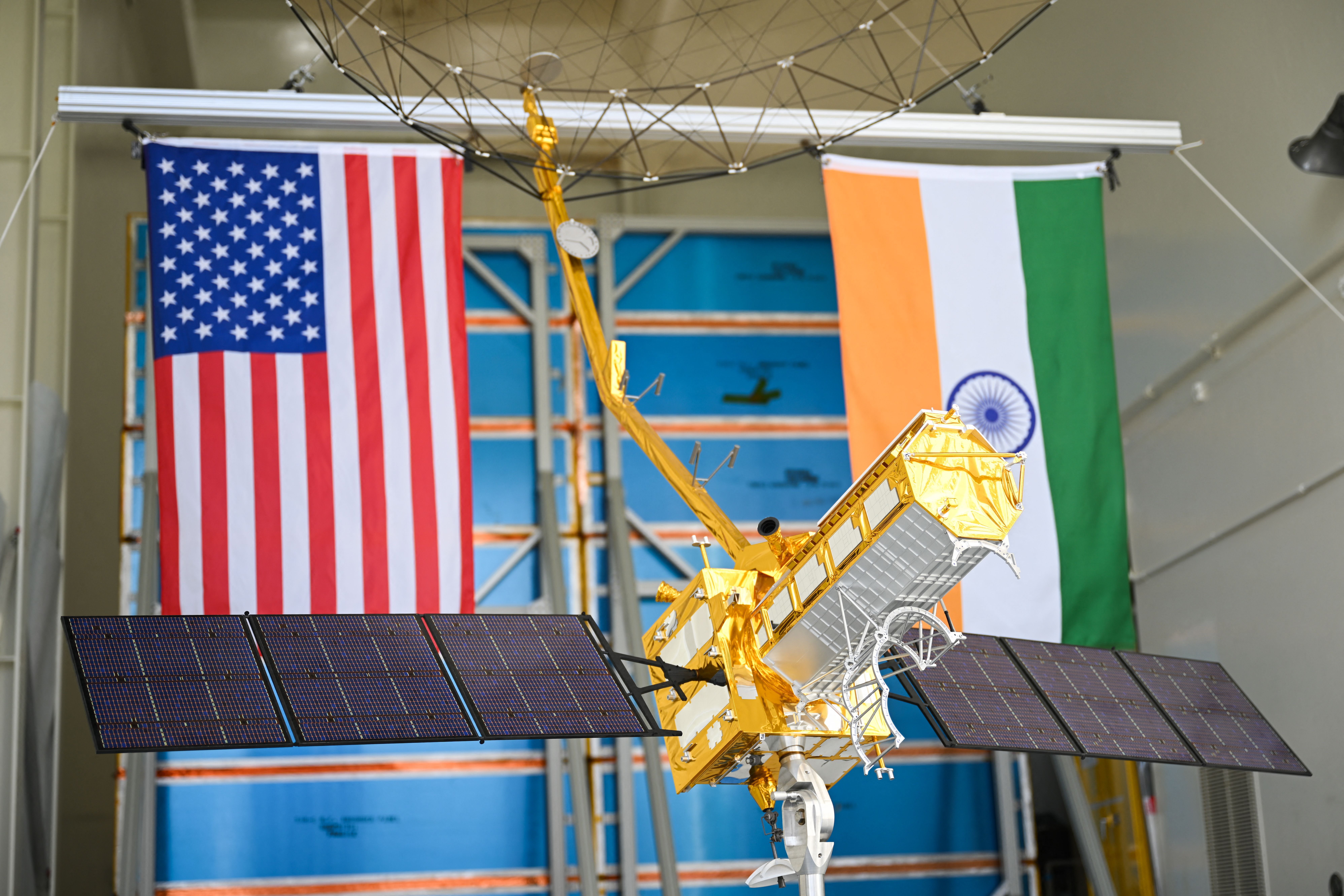
On July 30, 2025, the United States announced 25 percent tariffs on Indian goods. While diplomatic tensions simmered on the trade front, a cosmic calm prevailed at the Sriharikota launch range. Officials from NASA and ISRO were preparing to launch an engineering marvel into space—the NASA-ISRO Synthetic Aperture Radar (NISAR), marking a significant milestone in the India-U.S. bilateral partnership.

Tejas Bharadwaj