

Q&A
- +1
Sheena Chestnut Greitens, Oriana Skylar Mastro, Yukon Huang, …
{
  "authors": [
    "Yukon Huang"
  ],
  "type": "legacyinthemedia",
  "centerAffiliationAll": "dc",
  "centers": [
    "Carnegie Endowment for International Peace",
    "Carnegie China"
  ],
  "collections": [],
  "englishNewsletterAll": "asia",
  "nonEnglishNewsletterAll": "",
  "primaryCenter": "Carnegie Endowment for International Peace",
  "programAffiliation": "AP",
  "programs": [
    "Asia"
  ],
  "projects": [],
  "regions": [
    "East Asia",
    "China"
  ],
  "topics": [
    "Economy"
  ]
}
Source: Getty
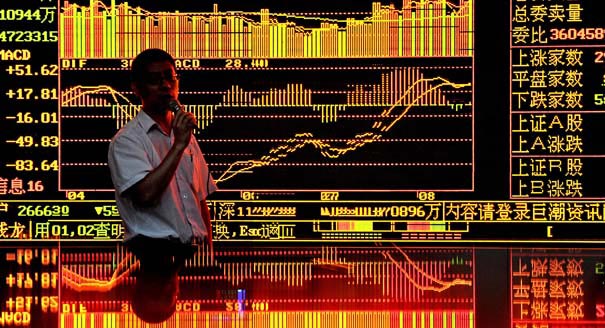
Liberalizing deposit interest rates without first addressing other distortions within the financial system will exacerbate distortions and introduce new and unnecessary risks to China’s economy.
Source: Wall Street Journal
Recent statements from Beijing make clear that leaders intend to push forward with financial-market reform by liberalizing interest rates and allowing easier cross-border capital flows as China internationalizes its currency. Many observers are cheering because this is exactly what foreigners and not a few local economists have urged Beijing to do for years now. But it isn't clear that these policies are right for China at this time, and the wrong reform steps now could further distort financial markets that are already badly distorted.
To see why, first grapple with the question of what interest rates should be right now. The consensus holds that deposit rates are too low, and that this acts as a form of subsidy for borrowers who can enjoy lower lending rates while suppressing consumption by households who have to save more of their income in light of low returns. Beijing has already liberalized lending rates, and central bank Governor Zhou Xiaochuan said this month that deposit rates will be liberalized in a year or two, with rates likely rising as a result.
But the cap on deposit rates is currently set at 3.3%, already high compared with nearby economies such as Hong Kong, Singapore or Tokyo, where deposit rates are around 0.2%. The difference is even more striking after accounting for inflation. Most major economies have negative real deposit rates, while China's are positive. On top of that, the yuan is expected to appreciate against the dollar and other major currencies, bolstering real returns further still. The real return on Chinese savings is as much as five percentage points higher than that available in the United States.Despite this differential, reformers see much evidence that formal deposit rates would rise if Beijing let them—from periodic surges in interbank lending rates (suggesting a cash shortage that would prompt banks to offer depositors higher rates) to the high rates offered by Alibaba to Internet deposit customers and by shadow-banking outfits via wealth management products.
Critics also suggest that mortgage rates are too low and that this is driving a property bubble that wouldn't exist if banks had to pay depositors more for capital and therefore charge higher mortgage rates. In this view, property price increases of three to five times over the past decade clearly are excessive and reflect financial distortion.
It is probably true that deposit rates will rise on liberalization, but that has more to do with distortions in the financial system than with how a freely functioning financial market would price capital. One factor is the privileged access of certain banks to household savings deposits. The major state commercial banks have the advantage of being able to draw on a large deposit base because of their implicit sovereign guarantees, which are valued by households looking for safety. Smaller private banks and other financial agents rely more on the interbank market and informal sources for lendable funds. They are willing to pay more to savers because they are often engaged in shadow banking, offering higher but riskier returns.
Meanwhile, whatever else is fueling the property market, it probably isn't too-low mortgage rates, which at around 7% are significantly higher than comparable rates in Asia or America. A more likely explanation for rising prices is that a private housing market that didn't exist at all in China until the middle of the last decade is still finding its sea legs. Sure enough, housing affordability has been improving and the supply and demand dynamics have been moving in the right direction.
It is dangerous to overstate the possible benefits of rate liberalization leading to higher deposit rates. The argument that higher rates would curb the more egregious lending practices is weakened by governance and institutional limitations peculiar to China's financial system. Because so many transactions involve state-owned entities lending to state-owned entities, accountability is blurred and conflicts of interest are intensified. This makes the signaling effect of higher rates less effective.
Moreover, a rise in deposit rates would have some undesirable consequences. It would worsen the already serious debt-servicing problem of firms and many local governments, as banks would need to demand higher rates on new loans used to roll over old ones. If current interest levels already are indeed too high, then higher debt-servicing burdens could unnecessarily jeopardize the solvency of otherwise viable firms and investments in a longer-term efficiency sense.
Further increases in deposit rates would also encourage even more investors to pour into China seeking higher returns for their savings. The more creditworthy Chinese borrowers would borrow abroad at lower rates than available domestically, buoyed by limited downside exchange risks. In fact, interest-rate arbitrage is already occurring as Chinese companies use their overseas affiliates to gain access to cheaper external funds, while households and companies in Hong Kong are finding ways to park their yuan holdings into higher-paying accounts on the mainland. This will pressure interest rates eventually to fall to the levels seen in the other major global markets.
None of this is to suggest that Beijing should never liberalize deposit rates. But if the goal is to create a financial system capable of correctly pricing capital, policy makers need to tackle other problems first. Tightening regulation of shadow banking and clarifying the role of implicit sovereign guarantees in the operations of state-linked entities would be good places to start.
This article originally appeared in the Wall Street Journal.

Senior Fellow, Asia Program
Huang is a senior fellow in the Carnegie Asia Program where his research focuses on China’s economy and its regional and global impact.
Recent Work


Sheena Chestnut Greitens, Oriana Skylar Mastro, Yukon Huang, …


Yukon Huang, Isaac B. Kardon, Matt Sheehan
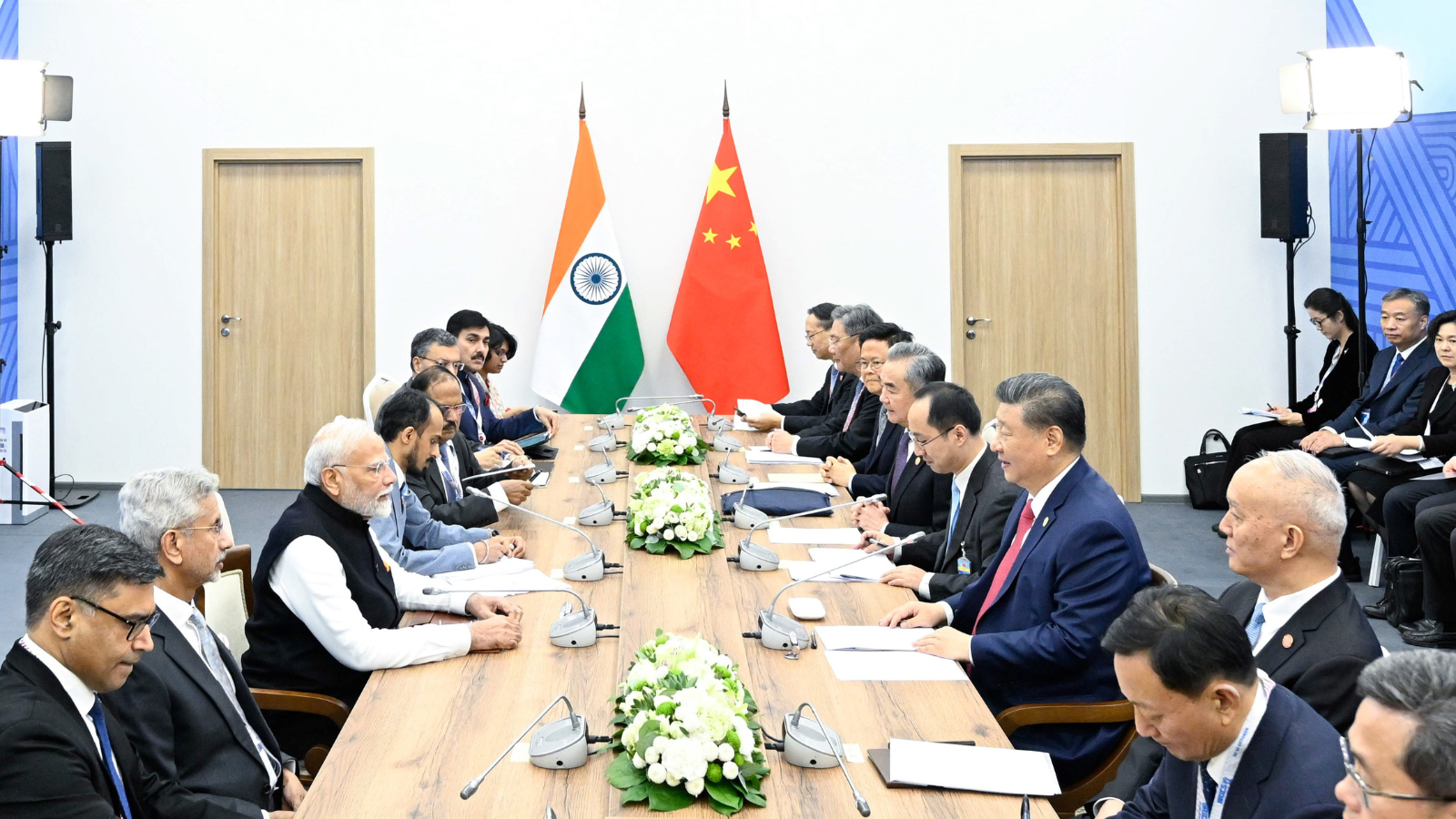
After the chill in ties between 2020 and 2024 that brought India–China relations to their lowest point in several decades, the two countries have engaged each other afresh. This paper argues that there are predominantly four imperatives guiding India’s approach to China, and they exist in an order of priority.

Saheb Singh Chadha

This piece argues that India’s central challenge is not managing a single flashpoint but resolving the underlying tension between expansion and institutional coherency of the BRICS grouping.

Vrinda Sahai

On March 10, 2026, India’s Union Cabinet approved amendments to Press Note 3, a regulation that mandated government approval on all foreign direct investment (FDI) from countries sharing a land border with India. This amendment raises questions primarily about whether its stated benefits will materialize and if the risks have been adequately weighed. This piece will address the same.
Konark Bhandari

This piece examines India’s response to U.S. sanctions and tariffs, specifically assessing the immediate market consequences, such as alterations in import costs, and the broader strategic implications for India’s energy security and foreign policy orientation.
Vrinda Sahai

This paper examines the evolution of India-China economic ties from 2005 to 2025. It explores the impact of global events, bilateral political ties, and domestic policies on distinct spheres of the economic relationship.

Santosh Pai