

Research
- +10
Rosa Balfour, Frances Z. Brown, Yasmine Farouk, …
{
  "authors": [
    "Moisés Naím"
  ],
  "type": "legacyinthemedia",
  "centerAffiliationAll": "dc",
  "centers": [
    "Carnegie Endowment for International Peace"
  ],
  "collections": [],
  "englishNewsletterAll": "americanStatecraft",
  "nonEnglishNewsletterAll": "",
  "primaryCenter": "Carnegie Endowment for International Peace",
  "programAffiliation": "ASP",
  "programs": [
    "American Statecraft"
  ],
  "projects": [],
  "regions": [
    "North America",
    "United States"
  ],
  "topics": [
    "Economy"
  ]
}
Source: Getty
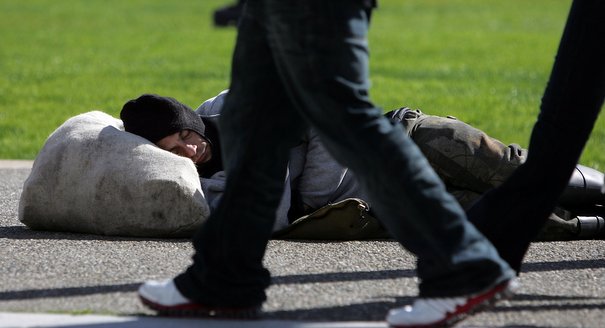
Inequality became the lightning rod that it is today only when wealth and incomes became as concentrated in the United States as they have been in other highly unequal countries.
Source: Atlantic
Two years ago, I wrote, “Inequality will be the central theme of 2012. It has always existed and is not going away, but this year it will top the global agenda of voters, protesters and politicians…. In 2012, peaceful coexistence with inequality will end and demands and promises to fight it will become fiercer and more widespread than they have been since the end of the Cold War.”
And that’s what happened. The 1 percent versus the 99 percent became a global catchphrase. In 2012, there were 25 percent more academic articles about inequality than in the previous year (and 237 percent more than in 2004).Notable world figures like Pope Francis and Barack Obama declared inequality the defining issue of our time. And how to fight it became an unavoidable topic in electoral debates everywhere, even in countries like Brazil where, over the past decade, income inequality has steadily declined.
And now comes Thomas Piketty. To say he’s a French economist who recently published a dense, 700-page tome titled, Capital in the Twenty-First Century that quickly became an international bestseller does not do justice to the impact of this book and author. Piketty is a social, intellectual, and media phenomenon as well as an editorial success. His main thesis is that economic inequality is the inevitable collateral effect of capitalism—and that if governments don’t act decisively to contain it (mostly through higher taxes on wealth and incomes), it will steadily grow until it seriously threatens democracy and economic stability. According to Piketty, inequality grows when the rate of return on capital (“r”) is larger than the rate of growth in the economy (“g”); or, in his already well-known formulation, inequality grows when “r > g.”
The ‘Piketty effect’ is greater than the familiar story of academic economists attracting an audience beyond the readers of specialized journals. As an example, consider one recent New York Times article on how to pick a new place to live. The author suggests that people who are considering relocating to a new town assess the literary tastes of their potential neighbors. Go to the local library and find out what books people are reading, she advises. Ask yourself: “Is it a Piketty kind of place, or does it lean toward James Patterson?” Another article explores the thorny issues that arise among couples when a wife makes more than her husband, and concludes with a man whose wife outearns him pointing out that the essence of the problem is “the Piketty debate.” Over at the Financial Times, Robert Shrimsley warns us in a very funny column that “concern is growing that much of the western world is heading into a ‘Piketty bubble’—a social and economic phenomenon that arises when everyone who considers themselves to be anybody feels the need to talk about a new book by French economist Thomas Piketty.” Shrimsly then offers the nine stages in which the Picketty bubble will likely evolve. He calls stage two, for example, “escape velocity”: “A critical mass of enthusiasm sees stock in Piketty rise faster than Bitcoin. Escape velocity is reached as politicians and pundits realize its value in supporting their existing convictions. They observe that his book crystallizes ‘the big issue of our day’. Such references must also always include the phrase ‘in his important work’. Bluffers’ guides spring up on the internet.”
The unexpected popularity of lofty academic books isn’t new—as examples such as The End of History by Francis Fukuyama and The Clash of Civilizations by Samuel Huntington attest. Published in 1992 and 1996, respectively, they were released at opportune moments when there was already strong interest around the world in the topics they were exploring. Both works emerged after the collapse of the Soviet Union, as the end of communism surfaced fundamental questions about the future of politics and economics. Fukuyama predicted that the coming age would be defined by the triumph of liberal ideas—by democracy and markets. Several years later, Huntington argued that clashes over religion rather than ideology would become the most frequent source of conflicts in the twenty-first century. Now it’s Piketty’s turn. A decade ago, during the economic boom and before the financial crisis, the desire to understand why “r > g” equals more inequality would not have been so intense or widespread.
The truth, however, is that economic inequality has been a serious problem for most of the world’s population for a long time. These inequities are nothing new in Latin America and Africa—the regions with the most unequal income distribution. And in many countries with historically high inequality, the main driver of the divisions is not r > g but rather c > h, where “c” stands for corruption and “h” for honesty.
Inequality became the lightning rod that it is today only when wealth and incomes became as concentrated in the United States as they have been in other highly unequal countries. This superpower has an unrivaled ability to export and globalize its anxieties. In this case, it’s good news that the problem afflicting Americans is also important for people elsewhere who have passively tolerated inequality for too long. One hopes that the debate underway in the U.S. and Europe will result in actions that will effectively improve the ways in which income and wealth are distributed—and not only in wealthy nations.

Distinguished Fellow
Moisés Naím is a distinguished fellow at the Carnegie Endowment for International Peace, a best-selling author, and an internationally syndicated columnist.
Recent Work



Rosa Balfour, Frances Z. Brown, Yasmine Farouk, …
Moisés Naím
Carnegie India does not take institutional positions on public policy issues; the views represented herein are those of the author(s) and do not necessarily reflect the views of Carnegie, its staff, or its trustees.

How is AI reshaping space security, creating governance challenges, and where does international diplomacy stand today?


Tejas Bharadwaj, Almudena Azcárate Ortega

The U.S.–India semiconductor cooperation story is well-stocked with top-level strategic intent. What remains unresolved, however, are some underlying challenges that will determine whether the cooperation actually functions. Three such friction points stand out.

Shruti Mittal

On March 10, 2026, India’s Union Cabinet approved amendments to Press Note 3, a regulation that mandated government approval on all foreign direct investment (FDI) from countries sharing a land border with India. This amendment raises questions primarily about whether its stated benefits will materialize and if the risks have been adequately weighed. This piece will address the same.

Konark Bhandari

India and the United States are close to concluding a Reciprocal Defense Procurement Agreement (RDPA) that will allow firms from the two countries to sell to each other’s defense establishments more easily. While this may not remedy the specific grievances both sides may have regarding larger bilateral issues, an RDPA could restore some momentum, following the trade deal announcement.
Konark Bhandari

On the last day of the India AI Impact Summit, India signed Pax Silica, a U.S.-led declaration seemingly focused on semiconductors. While India’s accession to the same was not entirely unforeseen, becoming a signatory nation this quickly was not on the cards either.
Konark Bhandari