

Commentary
How is AI reshaping space security, creating governance challenges, and where does international diplomacy stand today?
Tejas Bharadwaj, Almudena Azcárate Ortega
{
  "authors": [
    "Deborah Gordon",
    "Andreas Goldthau"
  ],
  "type": "commentary",
  "centerAffiliationAll": "",
  "centers": [
    "Carnegie Endowment for International Peace",
    "Carnegie Russia Eurasia Center"
  ],
  "collections": [],
  "englishNewsletterAll": "",
  "nonEnglishNewsletterAll": "",
  "primaryCenter": "Carnegie Endowment for International Peace",
  "programAffiliation": "",
  "programs": [],
  "projects": [
    "Carnegie Oil Initiative"
  ],
  "regions": [
    "North America",
    "United States",
    "Russia",
    "Eastern Europe",
    "Ukraine",
    "Western Europe"
  ],
  "topics": [
    "Economy",
    "Trade",
    "Climate Change",
    "Foreign Policy"
  ]
}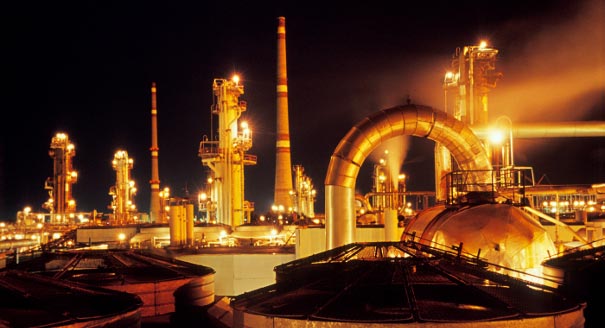
Source: Getty
Sanctioning Russia’s oil remains on the table, but playing this card comes with serious economic risk for all.
With secessionist events in Ukraine unfolding, further U.S. and EU sanctions against Russia remain a policy option.
Russia’s oil sector fuels roughly forty percent of the country’s current budget, so finding an effective way to sanction it is an obvious target for the United States and its western allies. Before sanctioning Russian oil, however, it is essential to answer one key question: how will markets respond to eliminating exports from today’s largest global oil producer? The answer to this question is not reassuring—neither for Russia, nor the West. Any steps to sanction crude therefore should be considered with extreme caution.
Yet, energy sanctions are much more than a technical issue. Oil is the world’s most actively traded physical commodity. It permeates today’s highly globalized economy. On any given day, more than ninety million barrels of crude and petroleum products are consumed, and over 55 million barrels of crude and petroleum products traverse the globe. As such, it will be impossible to impose “targeted” sanctions on oil. Supplies taken out of the market in one place—even if done only gradually—impact every nation, producer, and consumer.
To be sure, a complex oil value chain makes it impossible for even major players such as ExxonMobil or the International Energy Agency to accurately predict future oil prices. The truth is, with this level of integration, experts haven’t a clue how sanctions will distort global oil markets. What is guaranteed is that if only a fraction of the current Russian output is taken off market, this will lead to a short-term price spikes. In the past a market contraction of this size was dubbed an “oil crisis.”
Adding to that, futures and derivatives markets are also built on the price of underlying oil commodities. At least 200 billion barrels a year, worth in the order of $20 trillion, are priced off the Brent benchmark—the world’s major oil basket. Even small supply distortions could therefore amplify and have a significant impact on global energy prices. The biggest risk will however be triggering a market roller coaster, which is even harder for citizens, politicians, and industry to weather than only higher prices.
What’s more, it remains unclear whether oil sanctions will have their desired effect. And previous incidents won’t help in predicting the outcome of larger, sustained market interruptions.
The world was a different place in 1979 when President Carter enacted sanctions on Iran, freezing their assets, and again in 1995 when President Clinton expanded sanctions to include trade with Iran’s oil industry. Massive globalization hadn’t yet taken place. As such, the geo-economic impact of limiting a country’s ability to export oil once had limited reach. OPEC easily made up the 2 million barrels per day of displaced Iranian oil in 1979. This is in stark contrast with what is possible today when seventy-two percent more oil is traded worldwide than when the first sanctions were enacted.
This is also why the United States’ newly found oil riches wouldn’t shield the country from the price shock that is likely to result from serious oil sanctions against Russia. America remains wired into the global oil market, and this will translate into price spikes in NYMEX traded oil futures and for consumers at the pump. Russia, in turn, will not necessarily suffer in the way intended. While any oil price hikes will harm Russian citizens and business, they would stand to benefit the Kremlin’s state coffers, partially making up for the loss in market shares.
Sanctioning Russia’s oil remains on the table. But playing this card comes with serious economic risk for all. The burden is on Washington and Brussels to weigh this move carefully. Moscow, in turn, should be prepared for the West to sanction oil—not because it makes sense, but because the course of events might lead to actions whose outcomes are eventually undesirable.
Deborah Gordon is a senior associate in the Energy and Climate Program at the Carnegie Endowment for International Peace. Andreas Goldthau is Marie Curie senior fellow and visiting scholar with the Geopolitics of Energy Project at the Belfer Center for Science and International Affairs, Harvard Kennedy School of Government. His Twitter account is @goldthau.

Former Director and Senior Fellow, Energy and Climate Program
Gordon was director of Carnegie’s Energy and Climate Program, where her research focuses on oil and climate change issues in North America and globally.

Andreas Goldthau
Professor, University of Erfurt
Andreas Goldthau is the Franz Haniel Professor for Public Policy at the Willy Brandt School of Public Policy, University of Erfurt; a research group leader at the Institute for Advanced Sustainability Studies; and a visiting professor at the College of Europe.
Carnegie India does not take institutional positions on public policy issues; the views represented herein are those of the author(s) and do not necessarily reflect the views of Carnegie, its staff, or its trustees.

How is AI reshaping space security, creating governance challenges, and where does international diplomacy stand today?


Tejas Bharadwaj, Almudena Azcárate Ortega

After the chill in ties between 2020 and 2024 that brought India–China relations to their lowest point in several decades, the two countries have engaged each other afresh. This paper argues that there are predominantly four imperatives guiding India’s approach to China, and they exist in an order of priority.

Saheb Singh Chadha

This piece argues that India’s central challenge is not managing a single flashpoint but resolving the underlying tension between expansion and institutional coherency of the BRICS grouping.

Vrinda Sahai

A partnership between India, a country of subcontinental size, and Africa, a continent of fifty-four countries, may seem asymmetric until one notes that both are home to nearly the same number of people—1.4 billion. This essay spells out the existing challenges to the partnership, its optimal potential, and the possible pathways to realize it over the next quarter-century.

Rajiv Bhatia

The U.S.–India semiconductor cooperation story is well-stocked with top-level strategic intent. What remains unresolved, however, are some underlying challenges that will determine whether the cooperation actually functions. Three such friction points stand out.

Shruti Mittal