

Commentary
Dmitri Trenin
{
  "authors": [
    "Dmitri Trenin"
  ],
  "type": "commentary",
  "centerAffiliationAll": "",
  "centers": [
    "Carnegie Endowment for International Peace",
    "Carnegie Russia Eurasia Center"
  ],
  "collections": [],
  "englishNewsletterAll": "",
  "nonEnglishNewsletterAll": "",
  "primaryCenter": "Carnegie Russia Eurasia Center",
  "programAffiliation": "",
  "programs": [],
  "projects": [],
  "regions": [
    "North America",
    "United States",
    "Russia",
    "Eastern Europe",
    "Ukraine",
    "Western Europe"
  ],
  "topics": [
    "Foreign Policy"
  ]
}
Source: Getty
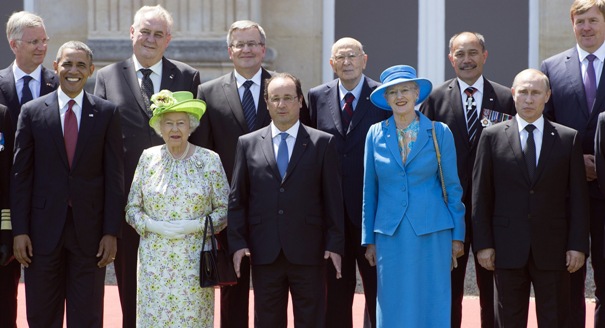
The D-Day anniversary celebrations have marked a new quality of the West’s relations with Russia. Putin is obviously playing from a position of weakness vis-à-vis the joint forces of the West. The first round has shown it has a chance, but more difficult rounds lie ahead.
The D-Day anniversary celebrations in France have marked a new quality of the West’s relations with Russia. No one any longer pretends that Russia is, or could be, “one of us.” As depicted by The Economist cartoonist, it is again part of the world of evil, alongside North Korea and Syria. For the United States, it is an adversary, albeit an unworthy one. Barack Obama deigned to have only a brief, standing encounter with Vladimir Putin, letting John Kerry discuss Ukraine with Sergey Lavrov. The Europeans, for whom Russia is a neighbor as well as an economic partner,Fjam cannot afford to be so studiously dismissive. Francois Hollande did not think it wise to disinvite Putin over Ukraine, and even attempted gastronomic mediation of sorts, by having dinners in succession with the U.S. and Russian presidents. David Cameron, too, sat down with Putin in the airport lounge. Angela Merkel not only had her own one-on-one with the Russian leader, but played the role of a broker between Putin and the Ukrainian President-Elect, Petro Poroshenko.
The newly inaugurated Ukrainian president, fully backed by the United States, has rejected the notion of Ukraine’s federalization and spoken strongly about the country’s western orientation. However, he used Russian to make a peace proposal to the rebellious Eastern Ukraine, and ordered the military operation there to be wrapped up in a week. Putin apparently has given Poroshenko a grace period to replace the military operation with a dialogue. After his meeting with Kerry in France, Lavrov talked about a degree of understanding between Moscow and Washington on Ukraine. Yet, the Obama Administration will not ease pressure on the Kremlin in the situation where any compromise might be interpreted in Vladimir Putin’s favor.
The Russian president knows this. Having withstood the first assault led by the White House, he is now consolidating his gains, from Crimea to domestic political support in Russia to the global popular image of one who does not bow before the United States. He has been very careful not to overplay his hand by invading Ukraine, disrupting the elections there, or cutting off gas supplies to Europe across Ukraine. He has left his critics without even a shred of hard evidence of Russia’s support for the Donbass militants. Now the time has come for Putin to show signs of flexibility. He has made no attempt to avoid Poroshenko in Normandy. He has sent the Russian ambassador back to Kiev, and ordered enhanced security along the Ukrainian border, presumably to stop volunteers going to Donbass. He has let Gazprom discuss the future gas price for Ukraine, once the past debt is collected.
Putin obviously aims for a deal with Poroshenko which would ensure Russia’s core interests in Ukraine: no NATO membership; an official status for the Russian language where it is widely spoken; continued economic relations, particularly with south-eastern Ukraine; and a degree of regional autonomy which would allow the Russian speakers in the South-East to have a voice and an impact on the decisions made in Kiev. Poroshenko probably understands that, to pull the country together and keep it whole, as well as to keep the economy going, the United States and Europe are not enough. He will need Putin. Russian-Ukrainian relations are resuming after a three-month break, and they might eventually assume a dynamic of their own, different from the Russian-Western ones.
Despite the generally successful weekend diplomacy, the Kremlin has no reason to fall back into complacency. Russia’s unequal competition with the United States will go on. Sooner rather than later, whatever Russia does or does not do, except for a complete surrender, the United States will heap more sanctions on it, including in the banking sector, and will lean harder on Europe and Japan to further tighten their technology transfers to Russia. Putin is obviously playing from a position of weakness vis-à-vis the joint forces of the West, which is not new in Russian history. With fewer resources than before, however, Russia needs to be very smart. The first round has shown it has a chance, but more difficult rounds lie ahead.
Former Director, Carnegie Moscow Center
Trenin was director of the Carnegie Moscow Center from 2008 to early 2022.
Recent Work
Dmitri Trenin
Dmitri Trenin
Carnegie India does not take institutional positions on public policy issues; the views represented herein are those of the author(s) and do not necessarily reflect the views of Carnegie, its staff, or its trustees.
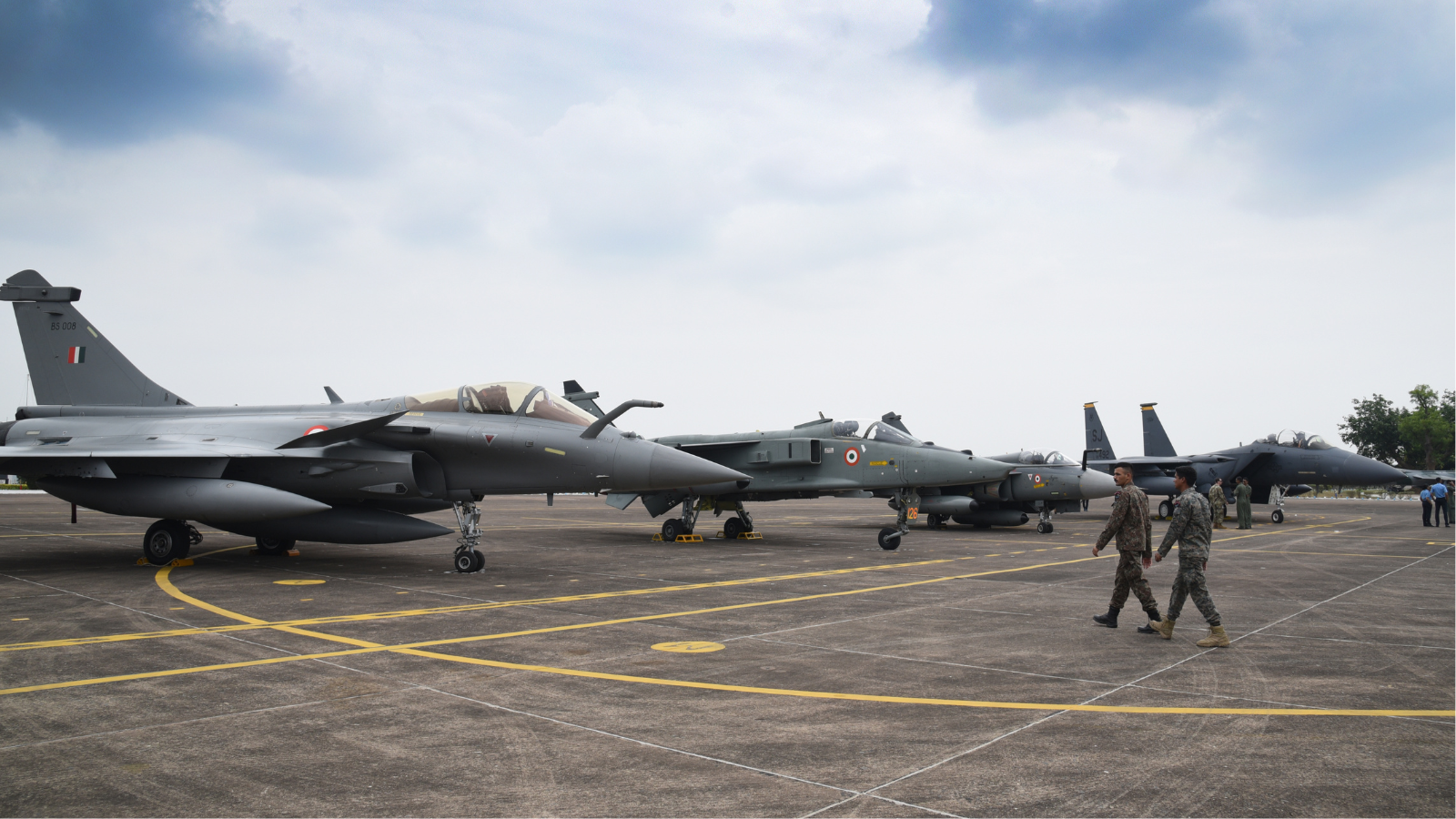
India and the United States are close to concluding a Reciprocal Defense Procurement Agreement (RDPA) that will allow firms from the two countries to sell to each other’s defense establishments more easily. While this may not remedy the specific grievances both sides may have regarding larger bilateral issues, an RDPA could restore some momentum, following the trade deal announcement.

Konark Bhandari
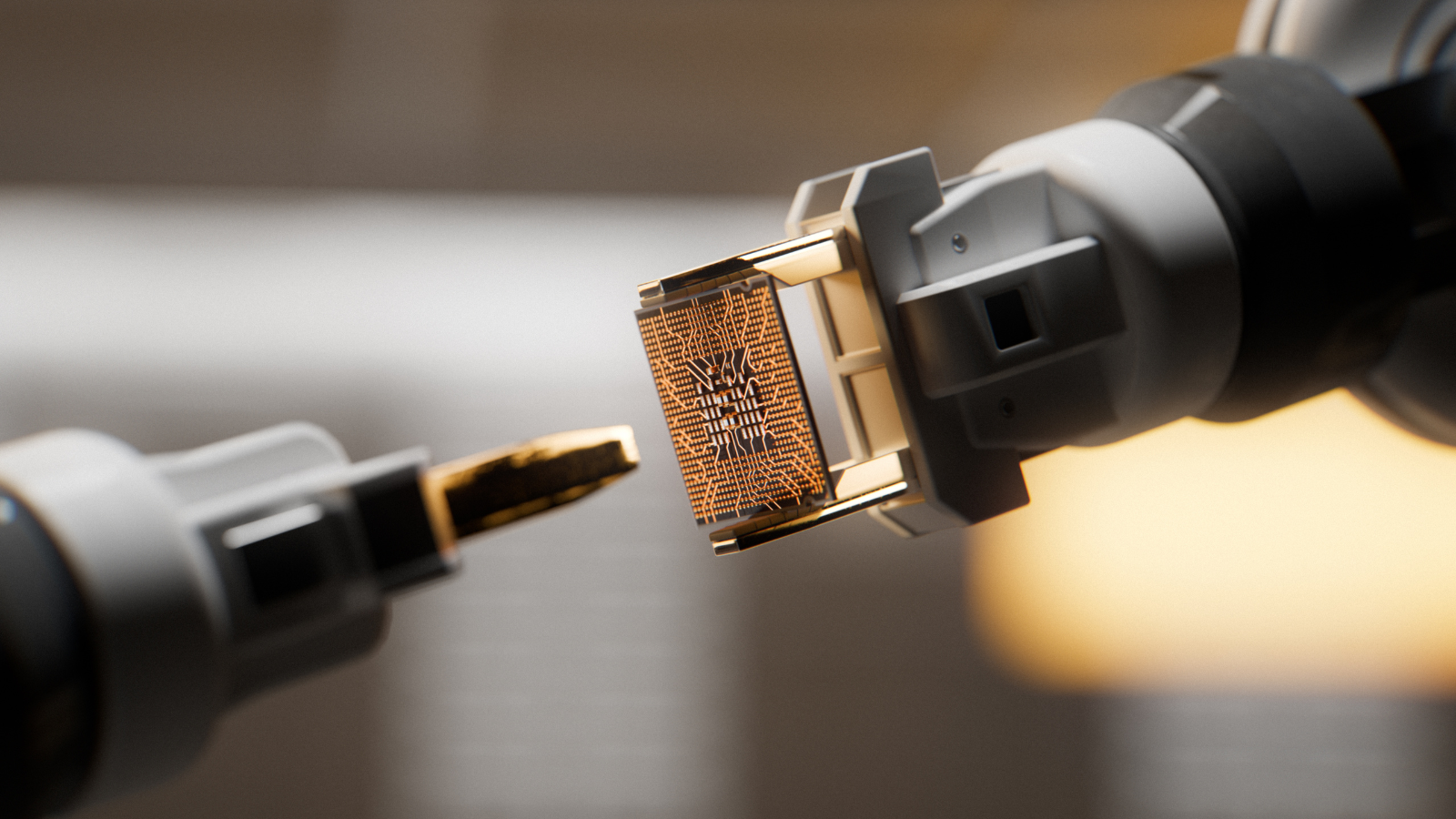
On the last day of the India AI Impact Summit, India signed Pax Silica, a U.S.-led declaration seemingly focused on semiconductors. While India’s accession to the same was not entirely unforeseen, becoming a signatory nation this quickly was not on the cards either.
Konark Bhandari

This piece examines India’s response to U.S. sanctions and tariffs, specifically assessing the immediate market consequences, such as alterations in import costs, and the broader strategic implications for India’s energy security and foreign policy orientation.

Vrinda Sahai
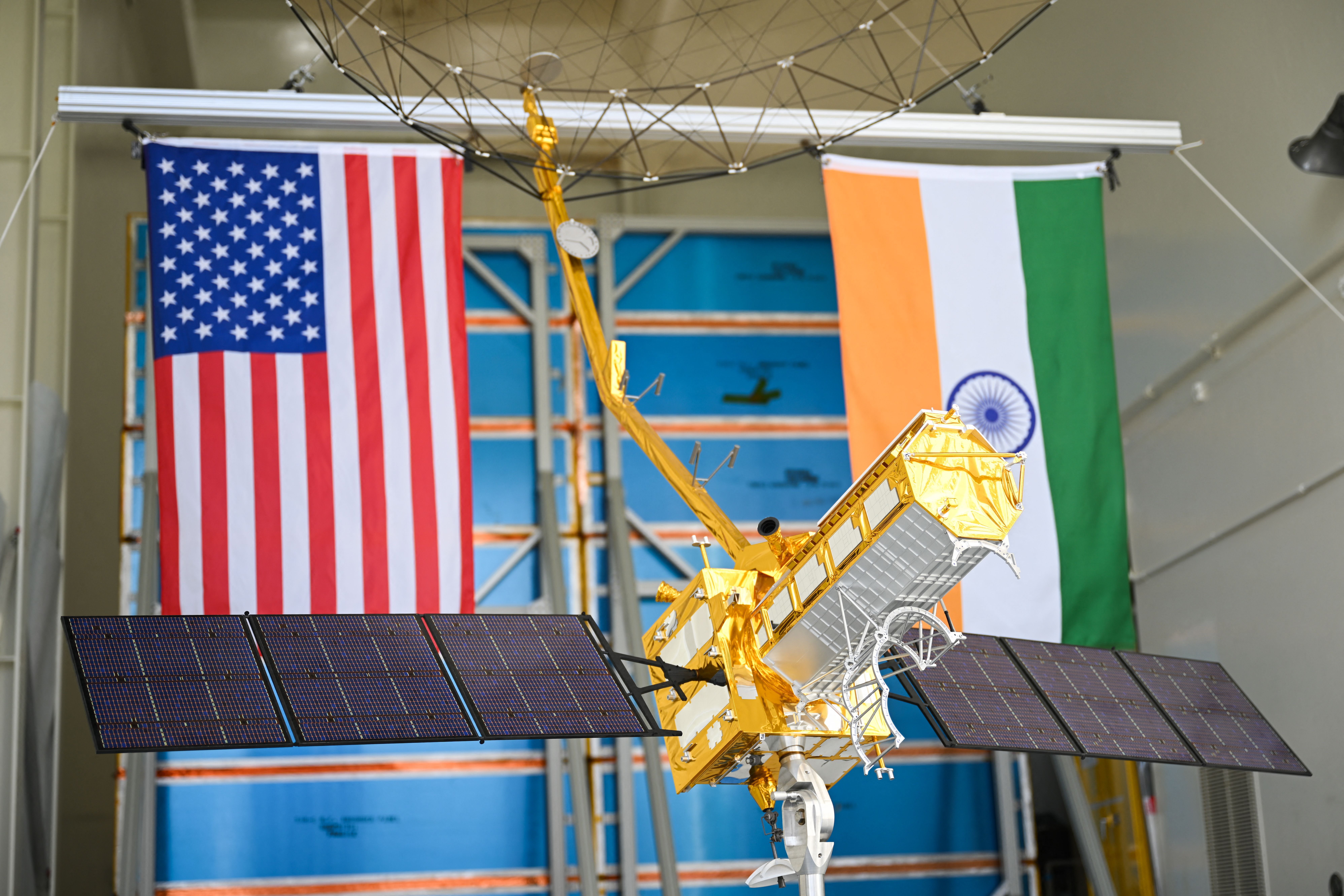
On July 30, 2025, the United States announced 25 percent tariffs on Indian goods. While diplomatic tensions simmered on the trade front, a cosmic calm prevailed at the Sriharikota launch range. Officials from NASA and ISRO were preparing to launch an engineering marvel into space—the NASA-ISRO Synthetic Aperture Radar (NISAR), marking a significant milestone in the India-U.S. bilateral partnership.

Tejas Bharadwaj

The India-U.S. relationship currently appears buffeted between three “Ts”—TRUST, Tariffs, and Trump.

Arun K. Singh