

Commentary
Cornelius Adebahr
{
  "authors": [
    "Cornelius Adebahr"
  ],
  "type": "legacyinthemedia",
  "centerAffiliationAll": "dc",
  "centers": [
    "Carnegie Endowment for International Peace",
    "Carnegie Europe"
  ],
  "collections": [],
  "englishNewsletterAll": "ctw",
  "nonEnglishNewsletterAll": "",
  "primaryCenter": "Carnegie Europe",
  "programAffiliation": "EP",
  "programs": [
    "Europe"
  ],
  "projects": [],
  "regions": [
    "North America",
    "United States",
    "Western Europe",
    "Germany",
    "Iran"
  ],
  "topics": [
    "Foreign Policy"
  ]
}
Source: Getty
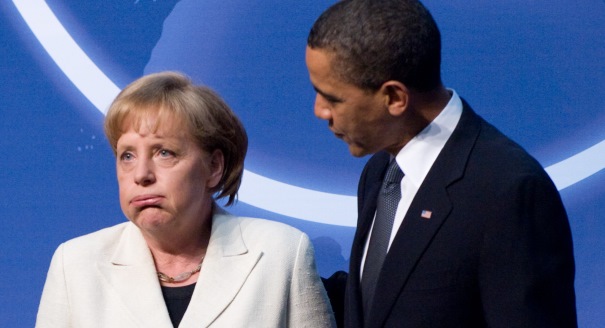
The NSA spying scandal, rooted in American feelings of omnipotence and mistrust, has revealed uncomfortable truths about the U.S.-German relationship.
Source: American Institute for Contemporary German Studies
The recent developments in the spying scandal in Berlin raised feathers only slightly with policymakers and pundits in DC. True, it may be a very self-centered German view to assume that the allegations that the CIA recruited a German agent—and the lack of any meaningful American explanation—are indeed a sign of a deepening transatlantic crisis. (At least when you ask some fellow Europeans, they would confirm this view.)
Still, it is telling to read those commentaries that argue boldly why the U.S. would indeed have to spy on Germany. The Wall Street Journal editorial uses half of its arguments for Obama-bashing—the expulsion of the CIA station chief “reflects America’s diminished standing in the world under President Obama”—and the other half for blaming German hypocrisy. James Kirchick in The Daily Beast, in contrast, aims to provide some real reasons for the intelligence activities, saying they took place because of Germany’s close relations with Russia and Iran, because of Cold War history, or simply because “Berlin has been a less than trustworthy ally.” Well, thanks for saying that so clearly.
Soberly looking at things, however, there are only two reasons why the United States under Barack Obama keeps spying on “one of our strongest allies and […] one of my closest partners,” as the president described the relationship to the German chancellor in May this year. Both have nothing to do with Germany but, rather, with the United States itself. The first is a feeling of omnipotence, and the second an apparent inability to trust its partners. Obviously, there is a connection between the two—possibly one reinforcing the other. But let’s take them as two distinct characteristics for the moment.
The first has been fueled by the American “victory” of the Cold War and reinforced by the national security frenzy following the shock of vulnerability experienced with 9/11. If you feel you can do anything, and feel you need to do anything to protect yourself, you will simply do anything in your powers, regardless of the cost.
The second aspect has probably been around for decades, but was kept in check by the bipolar threat when the United States actually had to rely on and work with its allies. The unipolar moment of the 1990s and the ensuing—complex and confusing—multipolar world, however, have led Washington to fundamentally mistrust even its closest partners. George W. Bush’s “You’re with us, or you’re against us” was an early expression of this hubris, and Obama’s outright negligence toward alliances is a continuation of sorts.
As for the German reaction, both official and public, you can call it naïve, of course. Yet, it tells you something about how deeply convinced most Germans are—or rather were up to the beginning of the NSA scandal—of the strong friendship between them and the Americans, and how similarly deep the disappointment is now. Of course, the problem is not American spying on German soil to counter real threats, but spying on German politicians, who the Americans can just as well call. Likewise, it’s not that Germans are tolerant or negligent of similar Russian or Chinese activities; it’s rather what they expect. What they don’t expect, however, is this coming from a supposed “friend.”
In addition, these revelations fall into a time of reckoning for Germany: 100 years after the beginning of World War I, oft-referred to in the context of the Ukraine crisis and its still untamed potential to cause a major war; a quarter century after the fall of the Berlin Wall; and with a long overdue institutional review of its foreign policy under way. Add to this the questionable results of recent military interventions, only in some of which Germany (reluctantly) participated, and it is easy to see why American leadership in world affairs is little appreciated there.
And, make no mistake, not every disapproval of actual U.S. policy can be easily dismissed as anti-Americanism. Instead, an accumulation of criticism does indeed feed into a broader reservoir of feelings, which so far tended to favor America for its support during the Cold War and the continued provision of European security. But these things may change. While the European framework is likely to persist—witness the gradual but steady overcoming of the financial crisis—recent U.S. actions put the transatlantic partnership to a test.
Hurt feelings are never a good counselor, but given certain cataclysmic events, no nation or its policymakers are entirely unemotional in their response—witness the American reaction to the 2001 terror attacks. If the lesson for Germans is that the United States is not their friend—as the general public understands it—but instead treats the country as no better than an enemy nation, this episode may encourage Berlin to think more independently and to be more assertive, at least alongside its European partners. Ironically, this is what consecutive U.S. administrations have demanded on multiple occasions, but may now come at their expense.
So if the United States wanted to teach the Germans a lesson in hard-nosed realism, it had better be careful what it wished for. The latter may find out that they’d rather be a little more independent than being viewed by partners and foes alike as “America’s dachshund.”
This article was originally published by the American Institute for Contemporary German Studies.

Former Nonresident Fellow, Carnegie Europe
Cornelius Adebahr was a nonresident fellow at Carnegie Europe. His research focuses on foreign and security policy, in particular regarding Iran and the Persian Gulf, on European and transatlantic affairs, and on citizens’ engagement.
Recent Work
Cornelius Adebahr

Cornelius Adebahr, Barbara Mittelhammer
Carnegie India does not take institutional positions on public policy issues; the views represented herein are those of the author(s) and do not necessarily reflect the views of Carnegie, its staff, or its trustees.

On the last day of the India AI Impact Summit, India signed Pax Silica, a U.S.-led declaration seemingly focused on semiconductors. While India’s accession to the same was not entirely unforeseen, becoming a signatory nation this quickly was not on the cards either.

Konark Bhandari

This piece examines India’s response to U.S. sanctions and tariffs, specifically assessing the immediate market consequences, such as alterations in import costs, and the broader strategic implications for India’s energy security and foreign policy orientation.

Vrinda Sahai
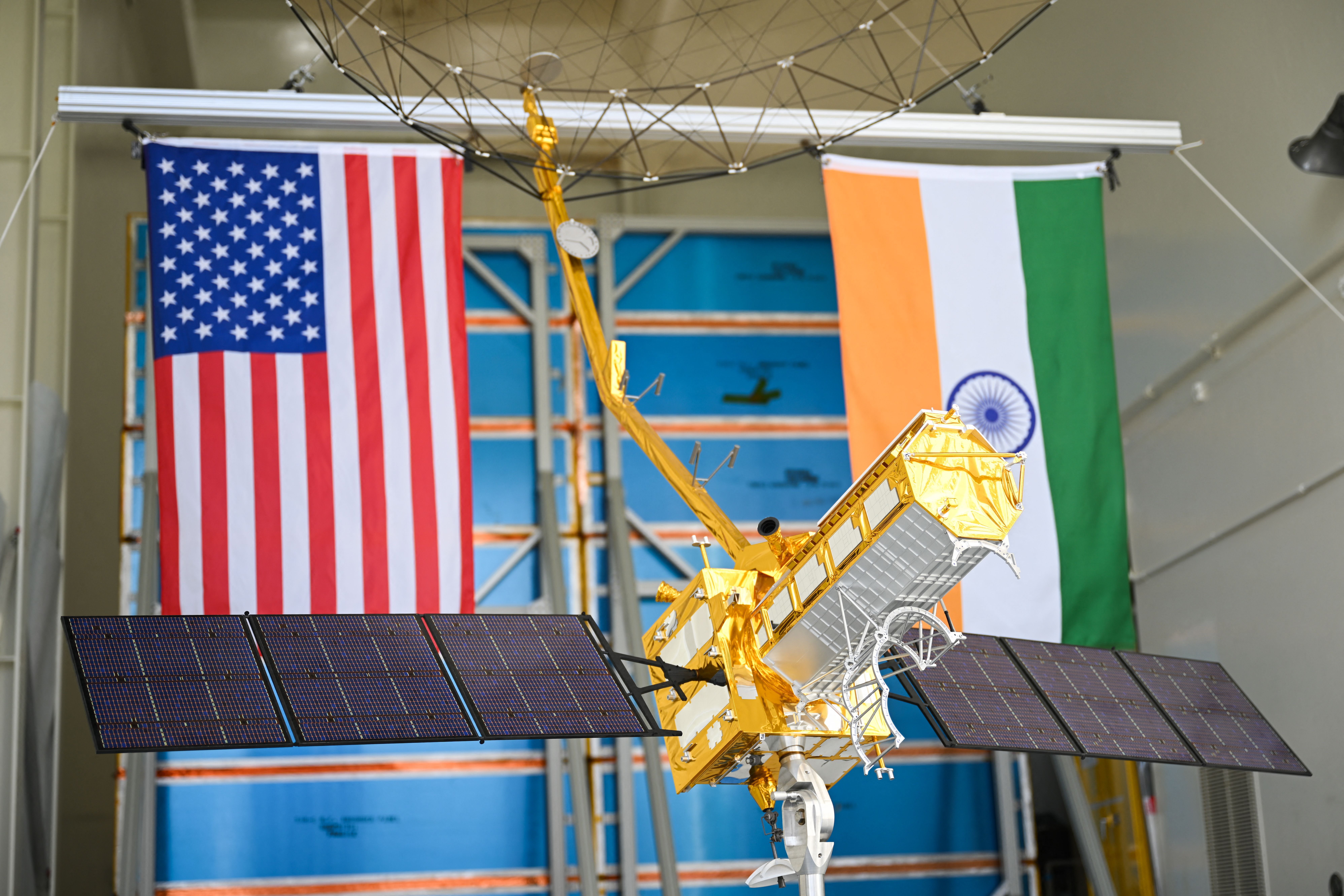
On July 30, 2025, the United States announced 25 percent tariffs on Indian goods. While diplomatic tensions simmered on the trade front, a cosmic calm prevailed at the Sriharikota launch range. Officials from NASA and ISRO were preparing to launch an engineering marvel into space—the NASA-ISRO Synthetic Aperture Radar (NISAR), marking a significant milestone in the India-U.S. bilateral partnership.

Tejas Bharadwaj
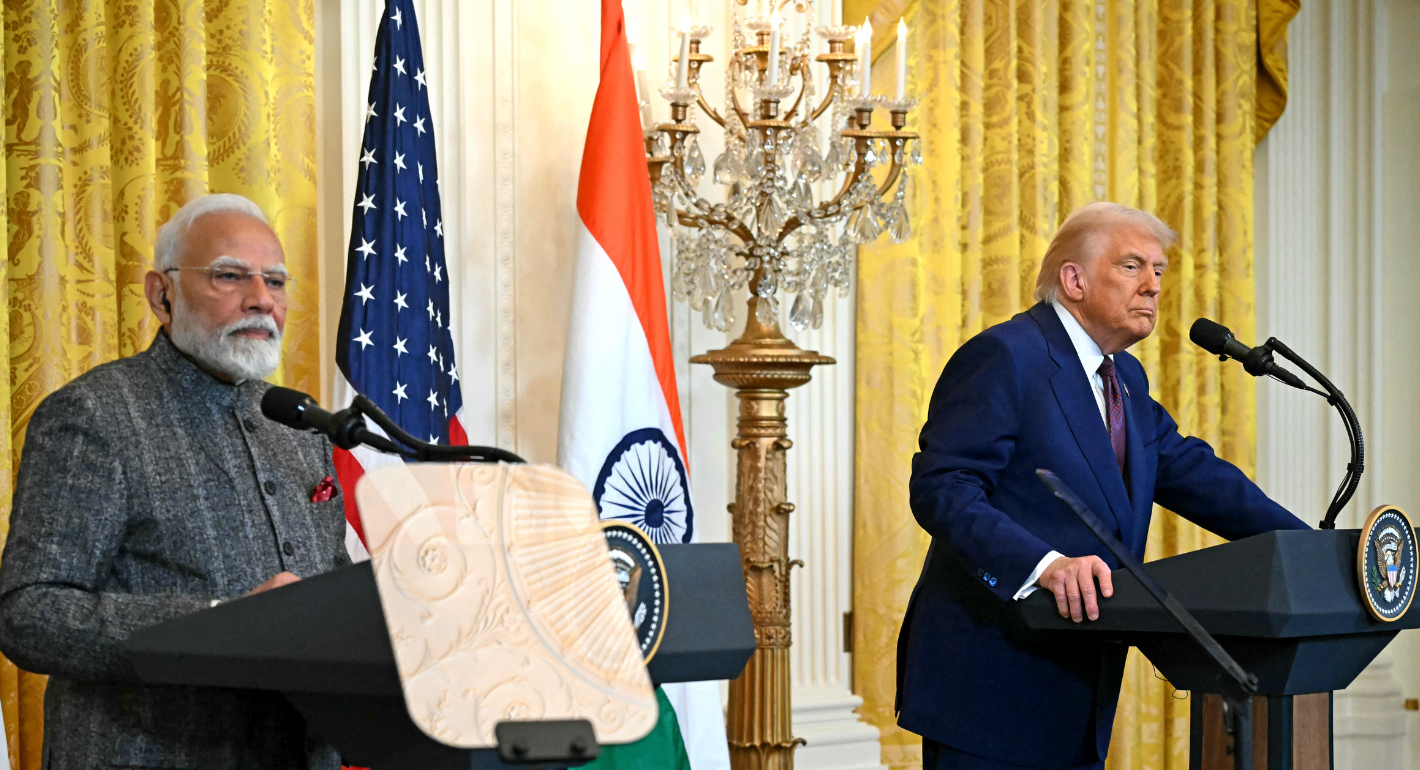
The India-U.S. relationship currently appears buffeted between three “Ts”—TRUST, Tariffs, and Trump.

Arun K. Singh
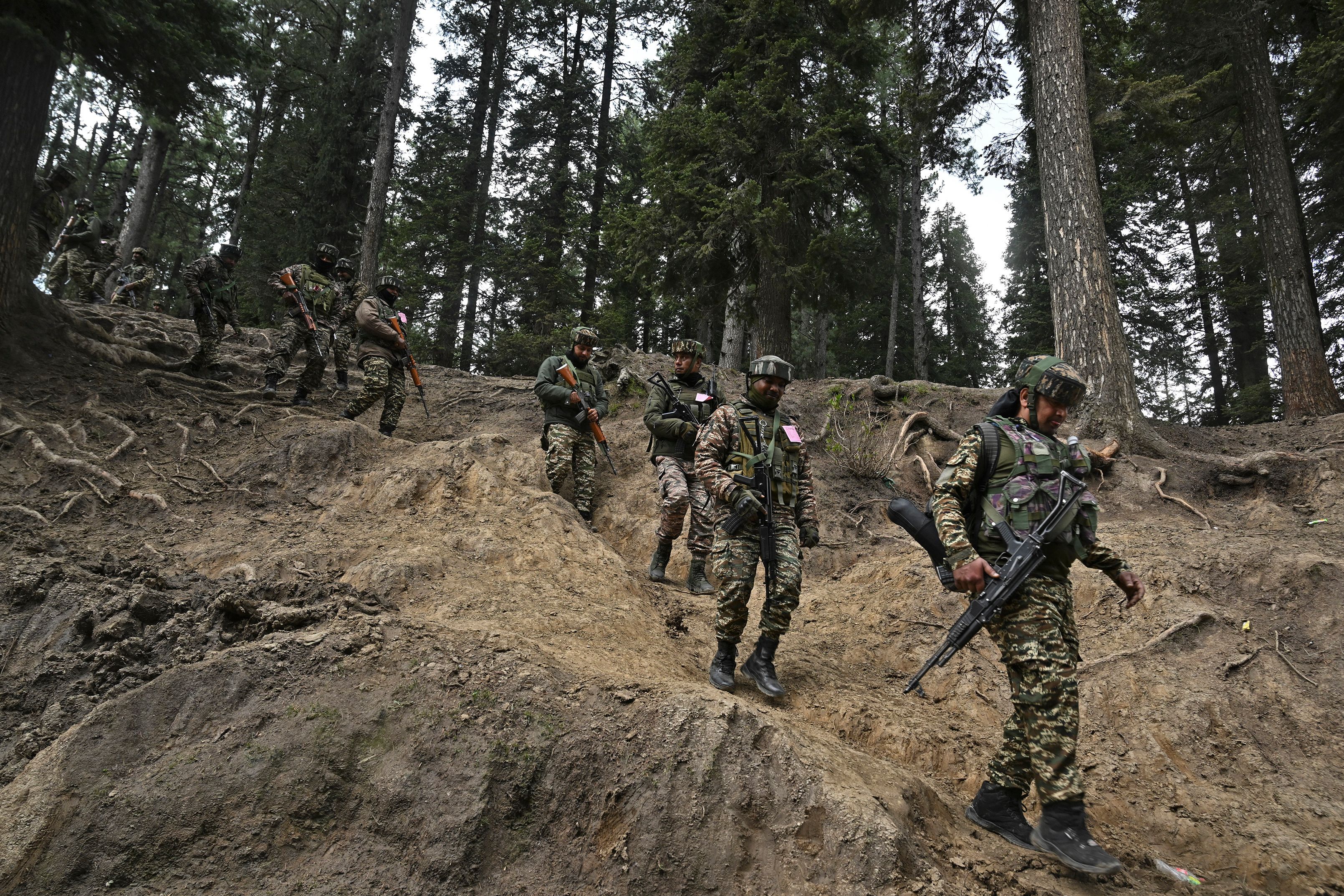
On May 7, 2025, between 1:05 and 1:30 a.m. (IST), airstrikes carried out by the Indian Air Force hit nine locations inside Pakistan and Pakistan occupied Kashmir (PoK). It was codenamed Operation Sindoor.

Rudra Chaudhuri