

Article
Wang Tao
{
  "authors": [
    "Wang Tao"
  ],
  "type": "legacyinthemedia",
  "centerAffiliationAll": "",
  "centers": [
    "Carnegie Endowment for International Peace",
    "Carnegie China"
  ],
  "collections": [
    "China’s Foreign Relations"
  ],
  "englishNewsletterAll": "",
  "nonEnglishNewsletterAll": "",
  "primaryCenter": "Carnegie China",
  "programAffiliation": "",
  "programs": [],
  "projects": [
    "Carnegie Oil Initiative"
  ],
  "regions": [
    "East Asia",
    "China"
  ],
  "topics": [
    "Economy",
    "Climate Change"
  ]
}
Source: Getty
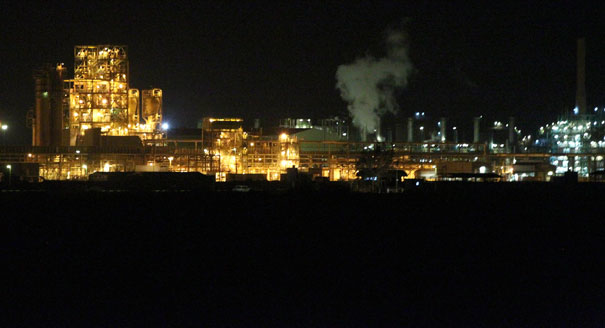
China still has to continue the use of fossil fuels for the immediate future, but even in the very best scenario, shale gas and unconventional oil could only serve as transitional energy sources.
Source: Energy Transition
After a decade of fast economic growth, China has found itself highly dependent on foreign imports for nearly 60% of its total oil demand. The concern for greater oil supply security and price volatility makes China very keen to tap into unconventional oil resources, both domestic and overseas.
China is, in fact, rich in unconventional oil resources, ranging from tight oil similar to that found in the US, to bitumen and heavy oil resources that is found in Venezuela. China has even been producing oil from coal since the 1950s, probably one of the dirtiest unconventional oil sources that has recently become economical due to technological advancements and the high price of oil. It is therefore not surprising that Chinese state-owned oil companies are actively investing in these unconventional oil resources and their extraction as well as into American companies; they expect to better understand the technological advancements of the US fracking industry and to bring this know-how back to China. Given the similarity in fracking technology for shale gas and shale oil, this is two birds for one stone: China’s surging demand in natural gas and a gas price nearly five times as high as that in US makes tapping into domestic shale gas and oil reserves economical and offers multiple benefits. These include reducing import dependency of both oil and gas, replacing coal to clean up air pollution and even reducing carbon emissions. These benefits make it hard for the Chinese government to resist.
However, the most significant obstacle to China’s shale development is clearly the lack of adequate water resources needed for this water-intensive practice. The pursuit of a disputably cleaner fossil fuel option over coal must not jeopardize China’s vulnerable water ecosystem.The Chinese government therefore has to make very cautious decisions in exploiting unconventional oil and gas resources, carefully weighing the benefits and consequences these actions may have on the local economies and ecosystems. Any future fracking practice in China has to be subject to the most stringent water regulations, with a comprehensive and independent assessment of all environment impacts.
China also has vast solar and wind power potential in the same areas where unconventional oil and gas resources are expected. Tapping into these green and unlimited renewable energy sources has a much lower ecological impact than continuing to rely on fossil fuels. This is the long term solution to China’s energy challenges and the earlier the country transitions to it, the better it would be for its economy and environment.
A similar debate also takes place in Europe, where policy makers discuss the development of renewable energy versus shale gas. In addition to very strict environmental impact assessments, fracking will also be subject to the EU’s directives, and a number of European countries such as Germany opt to instead pioneer in renewable energy, particularly wind and solar. It is a groundbreaking yet challenging task, even for advanced economies like Germany, and it is in China’s interests to be a collaborative partner, to watch closely and to learn from Germany’s experience.
It is inevitable that China still has to continue the use of fossil fuels for the immediate future, but even in the very best scenario, shale gas and unconventional oil could only serve as “transitional” energy sources. A serious energy transition is a long-term commitment, and it is important that China does not lose its vision on the way.

Former Nonresident Scholar, Carnegie-Tsinghua Center for Global Policy
Wang Tao was a nonresident scholar in the Energy and Climate Program based at the Carnegie–Tsinghua Center for Global Policy.
Recent Work
Wang Tao
Wang Tao, Yang Yifang
Carnegie India does not take institutional positions on public policy issues; the views represented herein are those of the author(s) and do not necessarily reflect the views of Carnegie, its staff, or its trustees.

After the chill in ties between 2020 and 2024 that brought India–China relations to their lowest point in several decades, the two countries have engaged each other afresh. This paper argues that there are predominantly four imperatives guiding India’s approach to China, and they exist in an order of priority.

Saheb Singh Chadha

This piece argues that India’s central challenge is not managing a single flashpoint but resolving the underlying tension between expansion and institutional coherency of the BRICS grouping.

Vrinda Sahai

On March 10, 2026, India’s Union Cabinet approved amendments to Press Note 3, a regulation that mandated government approval on all foreign direct investment (FDI) from countries sharing a land border with India. This amendment raises questions primarily about whether its stated benefits will materialize and if the risks have been adequately weighed. This piece will address the same.

Konark Bhandari

This piece examines India’s response to U.S. sanctions and tariffs, specifically assessing the immediate market consequences, such as alterations in import costs, and the broader strategic implications for India’s energy security and foreign policy orientation.
Vrinda Sahai
This paper examines the evolution of India-China economic ties from 2005 to 2025. It explores the impact of global events, bilateral political ties, and domestic policies on distinct spheres of the economic relationship.

Santosh Pai