

In The Media
Vikram Nehru
{
  "authors": [
    "Vikram Nehru"
  ],
  "type": "legacyinthemedia",
  "centerAffiliationAll": "dc",
  "centers": [
    "Carnegie Endowment for International Peace"
  ],
  "collections": [],
  "englishNewsletterAll": "asia",
  "nonEnglishNewsletterAll": "",
  "primaryCenter": "Carnegie Endowment for International Peace",
  "programAffiliation": "AP",
  "programs": [
    "Asia"
  ],
  "projects": [],
  "regions": [
    "Southeast Asia",
    "Indonesia"
  ],
  "topics": [
    "Political Reform",
    "Economy"
  ]
}
Source: Getty
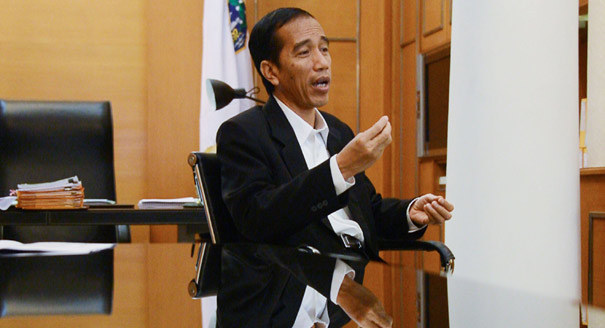
Faced with heavy expectations, Indonesia’s president-elect Joko Widodo must develop a plan of actions even before his October 2014 inauguration.
Source: Dialogue
Indonesia’s presidential election has a winner — finally. On August 21, after spending a fortnight hearing testimony in a lawsuit brought by the losing candidate alleging “massive and systemic fraud,” the Constitutional Court finally confirmed Joko Widodo — popularly known as Jokowi — as Indonesia’s next president. The court’s ruling is final with no right of appeal, so the transition to a Jokowi administration now begins in earnest as he prepares to take over the reins of the presidency on October 20. Despite winning the most closely contested presidential election in Indonesian history, the new president nevertheless shoulders an impossibly heavy burden of unrealistic expectations as he faces entrenched political, economic, and institutional obstacles that will make reforms a slow, long, and hard slog. While he must use his strengths and experience to build policy momentum from the very start to advance his agenda, he will also need to manage expectations and pace his reform program to ensure a steady drip of good news during his five-year administration. Most Indonesian and foreign political observers have acclaimed Jokowi’s win as a victory for democracy and a triumph for the common man. Both accolades are well-deserved; Indonesia's peaceful, fair, and transparent elections were an impressive accomplishment, and Jokowi’s modest background stands in stark contrast to virtually the entire current generation of Indonesian politicians. As governor of Jakarta, the capital city, and mayor of Solo, a mid-sized town in Central Java, Jokowi became known as a man of the people, touring slums on foot, listening to the concerns of the poor, and then resolving their problems using innovative, win-win solutions.
Compared to his previous positions as mayor and governor, however, as president Jokowi will have to tackle challenges that are greater in size and complexity. Politically, he will face a fractious parliament in which the losing candidate in the presidential elections, ex-General Prabowo Subianto, currently commands a coalition of parties that account for nearly two-thirds of the seats in parliament.
Institutionally, Jokowi will inherit a weak bureaucracy, a corrupt justice system, and subnational governments in need of urgent repair. Center-local fiscal arrangements have encouraged bloated subnational bureaucracies, not efficient service delivery. The general view of Indonesia’s judiciary as inefficient, incompetent, and corrupt was underscored by last year's arrest and conviction of the Constitutional Court’s Chief Justice. The police and prisons also rank highly in surveys of perceived corruption and have a reputation for targeting the poor, powerless and uneducated, while protecting the rich and powerful.
On the economic front, Jokowi will inherit a slowing economy facing macroeconomic imbalances and structural challenges. The imbalances include an external current balance that plunged into deficit for the first time in 15 years and a fiscal deficit perilously close to its constitutionally-mandated ceiling of 3 percent of GDP. Structural challenges include severe infrastructure bottlenecks, a shortage of skills across a range of occupations, and an investment environment that places Indonesia near the bottom of international rankings.Jokowi does not seem overawed by these daunting challenges, but has instead showed a quiet confidence. He has done a good job so far of managing expectations and moving forward with deliberate speed. He has appointed a five- member high-powered transition team led by Rini Suwandi, a 56-year-old technocrat, to prepare a policy road map that will fulfill his campaign promises. A separate “headhunting team” is vetting potential ministerial candidates, complemented by an innovative online public survey soliciting views from the public of their candidate choice. It is important that all deliberations of these two teams are confidential until Jokowi is ready to reveal his vision for the future of Indonesia and announce his team to the country. He proposes to announce his cabinet in early October, which hopefully will meet his criteria of professionalism, honesty and teamwork.
Jokowi will need to spend his limited and hard-earned political capital in the early days of his administration on only the most critical reforms. Foremost among these must be an increase in the price of fuel and electricity to rein in out-of-control budgetary subsidies. Necessary as it may be, this will surely become a lightning rod for criticism of the new government and an opportunity for the Prabowo-led opposition to block the new president's program. Yet taking the political hit early for a necessary but unpopular reform will give Jokowi the fiscal space to increase expenditures for more popular infrastructure and social protection programs, while also lowering the fiscal and balance of payments deficits. Of much lower priority in the early days, and therefore not recommended at this time, would be the abolition, merger, or re-structuring of ministries (as recommended by the transition team). In his early days in office, he will need to motivate and encourage the bureaucracy, not demoralize or antagonize it.
To ensure smoother passage of new laws through parliament, Jokowi’s early game plan should also include winning over some opposition parties to the ruling coalition. To do this, he has to emerge from the shadow of his mentor, Megawati Sukarnoputri, and open discussions with potential partners, such as the Democratic Party or Golkar — something that Megawati has always been reluctant to do. Vice President-elect, Yusuf Kalla, understands the horse trading involved in forming coalitions and making them work, and could be a useful ally, and perhaps even interlocutor, in these negotiations.
Finally, Jokowi’s 100-day action plan should focus on programs for which he was elected — namely, getting infrastructure projects moving again, improving the delivery of basic services to the poor, expanding affordable health insurance nationwide for low income groups, and reducing corruption by strengthening the Anti-Corruption Commission, streamlining regulations, and introducing e-governance where possible. These programs can build on his strengths as an administrator and his experience as a subnational government leader. Since these programs may take time to implement, Jokowi should outline a realistic timetable for change at the very outset of his administration and then stick to it. The emphasis should not be on “big bang” change, but rather a steady drip of reforms which, with time, could transform the policy and institutional landscape of the country.
Jokowi should not be expected to solve Indonesia’s deep-rooted problems overnight. But he should have a plan of action that sets the right priorities, and select a cabinet capable of implementing them. And that he can demonstrate well before he takes office on October 20.
Former Nonresident Senior Fellow, Asia Program
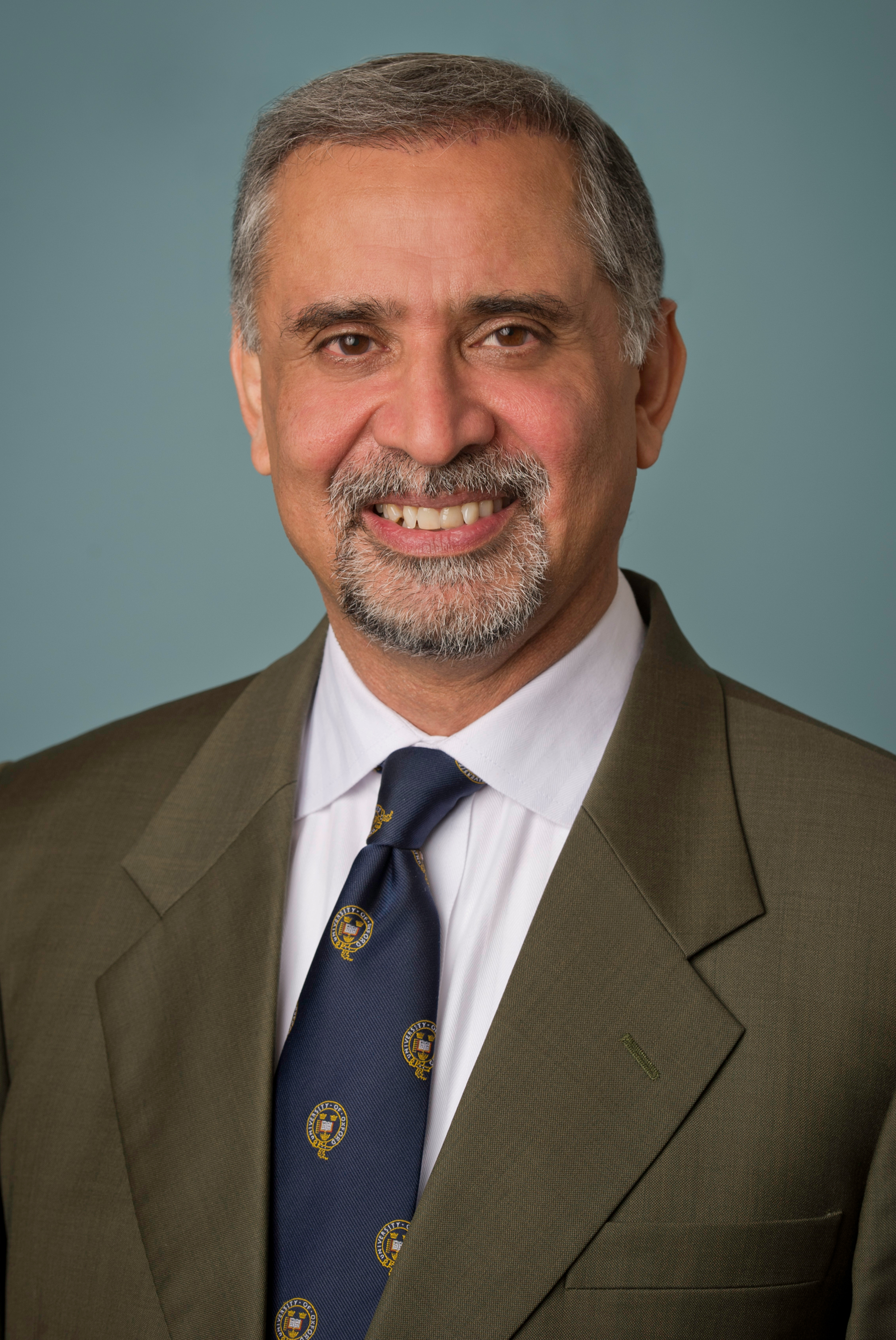
Nehru was a nonresident senior fellow in the Carnegie Asia Program. An expert on development economics, growth, poverty reduction, debt sustainability, governance, and the performance and prospects of East Asia, his research focuses on the economic, political, and strategic issues confronting Asia, particularly Southeast Asia.
Recent Work
Vikram Nehru
Vikram Nehru
Carnegie India does not take institutional positions on public policy issues; the views represented herein are those of the author(s) and do not necessarily reflect the views of Carnegie, its staff, or its trustees.

On March 10, 2026, India’s Union Cabinet approved amendments to Press Note 3, a regulation that mandated government approval on all foreign direct investment (FDI) from countries sharing a land border with India. This amendment raises questions primarily about whether its stated benefits will materialize and if the risks have been adequately weighed. This piece will address the same.

Konark Bhandari

This piece examines India’s response to U.S. sanctions and tariffs, specifically assessing the immediate market consequences, such as alterations in import costs, and the broader strategic implications for India’s energy security and foreign policy orientation.

Vrinda Sahai

This paper examines the evolution of India-China economic ties from 2005 to 2025. It explores the impact of global events, bilateral political ties, and domestic policies on distinct spheres of the economic relationship.

Santosh Pai
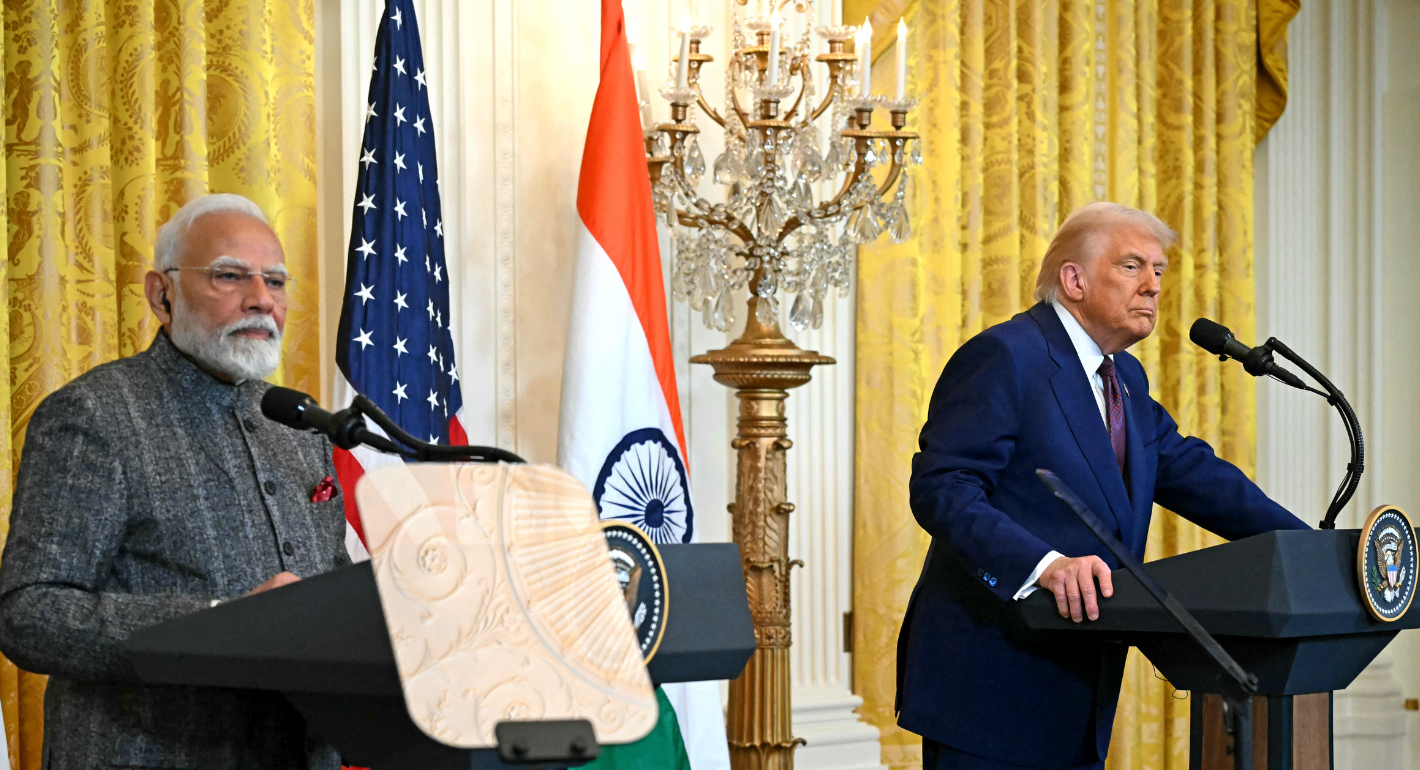
The India-U.S. relationship currently appears buffeted between three “Ts”—TRUST, Tariffs, and Trump.
Arun K. Singh
This article argues that the geopolitical circumstances have never been more conducive, not merely for the early conclusion of the free trade agreement (FTA) between India and the EU, but also for crafting a substantive and comprehensive strategic partnership.
Mohan Kumar