• Research
  • About
  • Experts
Carnegie India logoCarnegie lettermark logo
AI
{
  "authors": [
    "Mikhail Krutikhin"
  ],
  "type": "commentary",
  "centerAffiliationAll": "",
  "centers": [
    "Carnegie Endowment for International Peace",
    "Carnegie Russia Eurasia Center"
  ],
  "collections": [],
  "englishNewsletterAll": "",
  "nonEnglishNewsletterAll": "",
  "primaryCenter": "Carnegie Russia Eurasia Center",
  "programAffiliation": "",
  "programs": [],
  "projects": [],
  "regions": [
    "North America",
    "United States",
    "Russia",
    "Eastern Europe",
    "Ukraine"
  ],
  "topics": [
    "Economy",
    "Trade",
    "Climate Change",
    "Foreign Policy"
  ]
}

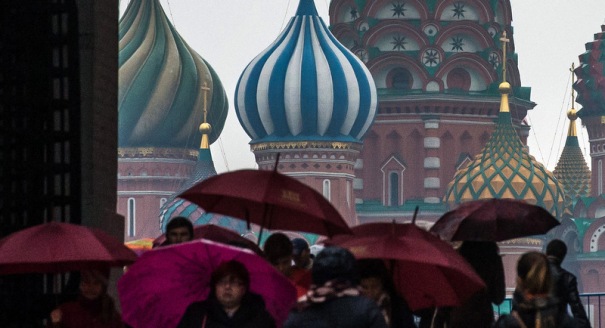
Source: Getty

Commentary
Carnegie Russia Eurasia Center

A Hereditary Disease

The old Soviet “enemies-are-everywhere” mentality frequently leads Russian decision makers to losses and defeat.

Link Copied
By Mikhail Krutikhin
Published on Oct 21, 2014

Plummeting oil prices—is it a conspiracy?

Many officials in Moscow, including top government figures, are convinced that the United States and Saudi Arabia have reached a secret agreement to make Russia’s life harder and change the ruling regime, while it is unable to carry out crucial social and economic programs.

No proof has been produced for the conspiracy theory. Nevertheless, a vivid image of President Barack Obama and Saudi King Abdullah bin Abdulaziz leaning their heads together to plot against Vladimir Putin seems to be constantly in the minds of Russian officials. Some officials even insist that the Soviet Union fell apart because of a similar U.S.-Saudi agreement to organize a fall in oil prices.

This approach reflects a mentality inherited from the USSR-KPSS-KGB era, and deeply fixed in the brains of the current decision makers in Russia. They sincerely believe that any government can, and must, issue political orders to industries and economy sectors, just as the old Gosplan did on instructions from the Central Committee of the Communist Party.

My foreign friends who have participated in negotiations with Russian officials say they were bewildered by the attitude of their Russian counterparts, who regarded the opposite party as just “America,” ”England,” ”Germany,” or ”Japan”, and insisted that the leaders of those nations could assign budgets to joint projects and give political commands to specific business companies. A recent fashionable idea was to imagine the CEOs of major U.S. energy corporations called to the State Department or even the White House and ordered to start selling liquefied natural gas immediately to Europe, in order to replace supply by Gazprom.

The scheme was so enticing to these officials that they dropped arguments which conflicted with this model of behavior: the absence of liquified natural gas (LNG) export terminals in the United States, and the gap between gas prices in Europe and Asia. They insisted that commercial companies would follow the political line of the U.S. government, and suffer commercial losses for the sake of a great national goal, the fall of the Russian regime.

The hereditary disease of the “enemies-are-everywhere” mentality frequently leads Russian decision makers to losses and defeat. In their relations with foreigners they usually pursue zero sum solutions, eagerly desiring to win and see the other party lose. The notion of a win-win approach remains alien to such negotiators.

The blind alley of the Russian-Ukrainian talks on gas issues is a good example. If both parties make concessions (for Gazprom, this would mean a new contract with Naftogaz along the same commercial lines as the Russian company signs with other European clients, and for the Ukrainians, repayment of debt), everybody would be happy. The Ukrainians and Europeans would not freeze, Russia would have an extra source of income for its ailing budget, and the reputation of Gazprom would not suffer because of its inability to supply enough gas in the winter season of peak demand.

The problem, as seen in Moscow, is the fact that the win-win solution is proposed by the Ukrainians, and the Russian party just cannot accept an offer coming from the “fascist junta in Kyiv.” Therefore, Moscow keeps stubbornly insisting on an approach that is going to make every party very unhappy when winter comes…

It is not enough to proclaim modernization and embrace capitalism. Many tears are needed to get rid of the old Soviet mentality.

Mikhail Krutikhin is a partner at the independent RusEnergy consulting agency.

About the Author

Mikhail Krutikhin

Mikhail Krutikhin
EconomyTradeClimate ChangeForeign PolicyNorth AmericaUnited StatesRussiaEastern EuropeUkraine

Carnegie India does not take institutional positions on public policy issues; the views represented herein are those of the author(s) and do not necessarily reflect the views of Carnegie, its staff, or its trustees.

More Work from Carnegie India

  • Paper
    Threading the Needle: India’s Path Forward with China

    After the chill in ties between 2020 and 2024 that brought India–China relations to their lowest point in several decades, the two countries have engaged each other afresh. This paper argues that there are predominantly four imperatives guiding India’s approach to China, and they exist in an order of priority.

      Saheb Singh Chadha

  • Article
    Managing Divergence: India’s BRICS Presidency in 2026

    This piece argues that India’s central challenge is not managing a single flashpoint but resolving the underlying tension between expansion and institutional coherency of the BRICS grouping.

      Vrinda Sahai

  • Article
    India–Africa Strategic Partnership: Challenges, Potential, and Possible Pathways

    A partnership between India, a country of subcontinental size, and Africa, a continent of fifty-four countries, may seem asymmetric until one notes that both are home to nearly the same number of people—1.4 billion. This essay spells out the existing challenges to the partnership, its optimal potential, and the possible pathways to realize it over the next quarter-century.

      Rajiv Bhatia

  • Commentary
    The Unresolved Challenges in U.S.–India Semiconductor Cooperation

    The U.S.–India semiconductor cooperation story is well-stocked with top-level strategic intent. What remains unresolved, however, are some underlying challenges that will determine whether the cooperation actually functions. Three such friction points stand out.

      Shruti Mittal

  • Commentary
    Emerging From the “Zombie State” of Trade Agreements: The India-EU FTA

    The India–EU Free Trade Agreement (FTA) is shaping up to be one of the most consequential trade negotiations, both economically and strategically. But, what’s in the agreement, what’s missing, and what will determine its success in the years ahead

      Vrinda Sahai, Nicolas Köhler-Suzuki

Get more news and analysis from
Carnegie India
Carnegie India logo, white
Unit C-4, 5, 6, EdenparkShaheed Jeet Singh MargNew Delhi – 110016, IndiaPhone: 011-40078687
  • Research
  • About
  • Experts
  • Projects
  • Events
  • Contact
  • Careers
  • Privacy
  • For Media
Get more news and analysis from
Carnegie India
© 2026 Carnegie Endowment for International Peace. All rights reserved.