

Commentary
Marc Pierini
{
  "authors": [
    "Marc Pierini"
  ],
  "type": "legacyinthemedia",
  "centerAffiliationAll": "dc",
  "centers": [
    "Carnegie Endowment for International Peace",
    "Carnegie Europe",
    "Malcolm H. Kerr Carnegie Middle East Center"
  ],
  "collections": [
    "Turkey’s Transformation"
  ],
  "englishNewsletterAll": "ctw",
  "nonEnglishNewsletterAll": "",
  "primaryCenter": "Carnegie Europe",
  "programAffiliation": "EP",
  "programs": [
    "Europe"
  ],
  "projects": [],
  "regions": [
    "Europe",
    "Türkiye",
    "Western Europe",
    "Iran"
  ],
  "topics": [
    "Foreign Policy",
    "Political Reform"
  ]
}
Source: Getty
A more assertive relationship with Turkey is in store for the European Union, but the assertiveness will likely be both ways.
Source: EUobserver
BRUSSELS - The current tone between the European Union and Turkey - some have spoken of a war of words - reflects an incompatibility between president Recep Tayyip Erdogan’s political choices on the domestic front and Turkey's economic, financial, and security interests on the international scene.
The situation is not going to temper any time soon.
It is probable that the Turkish president - the first to be elected directly by voters - will remain assertive on the international stage, as this serves him and his party well at the ballot box.Turkey's Western allies will continue to be surprised, and at times irritated, by a Turkish narrative that seems almost perfectly at odds with the country’s existing affiliations, including to Nato, and its proclaimed ambitions, namely toward EU membership.
This sorry state of affairs will provide pretexts for some Turkey foes in the West to plead for putting more distance between us and this uneasy partner.
Yet this would mean all too quickly forgetting the many Turkish citizens hoping for true democratic progress and respect for diversity, as well as the EU’s strategic interest in a stable and democratic Turkey.
Given the current international landscape, the EU is likely to be increasingly assertive with Turkey in at least three respects.
It will keep defending fundamental liberties and rule of law.
It will keep stressing the requirement of sealing the Turkey-ISIS border and fostering counter-terrorism co-operation in what is a common homeland security threat.
Finally, it will act in defence of a sound economic growth pattern in Turkey, because both partners have an interest in a healthy Turkish economy, one that is already fully integrated to the EU in terms of industrial production and remains a large and dynamic market.
Arguments about corruption allegations, suppression of dissent or “lessons in freedoms” will not hide the fundamentals: Turkey's economic anchor is and will remain the EU, while its security anchor is and will remain Nato.
All attempts to travel in another direction during the past few years have led to dead ends. The new rhetoric about Turkey-Russia economic co-operation is unlikely to go very far either.
There are 5 key areas where the EU and #Turkey can work together to keep their relationship on track.Tweet This
There are five key areas where the EU and Turkey can work together to keep their relationship on track.
First, counterterrorism co-operation must be kept an absolute priority, especially in regard to European jihadists and oil smuggling (the United States is also part of this effort).
Second, the EU and Turkey should modernise the Customs Union and look at ways to associate Turkey, under the appropriate conditions, with the Transatlantic Trade and Investment Partnership.
Third, advancements should be made on the EU-Turkey visa facilitation process and the implementation of the readmission agreement covering irregular migrants from third countries.
Fourth, both Turkey and the EU should co-operate fully on alleviating the tragedy of the Syrian and Iraqi refugees, including the issue of semi-permanent resettlements.
For this, the EU and Turkey should promote the convening of an international conference together with the UNHCR, following up on a German initiative in October.
Finally, while Turkey’s EU accession process is essentially on hold until the country returns to a normal rule-of-law architecture, one important exception should be made by the EU (i.e. by Cyprus) to let the discussions on chapters 23 and 24 (dealing with rule of law) go forward in mutual interest.
A more assertive relationship with #Turkey is in store for Europe.Tweet This
This is not a revolution of EU policy, and is least of all a distancing from Turkey.
It is a re-ordering of priorities demanded by the current international situation, including Turkey's domestic constraints and the EU’s foreign policy interests. A more assertive relationship with Turkey is in store for Europe; and the assertiveness will be both ways.

Senior Fellow, Carnegie Europe
Marc Pierini is a senior fellow at Carnegie Europe, where his research focuses on developments in the Middle East and Turkey from a European perspective.
Recent Work
Marc Pierini
Marc Pierini
Carnegie India does not take institutional positions on public policy issues; the views represented herein are those of the author(s) and do not necessarily reflect the views of Carnegie, its staff, or its trustees.

After the chill in ties between 2020 and 2024 that brought India–China relations to their lowest point in several decades, the two countries have engaged each other afresh. This paper argues that there are predominantly four imperatives guiding India’s approach to China, and they exist in an order of priority.

Saheb Singh Chadha

This piece argues that India’s central challenge is not managing a single flashpoint but resolving the underlying tension between expansion and institutional coherency of the BRICS grouping.

Vrinda Sahai
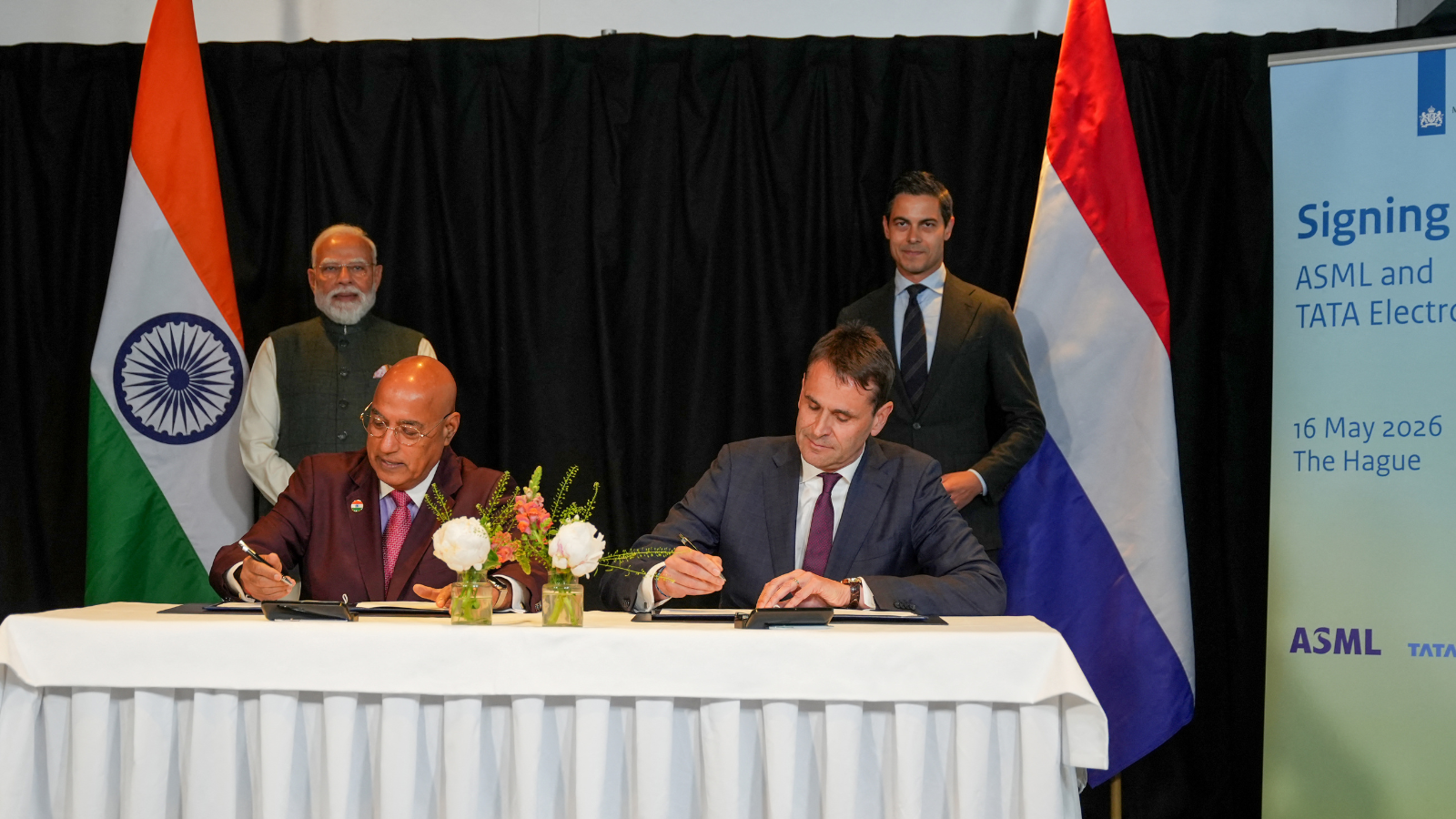
The ASML MoU with Tata Electronics is an indicator of how far the Indian semiconductor ecosystem has come. This ecosystem has been years in the making and represents real commercial logic.

Konark Bhandari

A partnership between India, a country of subcontinental size, and Africa, a continent of fifty-four countries, may seem asymmetric until one notes that both are home to nearly the same number of people—1.4 billion. This essay spells out the existing challenges to the partnership, its optimal potential, and the possible pathways to realize it over the next quarter-century.

Rajiv Bhatia

The India–EU Free Trade Agreement (FTA) is shaping up to be one of the most consequential trade negotiations, both economically and strategically. But, what’s in the agreement, what’s missing, and what will determine its success in the years ahead
Vrinda Sahai, Nicolas Köhler-Suzuki