• Research
  • About
  • Experts
Carnegie India logoCarnegie lettermark logo
{
  "authors": [
    "Eugene Rumer",
    "Thomas Graham"
  ],
  "type": "legacyinthemedia",
  "centerAffiliationAll": "dc",
  "centers": [
    "Carnegie Endowment for International Peace",
    "Carnegie Russia Eurasia Center"
  ],
  "collections": [],
  "englishNewsletterAll": "ctw",
  "nonEnglishNewsletterAll": "",
  "primaryCenter": "Carnegie Endowment for International Peace",
  "programAffiliation": "russia",
  "programs": [
    "Russia and Eurasia"
  ],
  "projects": [],
  "regions": [
    "North America",
    "United States",
    "Russia",
    "Eastern Europe",
    "Ukraine"
  ],
  "topics": [
    "Security",
    "Military",
    "Foreign Policy"
  ]
}

Source: Getty

In The Media

Arm Ukraine and You Risk Another Black Hawk Down

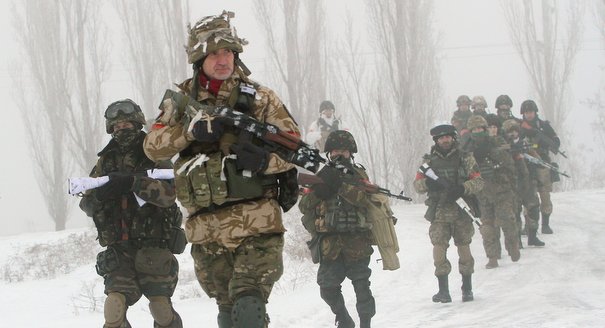
Sending weapons to Ukraine could prolong the country’s agony and distract it from the vital task of reconstruction.

Link Copied
By Eugene Rumer and Thomas Graham
Published on Feb 3, 2015

Source: Financial Times

The logic is misguided, but it is easy enough to grasp. Ukraine’s poorly equipped army cannot on its own inflict enough pain on the Russian-backed separatist insurgency to force an effective ceasefire that might lead to a negotiated truce. So America should help by sending defensive weapons, and some lethal ones too. Once body bags start arriving in Russian towns (the theory goes) President Vladimir Putin will relent, fearing a backlash from a public already unnerved by soaring inflation.

This is the case made by a group of former senior US officials, and it is reportedly being discussed within the Obama administration. It is, however, deeply mistaken. Intended to help a stricken country, it could instead prolong Ukraine’s agony and distract it from the vital task of reconstruction. It is highly unlikely to knock Mr Putin off his destructive course. And it would bring the US a step closer to direct military confrontation with Russia.

Russians support Mr Putin. The Kremlin has blamed the economic crisis on western sanctions, and it will blame military casualties on the west, too. There is nothing to suggest that Russians do not believe the Kremlin narrative. They are unlikely to abandon Mr Putin in his struggle against the west.

There are practical questions, too. It is pointless to send weapons to troops not trained in their use. Will the US and its allies send trainers to eastern Ukraine? If they do, they will be sending Americans into a war zone with Russia as the enemy. It will be hard to pretend then that the US is not a party to the conflict. What, realistically, are the chances of making sure that only regular Ukrainian troops, and not private militias, have access to western-supplied weapons? If a western non-combatant in uniform is captured by the separatists, does the US try to rescue them? Mark Bowden’s Black Hawk Down chronicled the perils of such an operation in downtown Mogadishu. Imagine what could happen 10 miles from the Russian border, in an area controlled by Russian personnel.

Finally, imagine the response. What do we do if Russia continues to escalate the conflict? Or if the Kremlin launches a cyber attack against an American financial institution, destroying data about asset ownership? Does America then inch closer towards war?

It is not a kindness to kindle unrealistic hopes. Of course Ukraine is a victim of aggression. But, short of a campaign like that fought by the US and its allies in the Balkans in the 1990s — which no one now advocates — no amount of US or Nato assistance can alter the fact that Russia has the upper hand. In August, and again in January, Mr Putin chose to escalate rather than allow the separatists to be defeated. Ukraine will need help rebuilding its army, and the US should provide it. But it will take years, and cannot be done in the middle of a war with a more powerful neighbour.

In contrast to this bold proposal to send arms to Ukraine, western economic assistance for the country has so far been timid. The US has promised $3bn in loan guarantees, a fraction of the tens of billions the country needs. In part, that is because Washington still suspects rampant corruption in Kiev. Will the military function better than the government it serves?

Ukraine cannot win this conflict now. It must be frozen. Ukraine’s leaders should be told as much. It will deepen the tragedy if soldiers are sent to fight a hopeless battle. A free and independent Ukraine, a solid defence of the European order and a firm rebuff of Russian aggression are worthy goals. But they do not absolve us of our responsibility to consider the consequences of our actions. The current proposal to arm Ukraine does not meet that standard.

This article was originally published in the Financial Times.

About the Authors

Eugene Rumer

Director and Senior Fellow, Russia and Eurasia Program

Rumer, a former national intelligence officer for Russia and Eurasia at the U.S. National Intelligence Council, is a senior fellow and the director of Carnegie’s Russia and Eurasia Program.

Thomas Graham

Authors

Eugene Rumer
Director and Senior Fellow, Russia and Eurasia Program
Eugene Rumer
Thomas Graham
SecurityMilitaryForeign PolicyNorth AmericaUnited StatesRussiaEastern EuropeUkraine

Carnegie India does not take institutional positions on public policy issues; the views represented herein are those of the author(s) and do not necessarily reflect the views of Carnegie, its staff, or its trustees.

More Work from Carnegie India

  • Commentary
    India Signs the Pax Silica—A Counter to Pax Sinica?

    On the last day of the India AI Impact Summit, India signed Pax Silica, a U.S.-led declaration seemingly focused on semiconductors. While India’s accession to the same was not entirely unforeseen, becoming a signatory nation this quickly was not on the cards either.

      Konark Bhandari

  • Commentary
    The Impact of U.S. Sanctions and Tariffs on India’s Russian Oil Imports

    This piece examines India’s response to U.S. sanctions and tariffs, specifically assessing the immediate market consequences, such as alterations in import costs, and the broader strategic implications for India’s energy security and foreign policy orientation.

      Vrinda Sahai

  • Article
    Military Lessons from Operation Sindoor

    The India-Pakistan conflict that played out between May 6 and May 10, 2025, offers several military lessons. This article presents key takeaways from Operation Sindoor and breaks down how India’s preparations shaped the outcome and what more is needed to strengthen future readiness.

      Dinakar Peri

  • Book
    India and the Sovereignty Principle: The Disaggregation Imperative

    This book offers a comprehensive analysis of India's evolving relationship with sovereignty in a complex global order. Moving beyond conventional narratives, it examines how the sovereignty principle shapes India's behavior across four critical domains—from traditional military power to contemporary data governance.

      Rudra Chaudhuri, Nabarun Roy

  • Commentary
    NISAR Soars While India-U.S. Tariff Tensions Simmer

    On July 30, 2025, the United States announced 25 percent tariffs on Indian goods. While diplomatic tensions simmered on the trade front, a cosmic calm prevailed at the Sriharikota launch range. Officials from NASA and ISRO were preparing to launch an engineering marvel into space—the NASA-ISRO Synthetic Aperture Radar (NISAR), marking a significant milestone in the India-U.S. bilateral partnership.

      Tejas Bharadwaj

Get more news and analysis from
Carnegie India
Carnegie India logo, white
Unit C-4, 5, 6, EdenparkShaheed Jeet Singh MargNew Delhi – 110016, IndiaPhone: 011-40078687
  • Research
  • About
  • Experts
  • Projects
  • Events
  • Contact
  • Careers
  • Privacy
  • For Media
Get more news and analysis from
Carnegie India
© 2026 Carnegie Endowment for International Peace. All rights reserved.