

In The Media
Vikram Nehru
{
  "authors": [
    "Vikram Nehru"
  ],
  "type": "legacyinthemedia",
  "centerAffiliationAll": "dc",
  "centers": [
    "Carnegie Endowment for International Peace"
  ],
  "collections": [],
  "englishNewsletterAll": "asia",
  "nonEnglishNewsletterAll": "",
  "primaryCenter": "Carnegie Endowment for International Peace",
  "programAffiliation": "AP",
  "programs": [
    "Asia"
  ],
  "projects": [],
  "regions": [
    "Southeast Asia",
    "Indonesia"
  ],
  "topics": [
    "Political Reform",
    "Economy"
  ]
}
Source: Getty
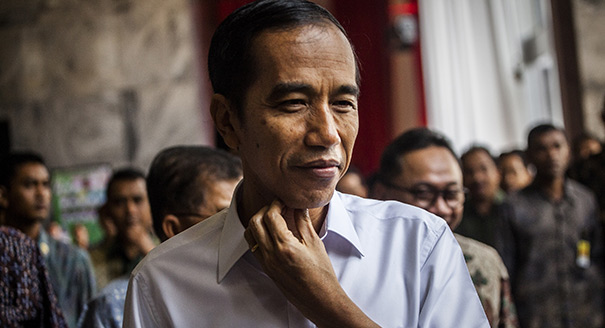
Indonesian President Joko Widodo faces two huge challenges. The first is political and has mesmerized the country for the last fortnight. The second is economic, less well known and less urgent, but will also test his leadership mettle.
Source: Nikkei Asian Review
Indonesian President Joko Widodo faces two huge challenges. The first is political, even existential, and has mesmerized the country for the last fortnight. The second is economic, less well known and less urgent, but will also test his leadership mettle.
The stakes are high. With steely resolve and good management, Widodo could emerge stronger. But succumbing to expediency would weaken him irreparably as a political leader; some have even suggested that his administration could end prematurely.
At the center of Indonesia's rapidly evolving political crisis is the president's nominee for police chief, Budi Gunawan. In the minds of many Indonesians, Widodo rightfully postponed Gunawan's inauguration when it emerged (after his nomination) that he was under investigation by the Corruption Eradication Commission, known by its Indonesian initials KPK. But Gunawan, it turns out, is a loyal and longtime acolyte of ex-President Megawati Sukarnoputri, Widodo's mentor and leader of his party, the Indonesian Party of Struggle (PDI-P).On her instructions, senior members of the party and its allies have threatened dire consequences if Gunawan is not sworn in immediately as police chief. Some have warned darkly of withdrawing support for Widodo's legislative program in parliament. Others, more rashly, have hinted at impeachment.
The stakes were raised when, in seemingly blatant retaliation, the police arrested the KPK's deputy chief commissioner for an alleged crime committed five years ago, leading him to resign. The police then opened investigations, unusually quickly by their standards, against another three commissioners (including the KPK's chief), reportedly on complaints brought by PDI-P members. If they were to resign too, the KPK would become ineffective and halt any further progress in Gunawan's investigation.
If Widodo -- who campaigned on a platform of curbing corruption -- holds his ground on Gunawan's inauguration despite these pressure tactics, he could cause the PDI-P to split. The PDI-P's party faithful would then have to choose between him and Megawati. And there is every likelihood that the majority would not choose Megawati. Indeed, if the popular media is any reflection of public opinion, then not only has she on this occasion overplayed her hand, but she also seems out of touch with the country's mood, appearing to value loyalty over integrity.
PDI-P parliamentarians, on the other hand, will think twice about abandoning Megawati, because she has the legal authority as party leader to remove and replace them. But if they defy her en masse, or apply the tried-and-tested response of challenging their party leader's action in the courts, then they could remain in parliament for months, if not years. In the meantime, Prabowo Subianto -- Widodo's unsuccessful rival for the presidency, and a leading member of the opposition coalition -- has expressed support for the embattled president.
The combination of these factors has strengthened Widodo's hand. Wilting under Megawati's pressure -- unlikely from the start -- now looks increasingly out of the question. His preference would probably be for Megawati to orchestrate a face saving climb down so the appearance of filial piety between the president and his mentor can be maintained and he can retain the PDI-P's support in parliament with little disruption. But if it comes to the Javanese equivalent of a showdown, Widodo's principled position would resonate well within his party and the electorate, and he would emerge the stronger politically.
Widodo will also need political strength to tackle the second, less visible, economic challenge confronting the country. Plummeting international oil prices will mean sharply lower oil revenues for Indonesia's 2015 budget, which could potentially eviscerate the economic centerpiece of his campaign -- an ambitious plan to double infrastructure investment this year. The draft budget before parliament obscures this problem by substituting lower oil revenues with unrealistic projections for non-oil tax revenues. Not only will the tax authorities almost certainly fall well short of the budget targets, their efforts to reach them could become overzealous and damage the country's fragile investment climate.
Instead, Indonesia's economic ministers need a more nuanced and eclectic approach toward achieving their ambitious infrastructure investment plans. This would involve more modest increases in non-oil tax revenues, greater borrowing from the banking system by infrastructure related state enterprises, and a higher than planned budget deficit financed through increased government borrowing from official bilateral and multilateral sources. These changes could be incorporated in the mid-year budget revisions later this year, so there would be no need to hold up parliamentary approval of the current draft budget. But this course of action would require an honest recognition of the resource challenge to the budget numbers, and deft handling of the adjustments needed in revenue, borrowing, and expenditure plans. Whatever happens, Widodo's leadership and management skills, together with those of his coordinating minister for the economy, Sofyan Djalil, will be tested.
Widodo is learning fast that politics in the big city can be bruising. In politics, as in most things, the urgent tends to take precedence over the important. In Indonesia's case, Widodo must first meet the urgent challenge to his presidency. Only then will he be able to shift his attention to the more important task of increasing infrastructure investment and building the foundations for rapid growth in the future. His compass should be the popular mandate on which he was elected. If he sticks to that, he will not go wrong.
This article was originally published in the Nikkei Asian Review.
Former Nonresident Senior Fellow, Asia Program
Nehru was a nonresident senior fellow in the Carnegie Asia Program. An expert on development economics, growth, poverty reduction, debt sustainability, governance, and the performance and prospects of East Asia, his research focuses on the economic, political, and strategic issues confronting Asia, particularly Southeast Asia.
Recent Work
Vikram Nehru
Vikram Nehru
Carnegie India does not take institutional positions on public policy issues; the views represented herein are those of the author(s) and do not necessarily reflect the views of Carnegie, its staff, or its trustees.

On March 10, 2026, India’s Union Cabinet approved amendments to Press Note 3, a regulation that mandated government approval on all foreign direct investment (FDI) from countries sharing a land border with India. This amendment raises questions primarily about whether its stated benefits will materialize and if the risks have been adequately weighed. This piece will address the same.

Konark Bhandari

This piece examines India’s response to U.S. sanctions and tariffs, specifically assessing the immediate market consequences, such as alterations in import costs, and the broader strategic implications for India’s energy security and foreign policy orientation.

Vrinda Sahai

This paper examines the evolution of India-China economic ties from 2005 to 2025. It explores the impact of global events, bilateral political ties, and domestic policies on distinct spheres of the economic relationship.

Santosh Pai
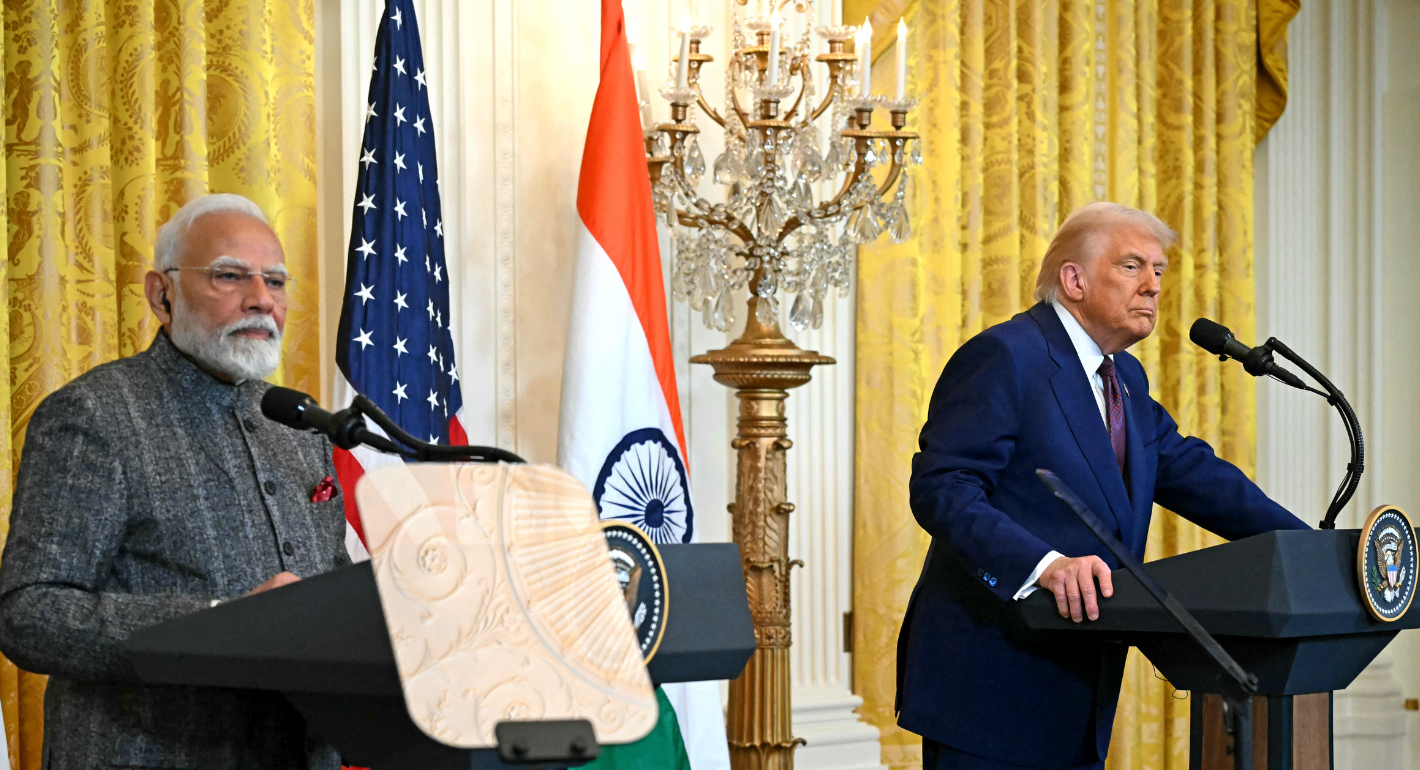
The India-U.S. relationship currently appears buffeted between three “Ts”—TRUST, Tariffs, and Trump.
Arun K. Singh
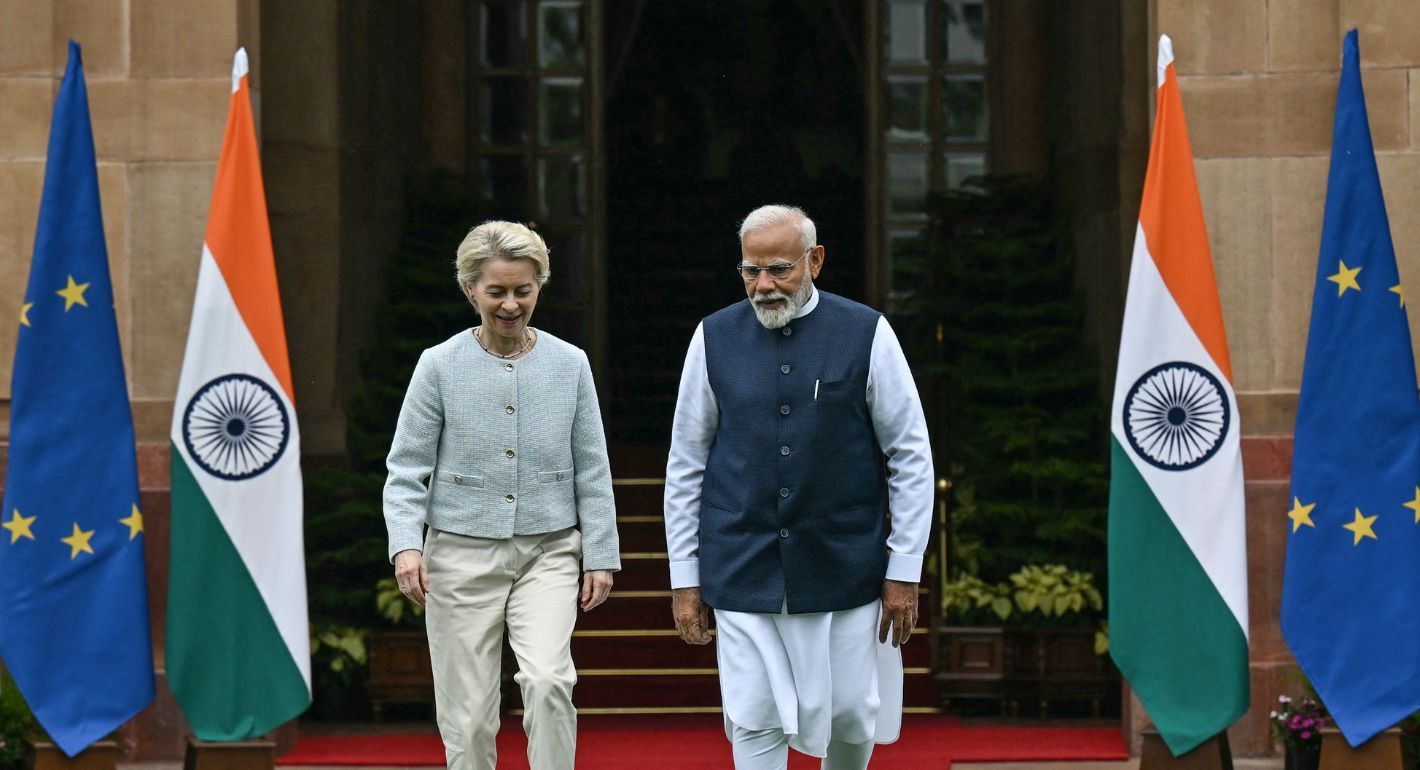
This article argues that the geopolitical circumstances have never been more conducive, not merely for the early conclusion of the free trade agreement (FTA) between India and the EU, but also for crafting a substantive and comprehensive strategic partnership.
Mohan Kumar