

Paper
Yezid Sayigh
{
  "authors": [
    "Yezid Sayigh"
  ],
  "type": "other",
  "centerAffiliationAll": "dc",
  "centers": [
    "Carnegie Endowment for International Peace",
    "Malcolm H. Kerr Carnegie Middle East Center"
  ],
  "collections": [],
  "englishNewsletterAll": "menaTransitions",
  "nonEnglishNewsletterAll": "",
  "primaryCenter": "Malcolm H. Kerr Carnegie Middle East Center",
  "programAffiliation": "MEP",
  "programs": [
    "Middle East"
  ],
  "projects": [],
  "regions": [
    "Gulf",
    "Levant",
    "Middle East"
  ],
  "topics": [
    "Political Reform",
    "Security"
  ]
}
Source: Getty
The self-proclaimed Islamic State has borrowed almost all of their methods of control from Saddam-era tactics.
Source: Belfer Center for Science and International Affairs
Carnegie’s Yezid Sayigh presented a lecture in Middle East Initiative Visiting Scholar Michael C. Hudson’s Spring 2015 Study Group “Rethinking the Arab State,” in which he examined the political legacy of Saddam Hussein’s regime in ISIS’ leadership structure and methods of control in Iraq, Syria, and beyond. Sayigh pushed for analysis of ISIS that looks underneath their discourse of global jihadi ideology at how ISIS constructs and consolidates power. He advocated examining the political and social contexts which ISIS and its affiliates use to better understand why and how it organizes itself. He argued that similarities between Saddam’s accession and dominance of Iraqi politics and ISIS’ efforts to build an ‘Islamic caliphate’ run deeper than ex-regime figures holding posts, and that ISIS has borrowed almost all of their methods of control from Saddam-era tactics. Sayigh included similarities in use of graphic (and widely disseminated) violence to instill fear and eliminate rivals; ideology to pressure regional and global rivals and acquire allies; and financial and material resources to fund operations and build infrastructure by managing key resource flows, while contrasting ISIS’ hands-off economic management style with Saddam’s expansive patronage regime.

Senior Fellow, Malcolm H. Kerr Carnegie Middle East Center
Yezid Sayigh is a senior fellow at the Malcolm H. Kerr Carnegie Middle East Center in Beirut, where he leads the program on Civil-Military Relations in Arab States (CMRAS). His work focuses on the comparative political and economic roles of Arab armed forces, the impact of war on states and societies, the politics of postconflict reconstruction and security sector transformation in Arab transitions, and authoritarian resurgence.
Recent Work
Yezid Sayigh
Yezid Sayigh
Carnegie India does not take institutional positions on public policy issues; the views represented herein are those of the author(s) and do not necessarily reflect the views of Carnegie, its staff, or its trustees.

In any defense establishment, change is an ongoing process. However, despite the best of intentions, existing bureaucracies, bound by habit and years of socialization, have their limits in implementing transformative change.

Anit Mukherjee

After the chill in ties between 2020 and 2024 that brought India–China relations to their lowest point in several decades, the two countries have engaged each other afresh. This paper argues that there are predominantly four imperatives guiding India’s approach to China, and they exist in an order of priority.

Saheb Singh Chadha

This piece argues that the present Indian strategy, based on opportunistic diversification and utilization of limited strategic reserves, remains inadequate when confronting supply disruptions. It evaluates India’s options in the short, medium, and long terms.

Vrinda Sahai

This piece examines India’s response to U.S. sanctions and tariffs, specifically assessing the immediate market consequences, such as alterations in import costs, and the broader strategic implications for India’s energy security and foreign policy orientation.
Vrinda Sahai
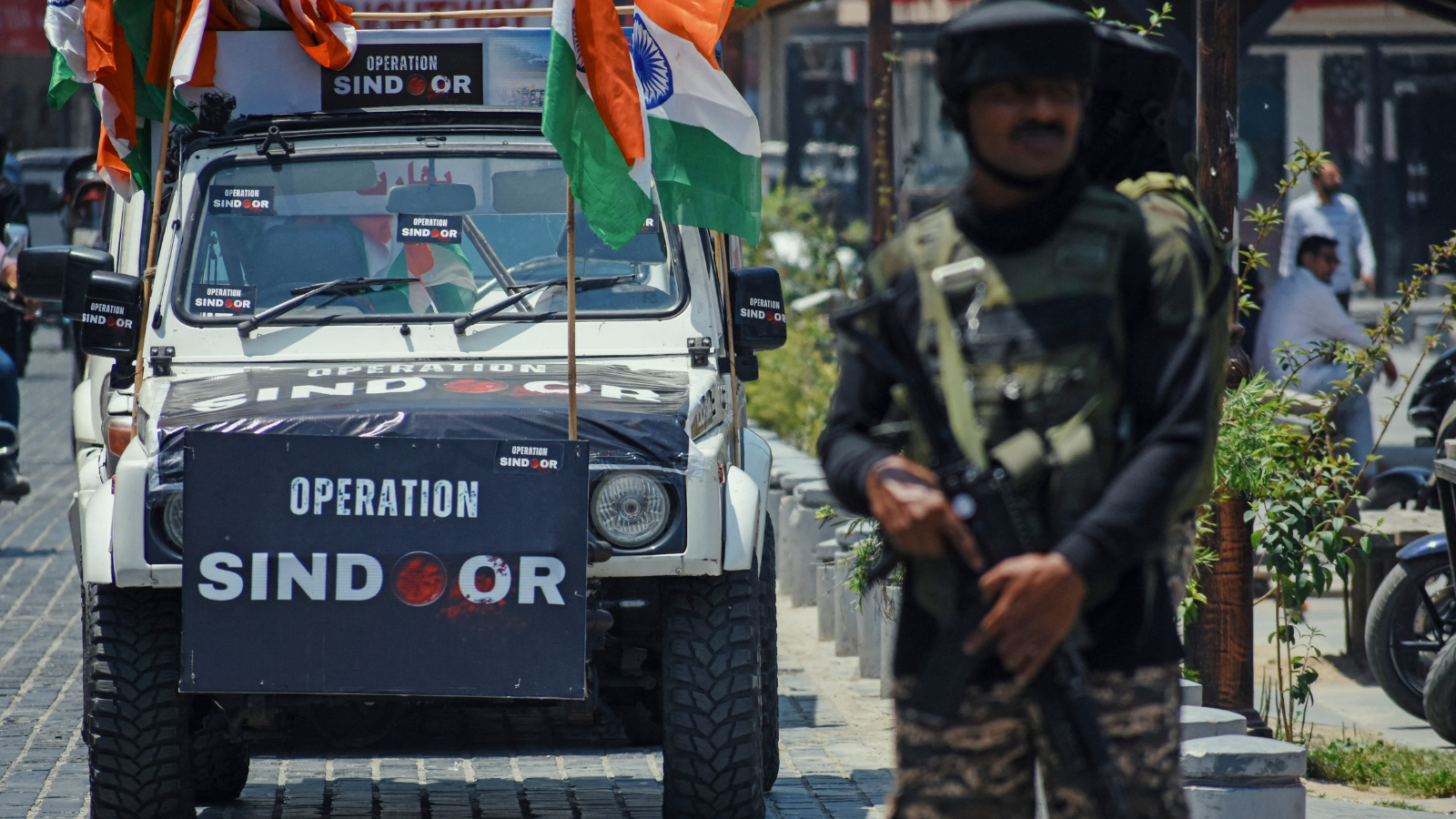
The India-Pakistan conflict that played out between May 6 and May 10, 2025, offers several military lessons. This article presents key takeaways from Operation Sindoor and breaks down how India’s preparations shaped the outcome and what more is needed to strengthen future readiness.

Dinakar Peri