

Commentary
Judy Dempsey
{
  "authors": [
    "Judy Dempsey"
  ],
  "type": "legacyinthemedia",
  "centerAffiliationAll": "dc",
  "centers": [
    "Carnegie Endowment for International Peace",
    "Carnegie Europe"
  ],
  "collections": [],
  "englishNewsletterAll": "ctw",
  "nonEnglishNewsletterAll": "",
  "primaryCenter": "Carnegie Europe",
  "programAffiliation": "EP",
  "programs": [
    "Europe"
  ],
  "projects": [],
  "regions": [
    "Europe",
    "Western Europe",
    "Iran"
  ],
  "topics": [
    "Foreign Policy",
    "EU",
    "Economy"
  ]
}
Source: Getty
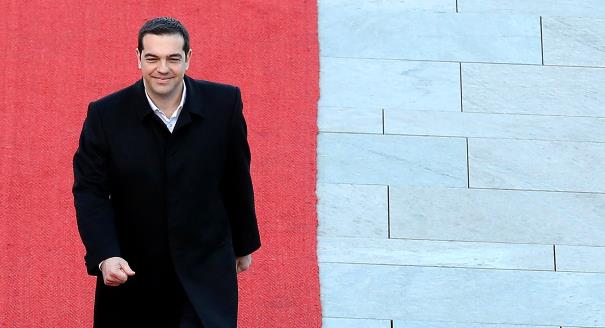
Greek Prime Minister Alexis Tsipras and the European Union have no choice but to work together to end Greece’s crippling financial and economic crisis.
Source: The Moscow Times
When Greek Prime Minister Alexis Tsipras visited Moscow last week, there were some hopes in Athens that President Vladimir Putin would give Tsipras something to bring back home.
In the end, Tsipras returned empty-handed, except for some vague promises about being involved in a new Russian-Turkish gas pipeline and Russia buying into some Greek companies that are due to be privatized.
The Kremlin didn't even lift the food embargo it imposed in reaction to the EU's sanctions on Russia after it annexed Crimea over a year ago. But still, Tsipras was in desperate need of some gestures from Russia.His visit to Moscow showed two things.
The first was that he could not rely on Putin to help him out despite the traditional close ties between Greece and Russia.
Second, Tsipras and the European Union have no choice but to work together to end Greece's crippling financial and economic crisis. Failing that, it cannot be ruled out that Greece could be forced out of the euro zone.
Several euro zone countries are somewhat sanguine over such a possibility, even arguing that the euro could survive a Grexit, or Greece's exit from the euro. They are mistaken.
A Grexit would do untold damage to the credibility of the euro and indeed of the European Union itself. Moreover, it would have serious geo-strategic implications. A fractured and weakened European Union is not in Europe's interests.
German Chancellor Angela Merkel understands perfectly well the impact of a Grexit, even though German public opinion is increasingly impatient and critical of Tsipras' strategy.
On first glance, his strategy is designed to wear down the institutions that are negotiating to salvage the Greek economy and its entire banking system. He wants less rigid conditions for receiving substantial loan guarantees while the EU wants to understand what kind of major reforms Tsipras intends to introduce in order to make the Greek economy competitive.
Tsipras and his radical left-wing Syriza party were catapulted into power last January after promising the electorate they would end the austerity measures imposed by the European Commission, the European Central Bank and the International Monetary Fund.
Since then, Tsipras and Finance Minister Yanis Varoufakis have yet to reward the voters largely because they have not reached a deal with the EU and other institutions.
It was the previous conservative Greek government led by Antonis Samaras that had drawn up the austerity package with the support of these institutions. Yet those reforms were flawed from the beginning.
The tax regime was not overhauled to create transparency, to improve the decrepit revenue collection system and end corruption. Furthermore, a wealthy network of oligarchs that had governed Greece since the end of military rule in 1974 was not affected by austerity measures.
These oligarchs had grown out of two Greek families, the Karamanlis and Papandreou clans who have been running Greece, often along the lines of their own fiefdoms. Indeed, since the end of the military junta, Greek politics have been based on patronage and clientelism, not transparency or accountability.
That was hardly dented over the past five years when Greece was supposed to introduce fundamental structural reforms in order to deal with the economic crisis.
In the end, the middle class and less well-off paid a very high price for the austerity measures while the old structures remained in place. That is why Tsipras won last January's election. He promised to dismantle those old structures and put in place social welfare measures for those most badly hit by austerity.
But looking back, why didn't the EU, the ECB and the IMF question the reforms of the previous government?
Surely they should have seen how the structures were not being overhauled and how even the basic transparency required for privatizing state assets was not in place.
It's as if the European Commission and the euro zone member states turned a blind eye to shortfalls of the reforms as the price to pay for keeping Greece in the euro.
This unwillingness to question those reforms is just one of many errors made by the EU when dealing with Greece.
When it became a member of the EU in 1981, it was far from ready. But back then, the criteria for EU membership were different. Then, it was about anchoring Greece to a democratic Europe and strengthening Greece's very fragile democratic institutions after military rule that had lasted from 1967 to 1974.
Once a member, Greece showed an extraordinary inability to use the EU's generous development and structural funds aimed at modernizing infrastructure and supporting the poorer regions.
I recall one Greek minister explaining in 2002 how the government in Athens and the local authorities had had no idea how to invest the funds, let alone draw up detailed plans for using them.
Greece simply lacked the absorption capacity and a civil service to deal with these issues, despite the fact that it had a huge and bloated public sector.
As if that was not enough, Germany and other euro zone countries are finally discovering, if not admitting, that Greece was ill-prepared to give up its drachma currency in favor of the euro currency in 2002.
Its economy was highly uncompetitive, not to mention its fiscal policies.
The German government in particular had serious misgivings about Greece adopting the euro. But one of the main reasons that Berlin relented was because Athens threatened to bring up the issue of World War II reparations if it was not allowed to enter the euro zone.
This issue of how much more Germany should compensate Greece for the appalling Nazi atrocities committed in Greece during World War II has resurfaced again under Tsipras. It shows the lack of closure between Greece and Germany over such a highly emotional and volatile chapter of their relations.
It also shows again how Greece's economic crisis and history have colluded and collided. It is up to Berlin and Athens to break the linkage. Indeed, it is up to Berlin and Athens to open a new chapter because Greece, as an EU member state, has nowhere else to go.

Nonresident Senior Fellow, Carnegie Europe
Judy Dempsey is a nonresident senior fellow at Carnegie Europe
Recent Work
Judy Dempsey
Judy Dempsey
Carnegie India does not take institutional positions on public policy issues; the views represented herein are those of the author(s) and do not necessarily reflect the views of Carnegie, its staff, or its trustees.

After the chill in ties between 2020 and 2024 that brought India–China relations to their lowest point in several decades, the two countries have engaged each other afresh. This paper argues that there are predominantly four imperatives guiding India’s approach to China, and they exist in an order of priority.

Saheb Singh Chadha

This piece argues that India’s central challenge is not managing a single flashpoint but resolving the underlying tension between expansion and institutional coherency of the BRICS grouping.

Vrinda Sahai
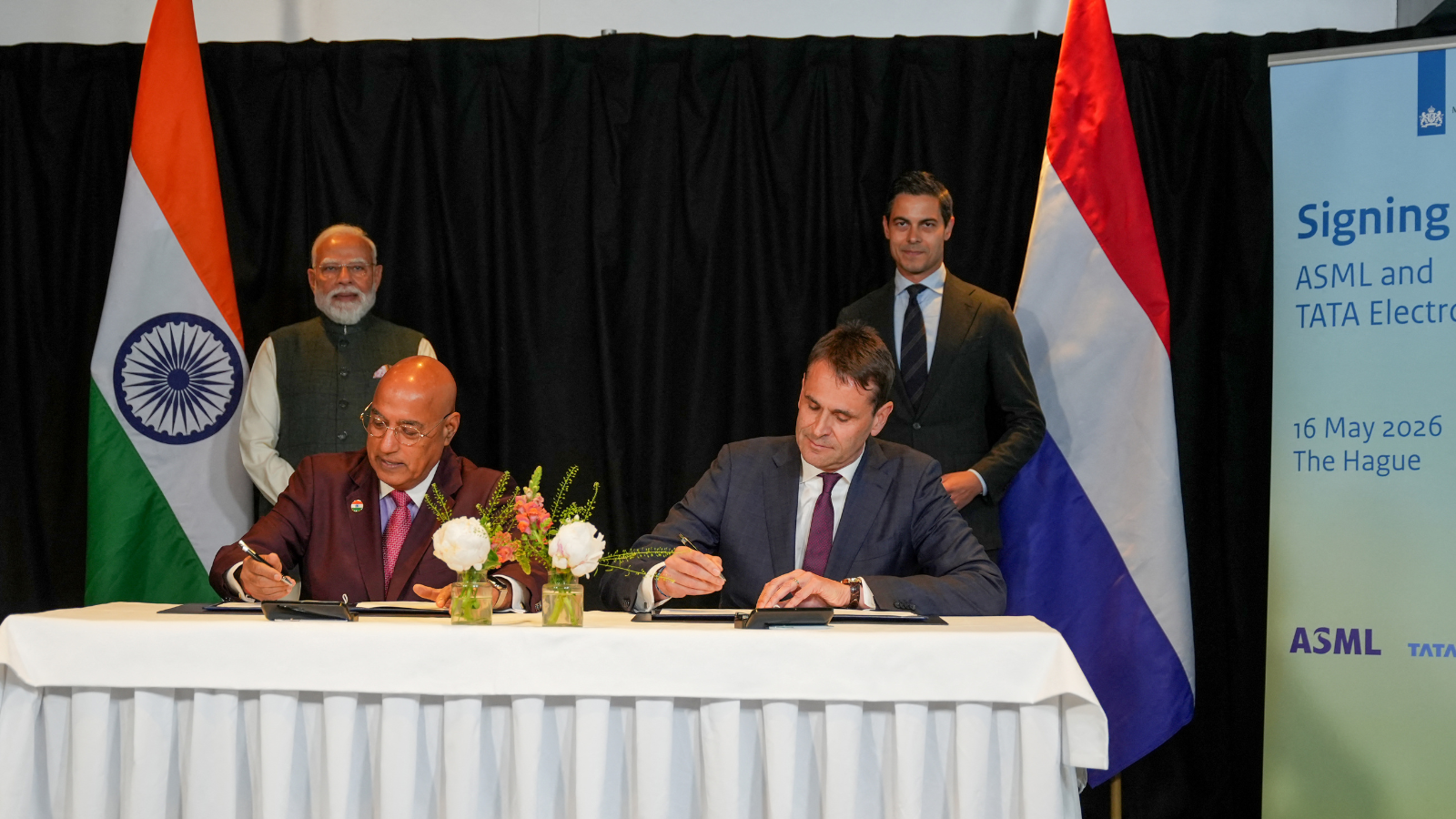
The ASML MoU with Tata Electronics is an indicator of how far the Indian semiconductor ecosystem has come. This ecosystem has been years in the making and represents real commercial logic.

Konark Bhandari

A partnership between India, a country of subcontinental size, and Africa, a continent of fifty-four countries, may seem asymmetric until one notes that both are home to nearly the same number of people—1.4 billion. This essay spells out the existing challenges to the partnership, its optimal potential, and the possible pathways to realize it over the next quarter-century.

Rajiv Bhatia

The India–EU Free Trade Agreement (FTA) is shaping up to be one of the most consequential trade negotiations, both economically and strategically. But, what’s in the agreement, what’s missing, and what will determine its success in the years ahead
Vrinda Sahai, Nicolas Köhler-Suzuki