

Commentary
Judy Dempsey
{
  "authors": [
    "Judy Dempsey"
  ],
  "type": "legacyinthemedia",
  "centerAffiliationAll": "dc",
  "centers": [
    "Carnegie Endowment for International Peace",
    "Carnegie Europe"
  ],
  "collections": [
    "EU Integration and Enlargement",
    "Brexit and UK Politics"
  ],
  "englishNewsletterAll": "ctw",
  "nonEnglishNewsletterAll": "",
  "primaryCenter": "Carnegie Europe",
  "programAffiliation": "EP",
  "programs": [
    "Europe"
  ],
  "projects": [],
  "regions": [
    "Europe",
    "Western Europe",
    "United Kingdom",
    "Iran"
  ],
  "topics": [
    "Foreign Policy",
    "EU"
  ]
}
Source: Getty
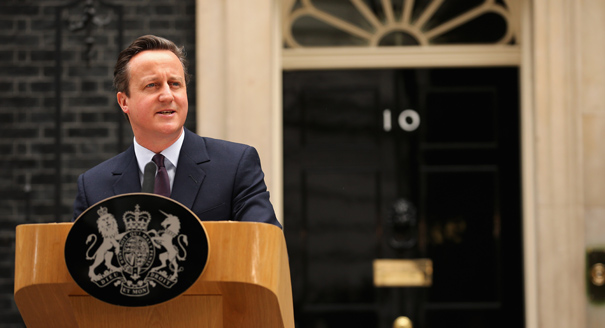
Between now and 2017, David Cameron has to move fast and work hard to explain why the EU matters and why it is in Britain’s strategic interest to remain inside it.
Source: The Moscow Times
Minutes after David Cameron knew he had been re-elected Britain's prime minister, and with a majority, the leader of the Conservative Party repeated his promise to hold a referendum in 2017. He will ask the British people if they want to remain in the European Union or leave it.
The outcome of that referendum will have far-reaching consequences for Britain, for Europe and for Russia.
A Brexit (a British exit) from the EU would have devastating consequences for Britain and Europe. Britain would be isolated.And if those among the British Eurosceptic public and the political elites believe they could manage quite well because of the special Anglo-American relationship, they are deceiving themselves.
The relationship between Washington and London is not what it used to be 10 years ago. The United States has other strategic interests.
Besides, it is German Chancellor Angela Merkel who is far more important a partner for U.S. President Barack Obama than David Cameron. This has been clear from almost the beginning of the Ukraine crisis.
It was Merkel who pushed the European Union into imposing sanctions on Russia after it annexed Crimea in March 2014. It was Merkel who stiffened Cameron's backbone when it came to the sanctions issue. Merkel's Germany is the undisputed leader of Europe.
However, even though British influence is waning in the EU, a Brexit would do untold damage to the integrity of the EU. The EU would lose a country whose input to security, strategy and defense issues cannot be underestimated.
No wonder the United States has long supported Britain remaining in the EU. Washington wants a strong and competitive Europe, a goal shared by the Baltic states and other Eastern European countries. These EU member states dread the idea of Britain leaving because it would give Eurosceptics and populists such a boost that the precedent could be established for other countries to consider quitting.
One country that would relish a Brexit is Russia. A Brexit would undoubtedly weaken the EU, which is in Russia's interests. That is why Merkel will do her utmost to try and find a way to ensure that Britain remains inside the EU, not outside.
Another dimension to a Brexit would be the fate of Scotland, which Russia has been watching closely. The Scottish National Party (SNP) now wields enormous influence in the House of Commons. Apart from wanting a discussion about the future of Trident, Britain's nuclear deterrent system, the SNP are pro-European and pro-independence from the United Kingdom.
Even though Scots voted against leaving the United Kingdom in their own referendum held in September 2014, the issue has not gone away.
It would be revived if Britain pulls out of the EU. Under such circumstances, the Scots could have another chance to say yes or no to remaining in the United Kingdom — and by implication to leaving the EU. And here is another plus for Russia.
If the British chose to leave the EU and as a consequence, the Scots chose to leave the United Kingdom, then a smaller Britain would be weaker and less influential.
Furthermore, a Scottish independence vote could embolden other independent movements inside the EU. Maybe the EU could live with that. But tensions between the regions and the central government in several countries could scupper any plans to further integrate the EU.
That would suit Russia too. A strong and integrated EU is not in Russia's interests.
Cameron can change all that. His outright victory means he should have the confidence, influence and power to move ahead with more devolution for Scotland — and Wales.
He also has to begin the long overdue debate about Europe. Europe played no role during the election campaign.
Between now and 2017, Cameron has to move fast and work hard to explain to his own Eurosceptic backbenchers why Europe matters and why it is Britain's strategic interests to remain inside it. That is why Cameron's victory and what he wants to do with it matters for Europe and Russia.

Nonresident Senior Fellow, Carnegie Europe
Judy Dempsey is a nonresident senior fellow at Carnegie Europe
Recent Work
Judy Dempsey
Judy Dempsey
Carnegie India does not take institutional positions on public policy issues; the views represented herein are those of the author(s) and do not necessarily reflect the views of Carnegie, its staff, or its trustees.

After the chill in ties between 2020 and 2024 that brought India–China relations to their lowest point in several decades, the two countries have engaged each other afresh. This paper argues that there are predominantly four imperatives guiding India’s approach to China, and they exist in an order of priority.

Saheb Singh Chadha

This piece argues that India’s central challenge is not managing a single flashpoint but resolving the underlying tension between expansion and institutional coherency of the BRICS grouping.

Vrinda Sahai
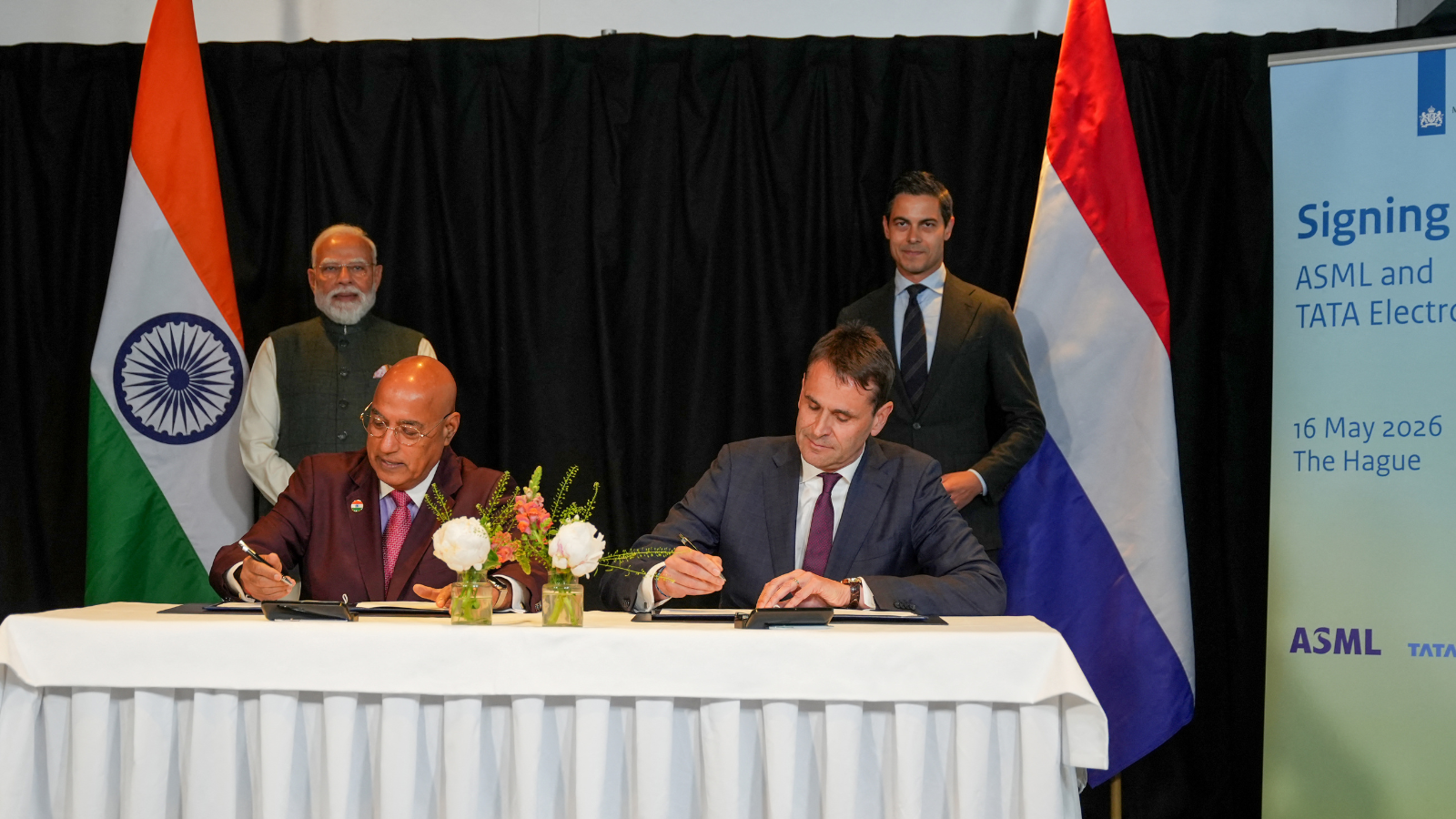
The ASML MoU with Tata Electronics is an indicator of how far the Indian semiconductor ecosystem has come. This ecosystem has been years in the making and represents real commercial logic.

Konark Bhandari

A partnership between India, a country of subcontinental size, and Africa, a continent of fifty-four countries, may seem asymmetric until one notes that both are home to nearly the same number of people—1.4 billion. This essay spells out the existing challenges to the partnership, its optimal potential, and the possible pathways to realize it over the next quarter-century.

Rajiv Bhatia

The India–EU Free Trade Agreement (FTA) is shaping up to be one of the most consequential trade negotiations, both economically and strategically. But, what’s in the agreement, what’s missing, and what will determine its success in the years ahead
Vrinda Sahai, Nicolas Köhler-Suzuki