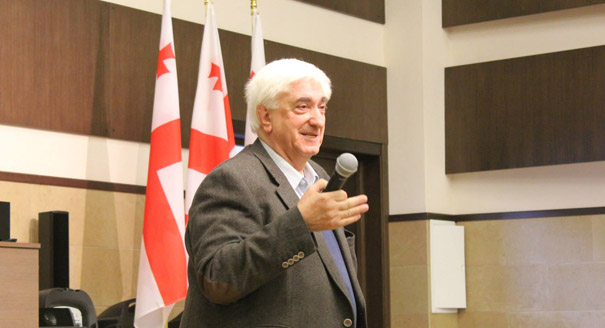
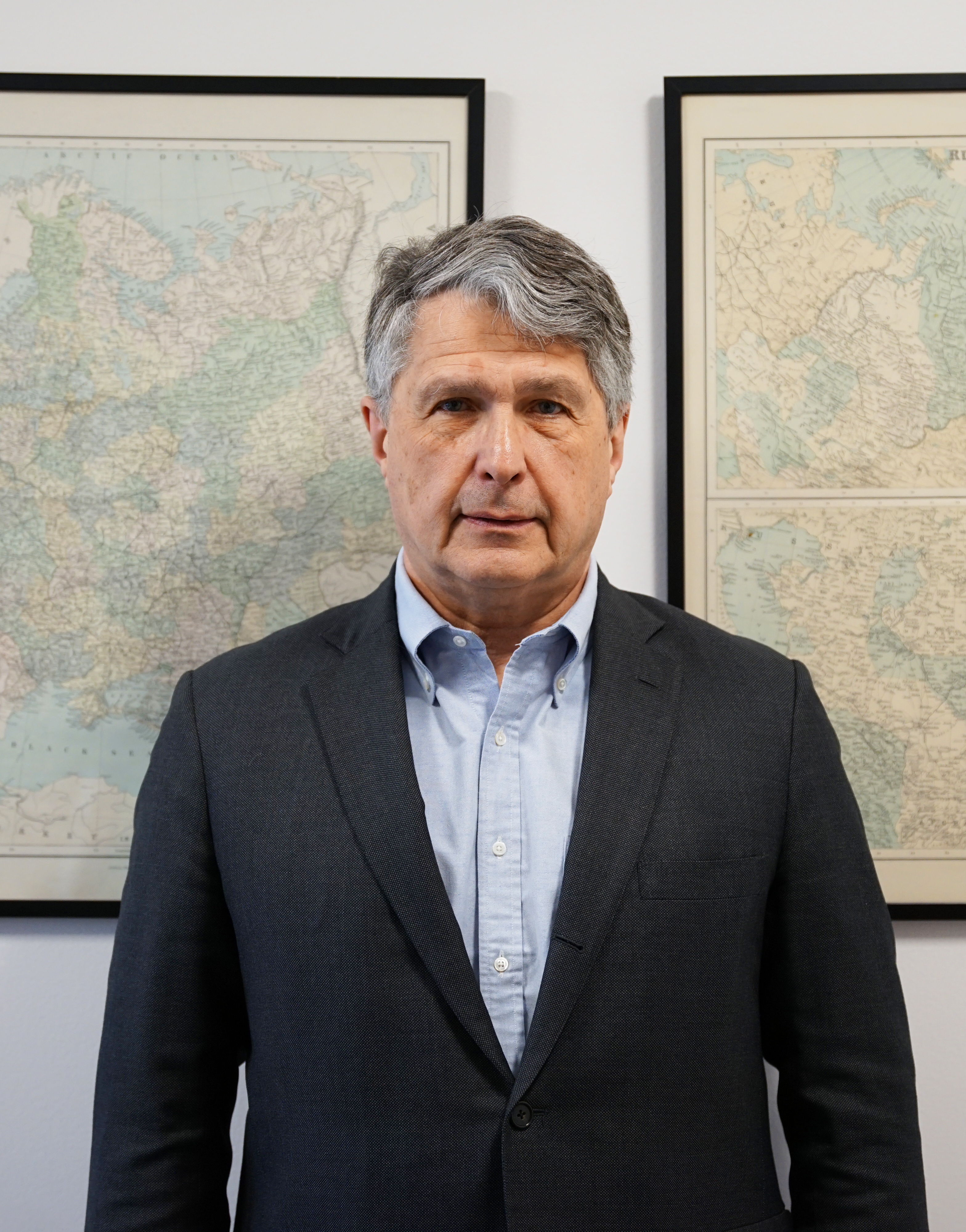
Alexander Rondeli passed away on June 12th, 2015. He was a Georgian political scientist, policy advisor, commentator, and founder of the Georgian Foundation for Strategic and International Studies. Eugene Rumer and Thomas de Waal join Rondeli's many friends and colleagues in expressing their condolences.
Eugene RumerDirector and Senior associate, Russia and Eurasia Program at the Carnegie Endowment
It was hard to meet Alex Rondeli and not become his friend. It was also hard to spend time with him and not learn from him. Scholar, teacher, diplomat, builder of institutions. Man of peace. Citizen. Georgian patriot. A big man with a big heart and big intellect from a small country. Professor Rondeli was all that and a lot more. He leaves a big legacy and a big void in the hearts of many.
The dean of Georgian political scientists and scholars of international relations, Alex could explain his country, the Caucasus, and the entire post-Soviet world with a rare combination of passion and realism. He knew—and would say it freely—that the transition from the Soviet past would be measured in decades rather than years, that the obstacles would be many, and that progress would come from durable institutions rather than powerful personalities. He more than knew it—he acted on it. He founded GFSIS—the Georgian Foundation for Strategic and International Studies. He worked hard to build independent scholarship and public policy analysis, to establish them as durable institutions in Georgian public life. It is his gift to his beloved Georgia. In an age when politics is often dominated by young men in a hurry, his vision, his wisdom and his sense of humor will be missed.
Rest in peace, Alex.
Thomas de WaalSenior associate, Russia and Eurasia Program at the Carnegie Endowment
Georgia of the 1990s was a much less diverse place than today, it had only a few fixtures and "must visits." One of them was the office of Alexander Rondeli. He was a diplomat, scholar and thinker. He was always generous in finding time for visiting journalists, some of them quite junior, and putting them right about Georgian history and contemporary politics, with insight, humor and good quotations. He was a kind of honorary host to Georgia in its darkest period, demonstrating its best side even as the country was in perpetual turbulence and crisis.
Alex eventually made his biggest commitment to his country by founding Georgia's first serious think-tank, GFSIS. He was a patriot in the best sense of the word, being on good terms with successive governments, but never afraid of criticizing them. He had friendly but critical words for both Eduard Shevardnadze, to whom he was a foreign policy adviser, and Mikheil Saakashvili.
Alex was also more than that. In post-Soviet Georgia, a poor, chaotic country he pulled off the feat of not complaining about his lot or competing with his peers. He was, in short, a gentleman. He also had a great sense of humor, delivering jokes in his incomparable deep gravelly voice that could have given him a career in the theater.
He was one of a kind and will be dearly missed.