

Article
Deborah Gordon, Smriti Kumble, David Livingston
{
  "authors": [
    "David Livingston"
  ],
  "type": "other",
  "centerAffiliationAll": "dc",
  "centers": [
    "Carnegie Endowment for International Peace"
  ],
  "collections": [],
  "englishNewsletterAll": "ctw",
  "nonEnglishNewsletterAll": "",
  "primaryCenter": "Carnegie Endowment for International Peace",
  "programAffiliation": "SCP",
  "programs": [
    "Sustainability, Climate, and Geopolitics"
  ],
  "projects": [
    "Carnegie Oil Initiative"
  ],
  "regions": [
    "North America",
    "United States"
  ],
  "topics": [
    "Climate Change"
  ]
}
Source: Getty
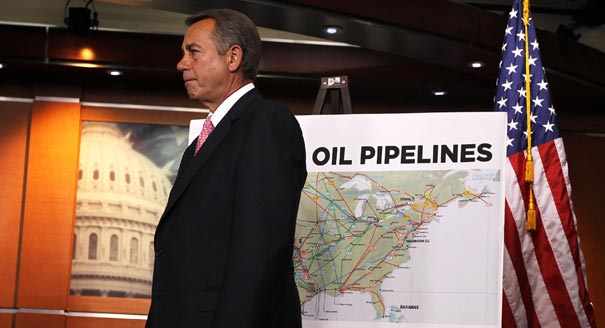
Recent upheavals in the oil market, most notably the growth in North American unconventional oil and the evolving response of OPEC, are prompting a reappraisal of conventional wisdom across a number of areas.
Source: European Centre for Energy and Resource Security
Recent upheavals in the oil market, most notab ly the growth in North American unconventional oil and the evolving response of OPEC, are prompting a re - appraisal of conventional wisdom across a number of areas. Though analysis has tended to focus on global dynamics, many of the oil market’s defining ch aracteristics are determined by regionalized micro - competition. This article explores evolving supply dynamics in the U.S. Gulf Coast, the most important refining hub and single largest source of heavy oil refining capacity. The implications of these evolv ing dynamics hold repercussions for the debate over the Keystone XL pipeline, Saudi Arabia’s ability to maintain a foothold in the North American market, and the heightened competition among heavy crude oils in the Western Hemisphere. It is suggested that U.S. policymakers place their ultimate focus not upon individual pieces of infrastructure, but instead upon establishing strategic priorities for managing the new and dynamic supplies of oil – including heavy oil – that is competing for refinery capacity i n North America.
This article was originally published by the European Centre for Energy and Resource Security.
Former Associate Fellow, Energy and Climate Program
Livingston was an associate fellow in Carnegie’s Energy and Climate Program, where his research focuses on emerging markets, technologies, and risks.
Recent Work

Deborah Gordon, Smriti Kumble, David Livingston

Erik Brattberg, David Livingston
Carnegie India does not take institutional positions on public policy issues; the views represented herein are those of the author(s) and do not necessarily reflect the views of Carnegie, its staff, or its trustees.

The U.S.–India semiconductor cooperation story is well-stocked with top-level strategic intent. What remains unresolved, however, are some underlying challenges that will determine whether the cooperation actually functions. Three such friction points stand out.

Shruti Mittal
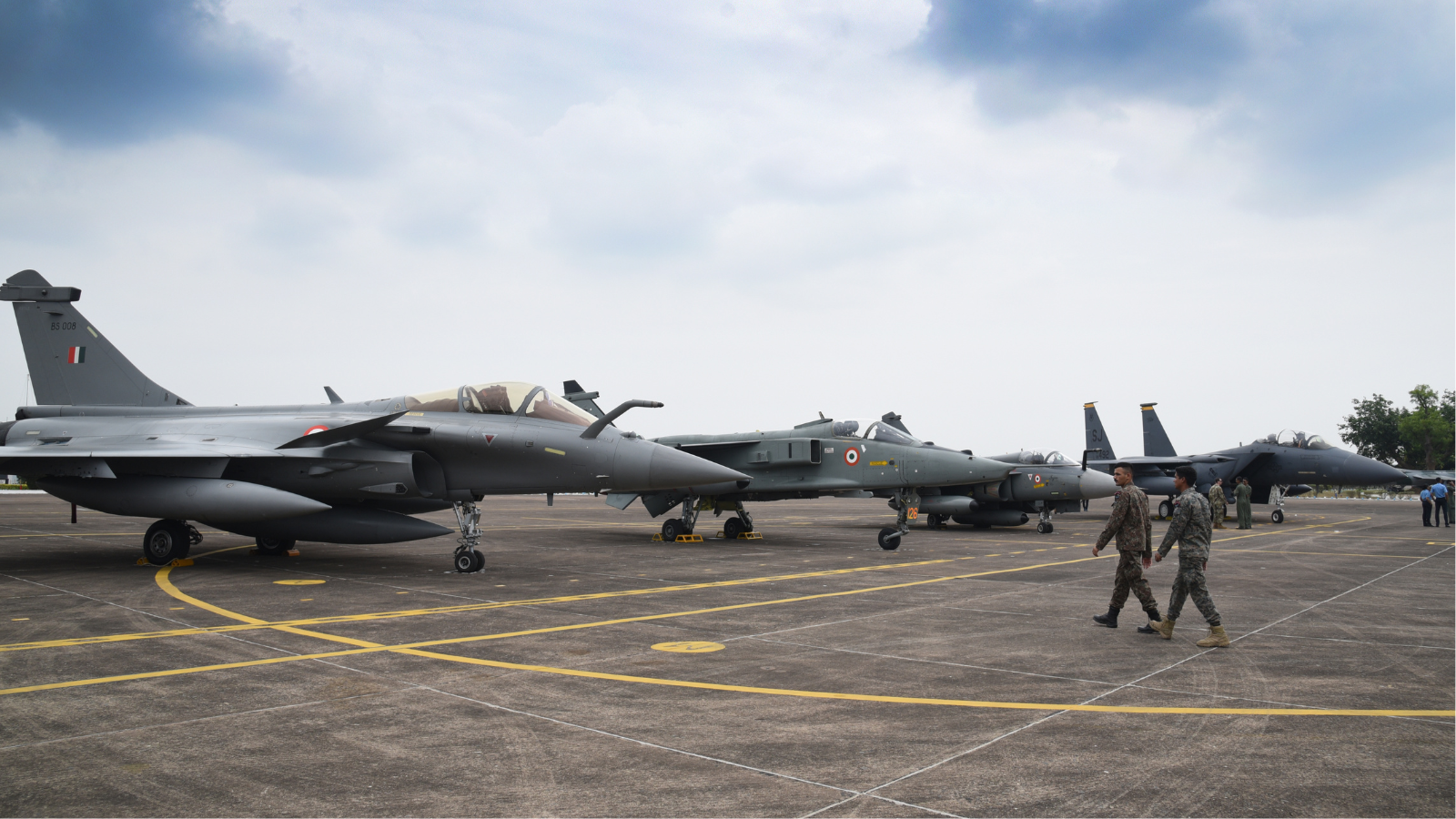
India and the United States are close to concluding a Reciprocal Defense Procurement Agreement (RDPA) that will allow firms from the two countries to sell to each other’s defense establishments more easily. While this may not remedy the specific grievances both sides may have regarding larger bilateral issues, an RDPA could restore some momentum, following the trade deal announcement.

Konark Bhandari

On the last day of the India AI Impact Summit, India signed Pax Silica, a U.S.-led declaration seemingly focused on semiconductors. While India’s accession to the same was not entirely unforeseen, becoming a signatory nation this quickly was not on the cards either.
Konark Bhandari

This piece examines India’s response to U.S. sanctions and tariffs, specifically assessing the immediate market consequences, such as alterations in import costs, and the broader strategic implications for India’s energy security and foreign policy orientation.

Vrinda Sahai
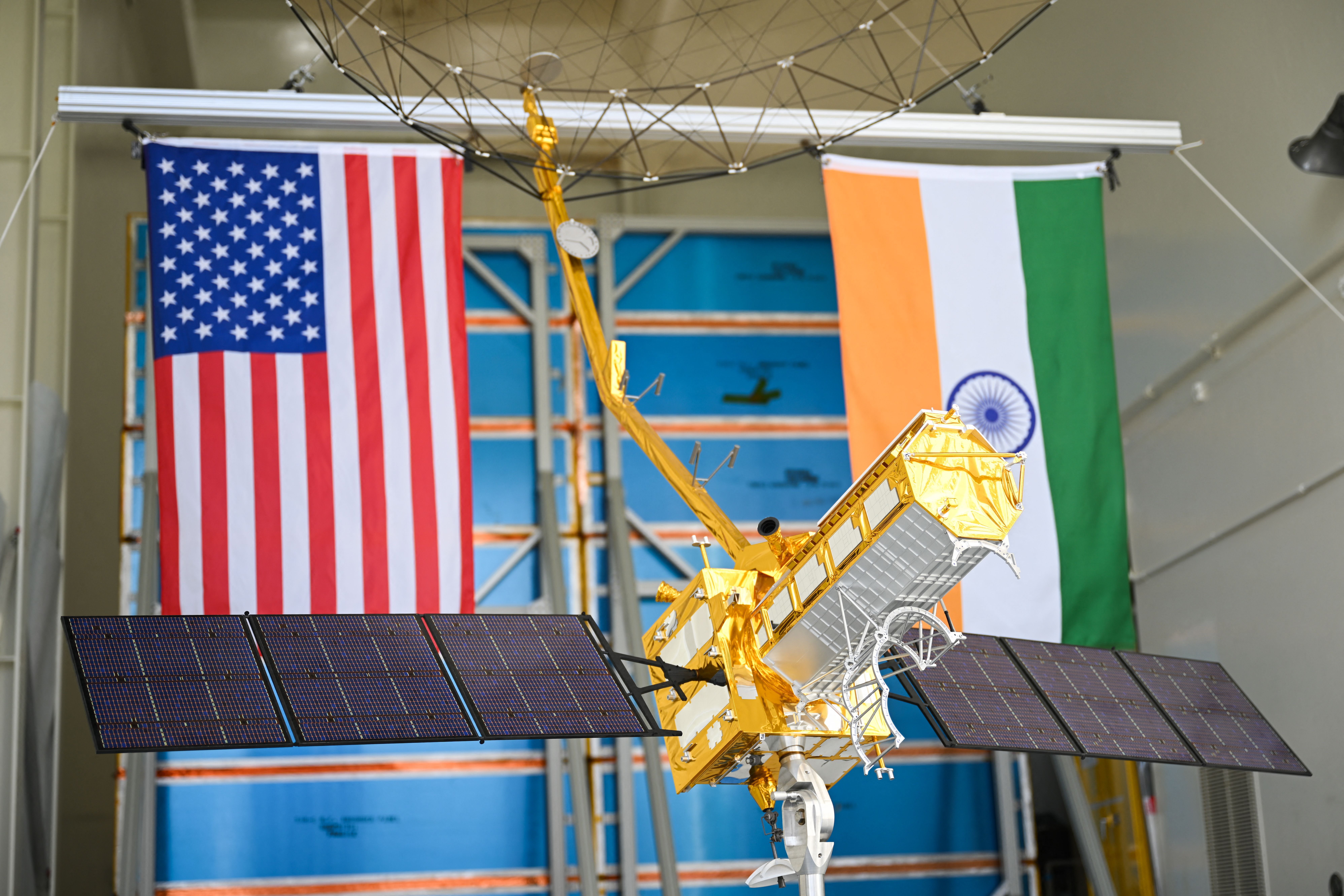
On July 30, 2025, the United States announced 25 percent tariffs on Indian goods. While diplomatic tensions simmered on the trade front, a cosmic calm prevailed at the Sriharikota launch range. Officials from NASA and ISRO were preparing to launch an engineering marvel into space—the NASA-ISRO Synthetic Aperture Radar (NISAR), marking a significant milestone in the India-U.S. bilateral partnership.

Tejas Bharadwaj