

Research
- +5
Alper Coşkun, Fatih Ceylan, Tacan İldem, …
{
  "authors": [
    "Sinan Ülgen"
  ],
  "type": "legacyinthemedia",
  "centerAffiliationAll": "dc",
  "centers": [
    "Carnegie Endowment for International Peace",
    "Carnegie Europe"
  ],
  "collections": [
    "Turkey’s Transformation",
    "EU Integration and Enlargement",
    "Brexit and UK Politics"
  ],
  "englishNewsletterAll": "ctw",
  "nonEnglishNewsletterAll": "",
  "primaryCenter": "Carnegie Europe",
  "programAffiliation": "EP",
  "programs": [
    "Europe"
  ],
  "projects": [],
  "regions": [
    "Europe",
    "Türkiye",
    "Middle East",
    "Western Europe",
    "United Kingdom",
    "Iran"
  ],
  "topics": [
    "EU",
    "Foreign Policy"
  ]
}
Source: Getty
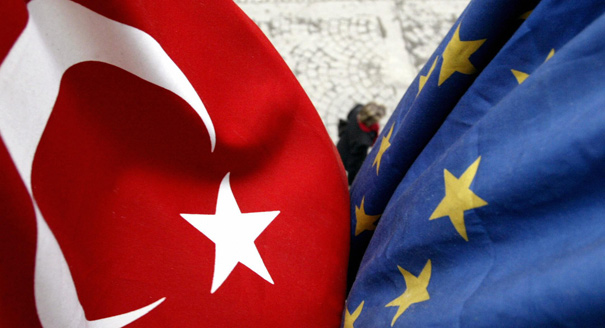
If the UK leaves the EU, that might also be a game changer for Ankara. But a partnership short of membership could fail to drive further political reforms in Turkey.
Source: Europe’s World
It is testimony to the short-sightedness of both sides that more than half a century after their formal engagement, and a decade of membership negotiations, the Turkey-EU relationship is stalled and its future uncertain.
The Turkish body politic is blameworthy because it failed to seize crucial moments to fully anchor Turkey in the EU. One such moment was in the mid-1970s, when the European Economic Community had decided on Greece’s accession. The Turkish government failed to commit itself to the membership track, and so the established symmetry between Turkey and Greece was broken. The EU has been equally responsible, for although it opened accession talks with Turkey in 2004 it failed to pursue them as enthusiastically as with the Central and Eastern European candidates.
The ambiguity that has long surrounded Turkey’s EU membership outlook was illustrated when France’s Nicolas Sarkozy became President in 2007 and reneged on the promise of membership by blatantly violating the hallowed international principle of pacta sunt servanda under which agreements reached in good faith must be respected. By doing so, he erased whatever good will and enthusiasm remained on the Turkish side for accession.Turkey now seems well along the road to becoming the sole exception to the rule in the framework of the EU’s enlargement negotiations that every beginning, however inauspicious, has a happy ending. The political context in both Europe and Turkey does not seem likely to generate a more favourable dynamic. Turkey’s ruling AKP government has lost its reformist ambitions after a decade in power, and is now associated more with the regression of democratic freedom and the rule of law than with a country that aspires to raise the level of its democratic norms to meet EU standards. Europe’s enlargement agenda, meanwhile, has lost its appeal in the wake of the economic crisis that has placed severe strains on social cohesion and has seen the rise of anti-immigration and anti-Islam political movements.
There therefore now seem three possible and equally likely endings for the Turkey-EU relationship – they are the rivalry, union and partnership scenarios.
The rivalry scenario would be the outcome of a collapse of the accession negotiations, which either Turkey or the EU could trigger. Right now, even though the membership negotiations are not advancing at all, the current Turkish government has no incentive to pull the plug on talks with the EU. Any such move would be a rebuttal of AKP’s longstanding EU membership policy and would probably lead to increased economic turbulence in Turkey.
But a future Turkish government that might well be more reliant on nationalist support, and that saw the EU as mired in economic stagnation, could make a different calculation. Years of frustration within Turkish public opinion about Europe, and the widespread tendency to view Europe’s ‘hidden’ motivations with great suspicion, mean that such a break would not necessarily amount to political suicide. The same outcome could also result from political changes in Europe; if France’s Front National were to gain power, for instance, it might well seek to block Turkey’s accession for the foreseeable future.
The end result would be a “Russified” Turkey. In other words, Ankara would stop seeing itself as a potential EU family member and would instead position itself as a strategic rival, just like Moscow. A deeper alignment with Putin’s Russia, especially on energy, can readily be postulated as part of this scenario. Ankara and Moscow would together completely dominate the eastern and south-eastern pathways energy supply to European markets.
On the wider foreign policy front, Ankara’s inclination would be to fixate on ‘winners versus losers’ zero-sum games with Europe in which co-operation on counter-terrorism and migration would be severely curtailed. Tension over Ankara’s unresolved differences with Athens over the Aegean and Cyprus would rise, while the EU would have lost all its leverage over a recalcitrant Turkey. Just as worrying, it isn’t a scenario that bodes well for the future of the democratic order in Turkey, not least because of the very positive contributions the EU dynamic has made so far to Turkish reforms.
At the other end of the spectrum lies the union scenario resulting from Turkey’s eventual EU accession. This optimistic version of events is heavily conditional, though, on two developments. Europe would need to return to the better growth prospects capable of generating a higher level of confidence in its own future. The current low or no growth environment is corrosive of Europe’s social order and is therefore highly detrimental to the prospects of enlargement. Difficult socio-economic conditions understandably make it difficult for European leaders to champion the cause of enlargement in general, and that in particular of the only large country that is still an official candidate. It was no surprise that soon after becoming the EU Commission President, Jean-Claude Juncker ruled out further enlargements in the next five years.
In other words, the EU has to overcome its internal competitiveness differences and create a new consensus over the updating of the European social model and regain its political and economic confidence before it can return to its enlargement agenda. Even that will not be enough as Turkey too needs to move in the right direction as a state that is still gradually reducing the gap between itself and the EU over democratic standards.
The third scenario, by default, is partnership – possibly a ‘British-style’ relationship with the EU. Ankara’s accession talks are now so much in crisis, that the Turkey-EU relationship can perhaps already be defined in this way.
The Customs Union established almost 20 years ago underpins Turkey’s economic convergence with the EU, and has led to greater mobility and better co-operation on foreign policy and counter-terrorism issues. These enrich the overall context of the partnership, yet it is a relationship whose non-permanent status is recognised on both sides. In other words, it will either culminate in the union scenario or collapse into the rivalry scenario.
Ankara has, for the time being, come to accept the limitations of this partnership as it is keenly aware of the difficulties surrounding accession in the current political atmosphere. The current partnership status nevertheless suits the political priorities of both Brussels and Ankara. The EU is not in any way about to lift the obstacles to Turkey’s membership, and Ankara is not interested in enacting the large-scale political reforms needed to clear its path to Europe.
But the current partnership model is unsustainable in the long run. It will take a Turkish government that is genuinely interested in pursuing EU membership to upset this unsatisfactory equilibrium. The EU would then need to respond, in which case its present strategy of prevarication would no longer suffice. Already there have been calls on the Turkish side for the EU to state a possible accession date, and at some point Turkey’s future leadership will want to test the genuineness of the EU position by insisting that a serious offer is put on the table.
There is one condition under which the partnership scenario could become permanent. It is Brexit. If the UK were indeed to leave the EU, that might also be a game changer for Turkey. Under this scenario, the EU and the UK would both need to design a new relationship, short of membership but obviously so deep as to be much more than just a strategic partnership. The UK would in all likelihood want to remain an integral part of the Single Market, but the European Economic Area (EEA) which is the only model that allows non-EU countries a relatively seamless integration with the Single Market would not be acceptable to a country as large and powerful as the UK. The EEA framework is one of complete policy dependence on the EU, and this severe drawback would make the EEA approach impossible for the British polity to adopt. Under the Brexit scenario, the EU and the UK would very possibly need to design a more acceptable version of the EEA, – call it EEA-plus – to address all the concerns associated with total policy dependence. This would, for instance, need to make provisions for associating the UK with European-level decision making, and thus going far beyond the decision shaping mechanisms of the EEA.
If an EEA-plus partnership structure were to be created to anchor the UK within Europe, the second beneficiary of this model could be Turkey. Turkish policymakers would be able to more easily champion this by emphasising that Turkey would be joining the UK in this form of partnership. With the UK’s exit, the EU would have lost quite a bit of its lustre in the eyes of Turkish citizens, and this would make the partnership option much more popular and politically acceptable. The drawback for Turkey would be that even the EEA-plus would not of itself be enough to drive further political reforms. The Turkey-EU relationship would end up being defined as a marriage of interest rather than a marriage based on values.

Senior Fellow, Carnegie Europe
Sinan Ülgen is a senior fellow at Carnegie Europe in Brussels, where his research focuses on Turkish foreign policy, transatlantic relations, international trade, economic security, and digital policy.
Recent Work

Alper Coşkun, Fatih Ceylan, Tacan İldem, …
Carnegie India does not take institutional positions on public policy issues; the views represented herein are those of the author(s) and do not necessarily reflect the views of Carnegie, its staff, or its trustees.

After the chill in ties between 2020 and 2024 that brought India–China relations to their lowest point in several decades, the two countries have engaged each other afresh. This paper argues that there are predominantly four imperatives guiding India’s approach to China, and they exist in an order of priority.

Saheb Singh Chadha

This piece argues that India’s central challenge is not managing a single flashpoint but resolving the underlying tension between expansion and institutional coherency of the BRICS grouping.

Vrinda Sahai
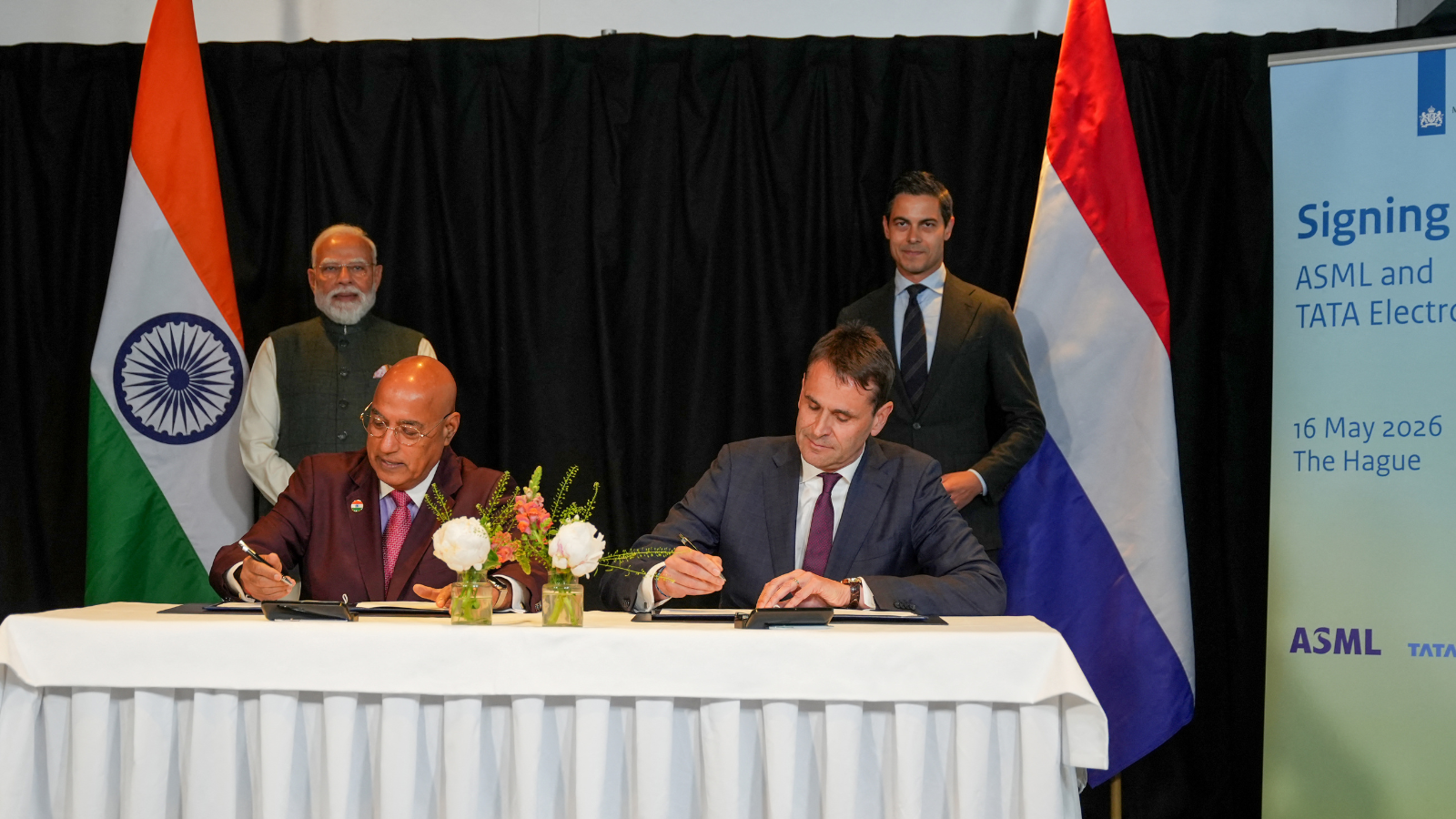
The ASML MoU with Tata Electronics is an indicator of how far the Indian semiconductor ecosystem has come. This ecosystem has been years in the making and represents real commercial logic.

Konark Bhandari

A partnership between India, a country of subcontinental size, and Africa, a continent of fifty-four countries, may seem asymmetric until one notes that both are home to nearly the same number of people—1.4 billion. This essay spells out the existing challenges to the partnership, its optimal potential, and the possible pathways to realize it over the next quarter-century.

Rajiv Bhatia

The India–EU Free Trade Agreement (FTA) is shaping up to be one of the most consequential trade negotiations, both economically and strategically. But, what’s in the agreement, what’s missing, and what will determine its success in the years ahead
Vrinda Sahai, Nicolas Köhler-Suzuki