

Paper
Ashley J. Tellis
{
  "authors": [
    "Ashley J. Tellis"
  ],
  "type": "legacyinthemedia",
  "centerAffiliationAll": "dc",
  "centers": [
    "Carnegie Endowment for International Peace"
  ],
  "collections": [],
  "englishNewsletterAll": "ctw",
  "nonEnglishNewsletterAll": "",
  "primaryCenter": "Carnegie Endowment for International Peace",
  "programAffiliation": "SAP",
  "programs": [
    "South Asia"
  ],
  "projects": [],
  "regions": [
    "North America",
    "United States",
    "South Asia",
    "India"
  ],
  "topics": [
    "Security",
    "Military",
    "Foreign Policy"
  ]
}
Source: Getty
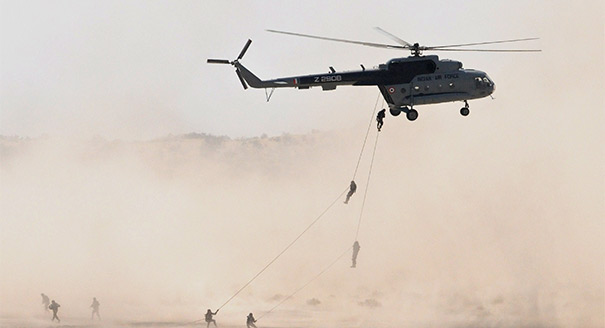
Defense cooperation is the cornerstone of the steadily strengthening bilateral U.S.-Indian relationship.
Source: Force
If there is any single proof of the transformation of US -Indian relations since 2001, burgeoning defence ties would stand out as ‘Exhibit A.’ Since the trying moments after the 1998 Indian nuclear tests — when Indian strategic entities became targets of US sanctions, when Indian weapons systems of US origin lay non-operational because spare parts were denied, and when US -Indian defence trade was minuscule — the flood of interactions that have now become commonplace mark defence cooperation as the cornerstone of the steadily strengthening bilateral relationship.At one level, this metamorphosis should not be surprising. Both the United States and India face common threats: Islamist terrorism, rising Chinese power, continued nuclear proliferation, and new dangers in the global commons. But despite these persistent perils, it required a civil nuclear agreement to dramatically seal the evolving strategic collaboration between Washington and New Delhi. The 18 July 2005 joint statement issued by President George W. Bush and Prime Minister Manmohan Singh did just that: by signalling that the United States would now treat India as a valued geopolitical partner rather than as a singular target of its nonproliferation policy, Bush (and, his successor, Barack Obama) declared— to the consternation of many— that the United States was serious about building a new relationship with India....
The full text of this article was originally published in Force.
Former Senior Fellow
Ashley J. Tellis was a senior fellow at the Carnegie Endowment for International Peace.
Recent Work
Ashley J. Tellis
Ashley J. Tellis
Carnegie India does not take institutional positions on public policy issues; the views represented herein are those of the author(s) and do not necessarily reflect the views of Carnegie, its staff, or its trustees.

In any defense establishment, change is an ongoing process. However, despite the best of intentions, existing bureaucracies, bound by habit and years of socialization, have their limits in implementing transformative change.

Anit Mukherjee
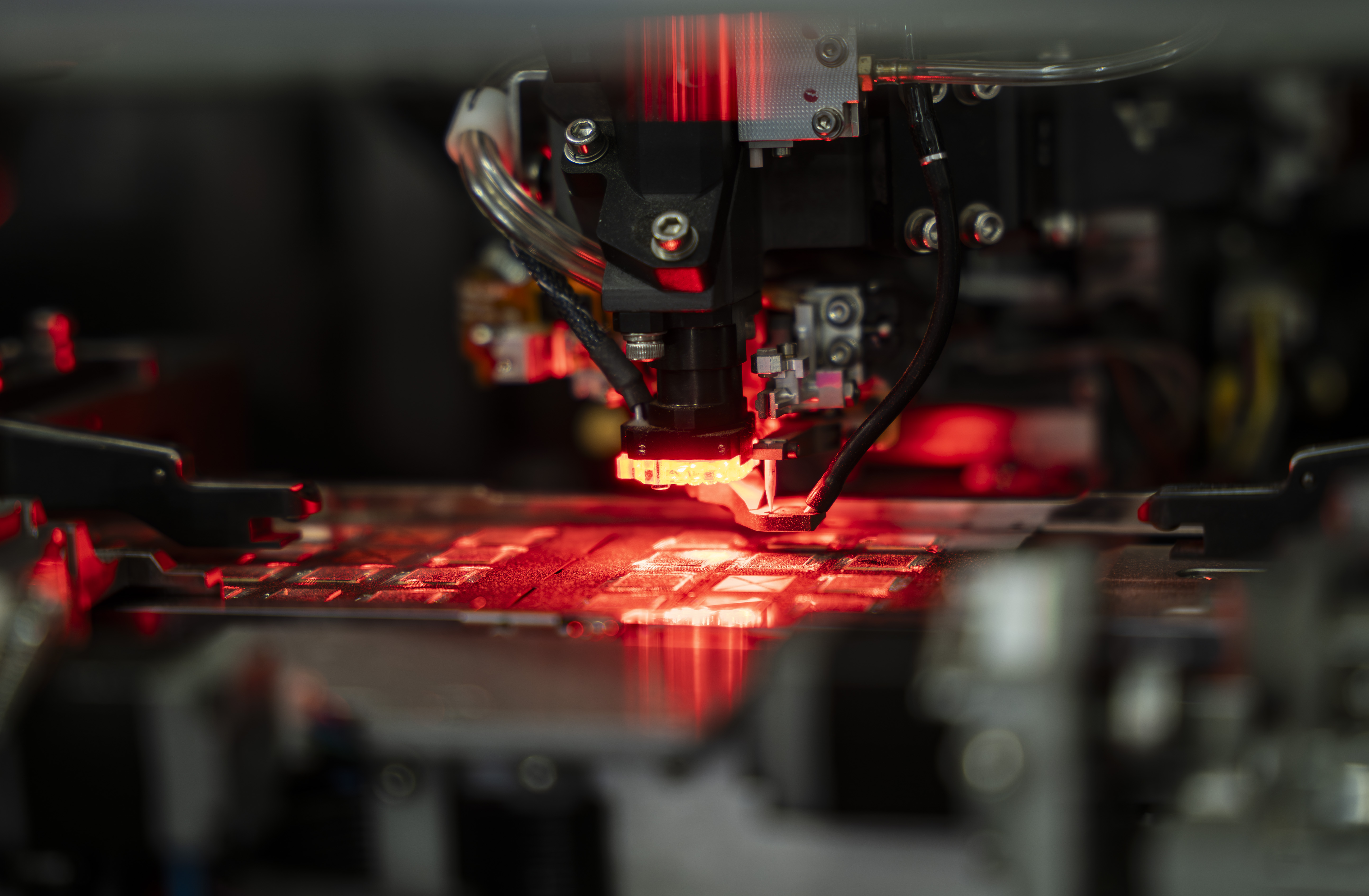
As AI grows more sophisticated, as the supply chains that power it become more contested, and as access to frontier models becomes geopolitically charged, India must begin to ask a different set of questions. Not what applications it can build on someone else’s infrastructure but what the world needs.

Konark Bhandari

The Indian Ocean Region hosts one of the densest concentrations of subsea cables in the world. Yet, despite accounting for a significant share of global internet traffic, India’s participation remains limited.

Charukeshi Bhatt

How is AI reshaping space security, creating governance challenges, and where does international diplomacy stand today?


Tejas Bharadwaj, Almudena Azcárate Ortega

After the chill in ties between 2020 and 2024 that brought India–China relations to their lowest point in several decades, the two countries have engaged each other afresh. This paper argues that there are predominantly four imperatives guiding India’s approach to China, and they exist in an order of priority.

Saheb Singh Chadha