

Commentary
Tatiana Stanovaya
{
  "authors": [
    "Tatiana Stanovaya"
  ],
  "type": "commentary",
  "centerAffiliationAll": "",
  "centers": [
    "Carnegie Endowment for International Peace",
    "Carnegie Russia Eurasia Center"
  ],
  "collections": [
    "Inside Russia"
  ],
  "englishNewsletterAll": "",
  "nonEnglishNewsletterAll": "",
  "primaryCenter": "Carnegie Endowment for International Peace",
  "programAffiliation": "",
  "programs": [],
  "projects": [],
  "regions": [
    "Russia"
  ],
  "topics": [
    "Political Reform"
  ]
}
Source: Getty
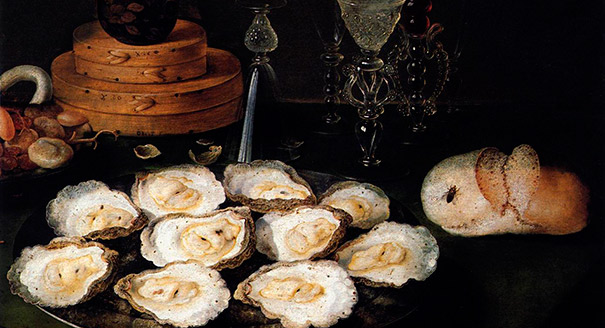
The Russian government provoked controversy with mass destruction of European food. The government could not allow its counter-sanctions policy to be seen to be failing and is exploiting different attitudes to banned Western products amongst the opposition and the general public.
This summer the whole of Russia has been hotly debating the issue of the government’s deliberate destruction of mountains of food imported in contravention of the sanctions regime against the European Union. In the first week of August, television pictures showed the incineration or bulldozing in different Russian cities of banned European cheese, pork and fruit.
On the one side has been outrage at the waste, on the other poker-faced government officials warning the public about contraband goods and telling them that the Russian agricultural sector is about to boom.
The Kremlin’s actions have been variously explained—as an act of sabotage, stupidity, helplessness or an effort to cover something else up with a high-profile, ostentatious action. The biggest unanswered question is: What will the people say? Will a country that has lived through terrible famines in the past simply stand by and watch food be burned? Will this undermine the popularity of the regime?
Let’s leave the moral aspect of the story and the alleged stupidity of the decision-makers to one side for a moment. Every government decision has a political rationale behind it. The government’s motive in the current situation is clear: it is determined not to allow banned products onto Russian markets at any cost. “At any cost” means choosing the most effective and radical method: destroying them.
This is because Russia's food embargo on Europe is not working. A recent investigation by Forbes.ru shows that it remains easy to import European products into Russia disguised as products from non-European countries. The difference is that if yesterday a customs official took your bribe, today he will burn your product. In fact he has to burn as much of it as possible to show his superiors how hard he is working. Something has to be burned, to persuade the importers to stop importing. It will come as no surprise if in a month’s time the next step is a law which makes breaking the embargo a criminal offence or even an act of treason.
Russia’s political leaders who imposed the counter-embargo on the EU know they will look foolish if it is seen that their year-old embargo is still not working properly. It is as embarrassing as if “Putin’s friends” targeted by Western sanctions were still able to travel to the West and take out loans there, even if at slightly higher interest rates.
The Kremlin’s problem is that the Western sanctions on Russia are working but Russia’s own ones are only a mirage. President Putin is unable to make his mighty power vertical carry out his orders, even the informal ones. The system cannot just follow general rules, it can operate only after the boss issues a direct instruction to solve a specific question with specific names attached to it.
In these circumstances the Kremlin’s only response was to destroy the food. It could not donate it to orphanages, feed it to livestock or use it for any other charitable purpose. If the decision had been taken to distribute the banned food to the needy, Russia’s current levels of corruption are such that schemes would have been devised to sell on the goods and neither children, the elderly nor cattle would have set eyes on it. That’s the situation with the humanitarian aid delivered to Russia, Donbas or Ukraine, some of which is distributed, some stolen and half of which is sold.
It is also unrealistic to expect righteous public anger at the burning of the food. Opinion polls suggest that public opinion is actually mainly sympathetic to the government on this issue. A recent Levada Center poll from late July suggests that more Russians are getting accustomed to their country’s isolation. Over the last 18 months, the number of those worried about the isolation of Russia declined from 56 percent to 38 percent. The number of people concerned about Western sanctions also went down from 53 percent to 41 percent. On the other hand, a higher proportion of Russians now believe that counter-sanctions hurt the West more than they do Russia (35 percent vs. 15 percent).
It is instructive to see how the destruction of the food is portrayed on Russian television. On August 6, a typical Channel One evening news story carried a report about the destruction of “290 tons of fresh produce and 29 tons of livestock products.” Viewers were also informed about “household waste”, “products without labels,” “products that can’t be called cheese,” “an absence of documents confirming quality and safety,” “health risks” and “unidentified raw materials.” It doesn’t sound very appetizing, does it?
For ordinary Russians the forbidden goods are presented as either the food of “the accursed bourgeoisie” or as dangerous products sent by the West to poison the Russian people. Everyone is suddenly remembering the humiliating 1990s and their U.S.-imported nitrate-laden “Bush chicken legs.” In this context, the opposition resembles the spoiled bourgeois, who are making a big play about hunger stories from wartime Leningrad or the tears of the elderly only because they have lost access to their contraband Spanish ham.
It looks as though the public and government are in perfect harmony. The food will burn, the people will cheer and hate the West as the cause of all their problems. But there are some nuances which complicate the picture. For instance, the price of buckwheat is going up, as is the cost of building repairs. It is as though the public's growing social discontent is isolated in one vessel, while political trust in the president fills up another vessel. Fear and hatred of the West keep the two vessels apart. But will this situation last forever? In certain circumstances the discontent can break through and empty out the public's political love for Putin.
Tatyana Stanovaya is a head of the analytics department of the Center for Political Technologies (CPT) in Moscow

Senior Fellow, Carnegie Russia Eurasia Center
Tatiana Stanovaya is a senior fellow at the Carnegie Russia Eurasia Center.
Recent Work
Tatiana Stanovaya
Tatiana Stanovaya
Carnegie India does not take institutional positions on public policy issues; the views represented herein are those of the author(s) and do not necessarily reflect the views of Carnegie, its staff, or its trustees.

This piece argues that India’s central challenge is not managing a single flashpoint but resolving the underlying tension between expansion and institutional coherency of the BRICS grouping.

Vrinda Sahai
As India’s economy recovers from the coronavirus pandemic, Indian businesses need efficient financial structures to regain their ground. Key reforms to India’s Insolvency and Bankruptcy Code could fill these gaps.

Anirudh Burman
Access to cross-border data is an integral piece of the law enforcement puzzle. India is well placed to lead the discussions on international data agreements subject to undertaking necessary surveillance reforms.

Smriti Parsheera, Prateek Jha
After the coronavirus pandemic wanes, how will China’s reorientation of the Belt and Road Initiative to address global health concerns influence its relationships with South Asian countries?


Deep Pal, Rahul Bhatia
Early in the outbreak, government researchers forecast several high-risk scenarios that were downplayed or ignored in public messaging.
Gautam I. Menon