

In The Media
David Rothkopf
{
  "authors": [
    "David Rothkopf"
  ],
  "type": "legacyinthemedia",
  "centerAffiliationAll": "",
  "centers": [
    "Carnegie Endowment for International Peace"
  ],
  "collections": [],
  "englishNewsletterAll": "",
  "nonEnglishNewsletterAll": "",
  "primaryCenter": "Carnegie Endowment for International Peace",
  "programAffiliation": "",
  "programs": [],
  "projects": [],
  "regions": [
    "United States"
  ],
  "topics": [
    "Political Reform"
  ]
}
Source: Getty
What would a United States under President Trump look like?
Source: Foreign Policy
The first thing you notice as you approach passport control is the warm yellow light. It reminds you of a summer sunrise, but it’s actually just the reflection from the spotlights glinting off a giant golden marquee above the portal that now welcomes each and every new arrival to America. “Welcome to the U.S.A.,” say the immense gilded letters, “The Classiest Country on Earth.”
There’s something different about the customs officer who greets you. It is not just that she is impossibly cheerful — and with her cascading hair and her brilliant smile, she would remind you of a beauty queen if it weren’t for the badge and gun adorning her form-fitting, miniskirted uniform. She pulls a rubber stamp from an official U.S. government-issued garter belt, imprints your passport (assuming you are not a Mexican), and hands you a coupon book good for “the biggest discounts offered by any country in the world” as she welcomes you to the United States.It is only when you reach the exit that you begin to realize who else that cotton-candy hairdo and smile remind you of. That’s because by each doorway welcoming new arrivals into America there stands a shimmering hologram of the president of the United States, America’s emcee in chief, Donald Trump. The new president beckons you onward, and a recording repeatedly booms his voice repeating, “America! It’s for winners!” It’s not only a greeting. It’s the new national motto, having replaced “e pluribus unum” on U.S. currency.
This used to be Kennedy airport, but it has been rechristened, the first major airport ever to be named after a sitting president. (“Kennedy was fine. But he wasn’t a great president. I like presidents who weren’t assassinated.”) In front, you hail one of the yellow stretch taxi-limousines and head for downtown Manhattan. As you drive in through Queens, where LaGuardia Airport and the World’s Fair grounds once stood, you see emerging amid the cranes and the scaffolding the outlines of the Trump Presidential Resort and Casino. Gambling has been legal across America since shortly after his election, providing most of the funding for many of the new president’s signature major projects, from the gilding of customs halls to extending health insurance coverage to include free Hair Club for Men and most forms of plastic surgery for women (or as the new president called it, his “Be Kind to Dogs Act”) to ensuring that every public high school in America has the “Trump bare essentials,” including a heliport, cafeteria cocktail waitresses, and laser teeth whitening for disadvantaged students.
Through all the glitz, however, you notice that the city is starting to take on many of the other grimmer hallmarks of past Trump development projects. Like Atlantic City, it seems full of busloads of the elderly being led past assorted hookers, small-time hoods, and Elvis impersonators. Yakov Smirnoff is the toast of Broadway. And, of course, the city has embraced one of Trump’s favorite financing techniques — bankruptcy. (Just “taking advantage” of the country’s laws, as he likes to put it. Or as he memorably put it in his first inaugural, “Only a schmuck wouldn’t use those laws to cancel the nation’s debt. Serves those Chinese investors who bought U.S. Treasurys right. Am I the nation’s best deal-maker, or what?”)
It is not very luxe on the southern border either. There, a 30-foot-high wall dressed up with the finest gilded barbed wire on top (“I have the biggest heart. The biggest.”) extends from the Gulf of Mexico to the Pacific. There is just one small door situated between Juárez and El Paso. Over it a sign reads “Servant’s Entrance.” Next to it is a small stand with copies of what has become known as the Trump Constitution, available in “English and Mexican.” One notable alteration is that the 14th Amendment has been deleted. (“Some top legal minds think you can fix the whole problem with white-out. So, that’s what I did. If someone wants to sue, they can sue. Good luck winning now that I can print my own money. Am I the world’s best problem solver, or what?”)
The place where the shine has really come to America, however, is clearly in the White House. Everybody in the country remembers the hourlong television special that featured first lady Melania Knauss-Trump taking Americans on a Jackie Kennedy-like tour of the renovated grounds and “world class” executive mansion. With fountains like those at Las Vegas’s Bellagio (“only classier, much, much classier”), the actual Hall of Mirrors from Versailles (“I made Hollande an offer he couldn’t refuse”), and monitors/screens in every room that stream an around-the-clock live broadcast of a presidential reality show that now is showing on every C-SPAN channel (“And the ratings are killer! I am crushing Dancing with the Stars.), it is not the first Trump Palace, but is now certainly the biggest. (Admittedly, it nearly burned down during Trump’s first state dinner when well-known hothead turned Secretary of State John Bolton actually spontaneously combusted, setting Chinese President Xi Jinping on fire while he was eating the “double” Big Mac the president had promised him. But as the president said, “Fire, what fire? Next question.”)
Washington insiders, all of whom dreaded the election of Trump, a man they viewed as an outsider, an incompetent, and a boor who treated presidential politics like just another cheeseball publicity stunt, flocked to the new White House to seek jobs and curry favor. Think-tankers produced papers expounding on how Trump captured the new American zeitgeist, and so many Capitol Hill denizens who had once laughed at the pinkish-orange cow flop of a comb-over adorning his head were soon seen sporting the same do that the place had begun to look scarily like the capital city of Panem, from The Hunger Games. In fact, in secret study groups across America, the trilogy, now recognized as scarily prescient, was studied for further clues about the direction Trumpmerica would take. (Jennifer Lawrence, in fact, went into hiding, fearing she would be seen as a symbol of opposition and exiled in the same way Trump opponents like Megyn Kelly and Jorge Ramos had been. “Tolerance is for losers! Bunga bunga!” said Trump, who is said to have held a hot-tub party with Silvio Berlusconi and Vladimir Putin deep in the bowels of the White House’s secret sub-basement gaming facilities.)
Recognizing the authoritarian bully tendencies of Trump and the ugliest impulses of his supporters had been the reason for the one big national boom associated with the Trump presidency. Sadly for Americans, that boom did not, however, take place in the United States. Instead, it occurred in Canada — which since the Trump presidency had seen its population treble as new immigrants clogged its border crossings, deeply embarrassed at what their country had become. And, ironically, the first act that this new electorate demanded of the government in Ottawa was to build a wall, this one along America’s northern border.
Former Visiting Scholar
David Rothkopf was a visiting scholar at the Carnegie Endowment as well as the former CEO and editor in chief of the FP Group.
Recent Work
David Rothkopf
David Rothkopf
Carnegie India does not take institutional positions on public policy issues; the views represented herein are those of the author(s) and do not necessarily reflect the views of Carnegie, its staff, or its trustees.

India and the United States are close to concluding a Reciprocal Defense Procurement Agreement (RDPA) that will allow firms from the two countries to sell to each other’s defense establishments more easily. While this may not remedy the specific grievances both sides may have regarding larger bilateral issues, an RDPA could restore some momentum, following the trade deal announcement.

Konark Bhandari
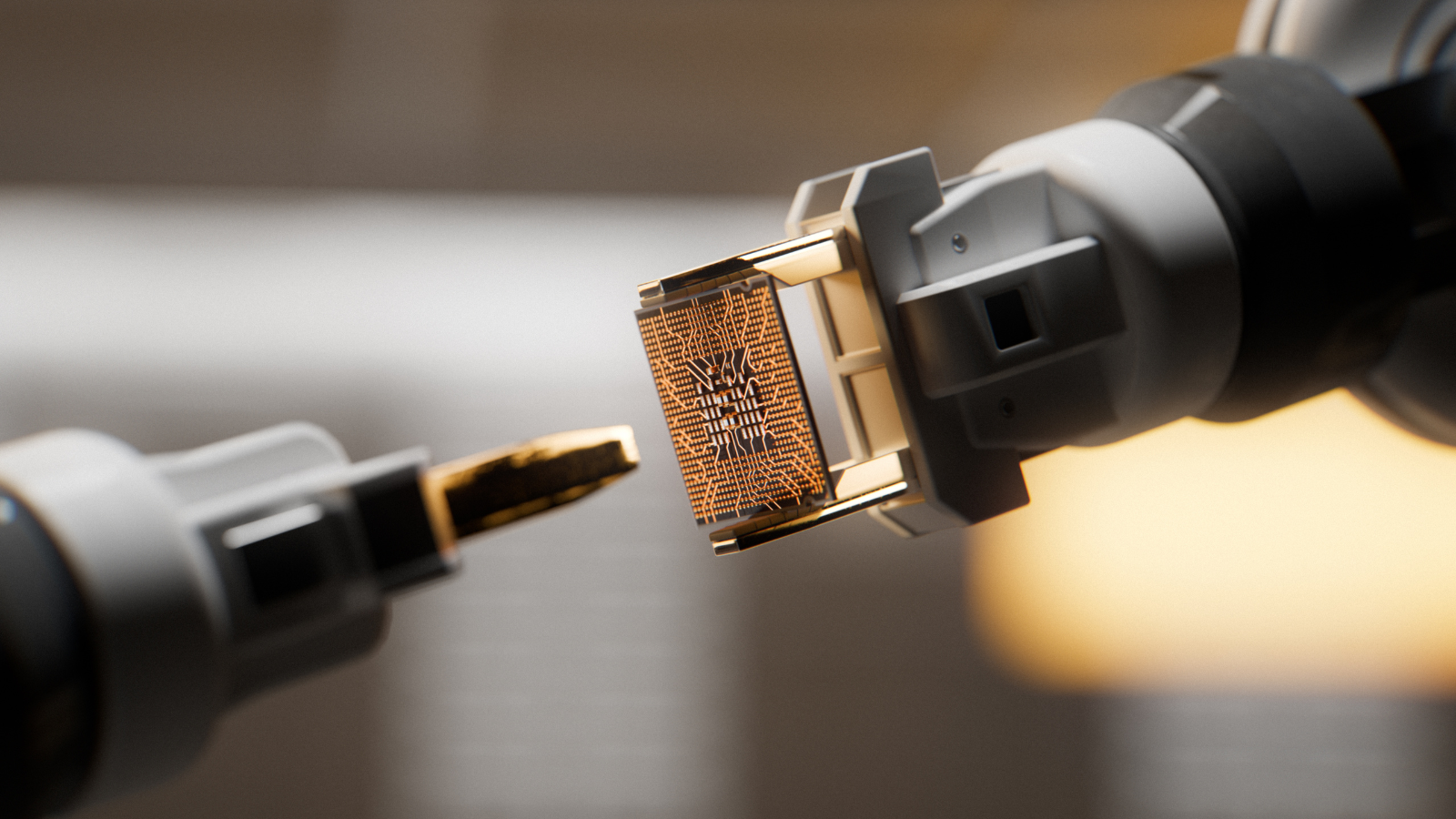
On the last day of the India AI Impact Summit, India signed Pax Silica, a U.S.-led declaration seemingly focused on semiconductors. While India’s accession to the same was not entirely unforeseen, becoming a signatory nation this quickly was not on the cards either.
Konark Bhandari

This piece examines India’s response to U.S. sanctions and tariffs, specifically assessing the immediate market consequences, such as alterations in import costs, and the broader strategic implications for India’s energy security and foreign policy orientation.

Vrinda Sahai
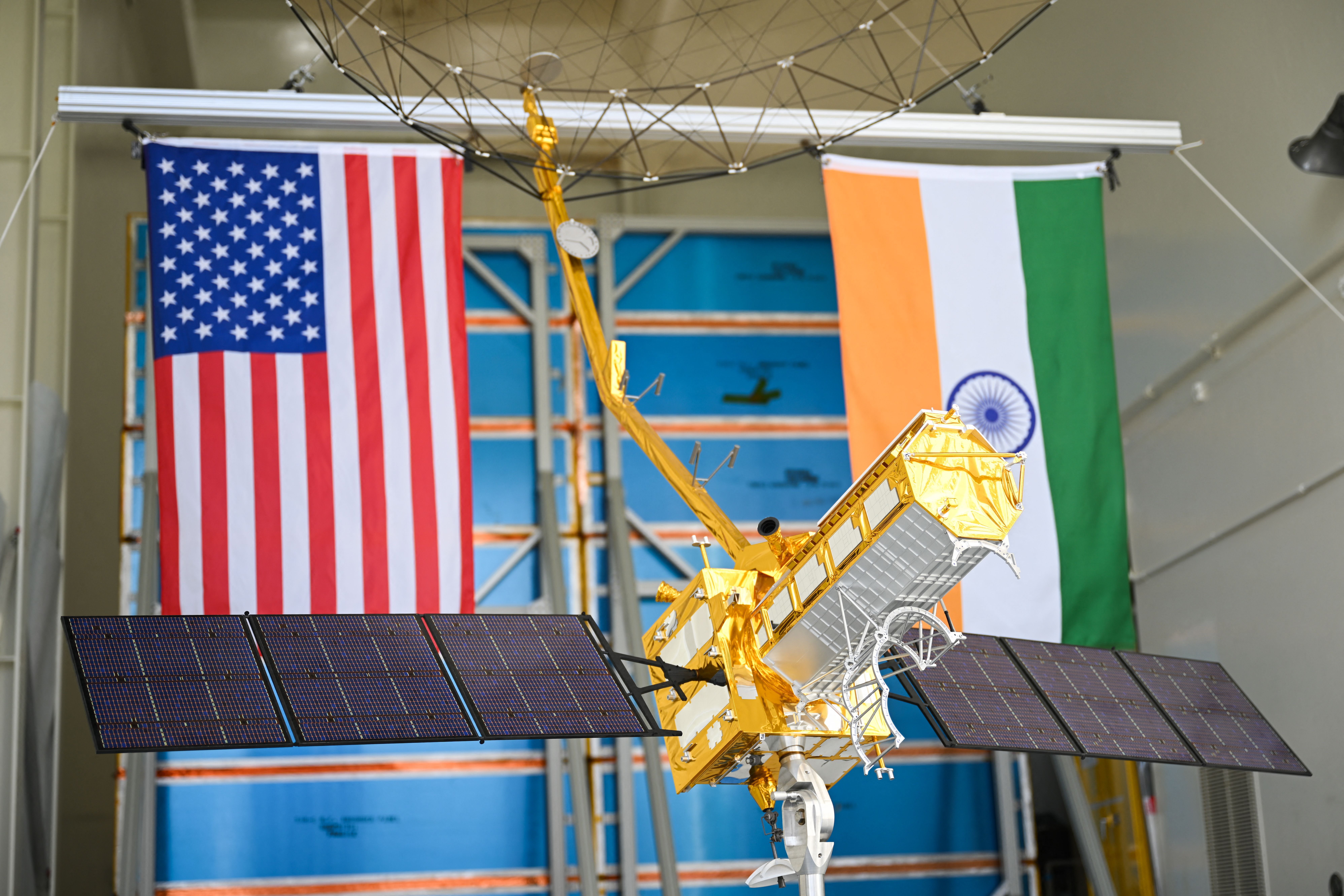
On July 30, 2025, the United States announced 25 percent tariffs on Indian goods. While diplomatic tensions simmered on the trade front, a cosmic calm prevailed at the Sriharikota launch range. Officials from NASA and ISRO were preparing to launch an engineering marvel into space—the NASA-ISRO Synthetic Aperture Radar (NISAR), marking a significant milestone in the India-U.S. bilateral partnership.

Tejas Bharadwaj
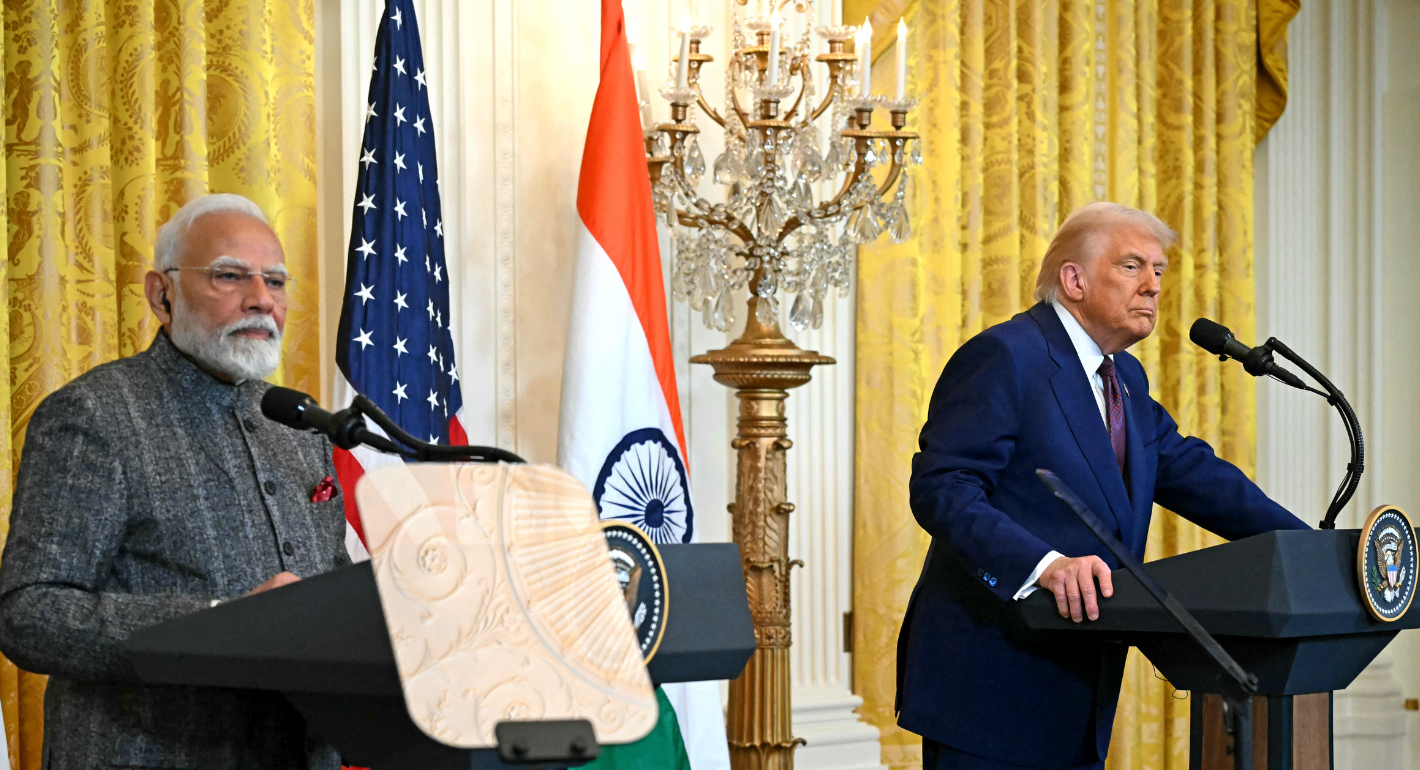
The India-U.S. relationship currently appears buffeted between three “Ts”—TRUST, Tariffs, and Trump.
Arun K. Singh