

Commentary
Tatiana Stanovaya
{
  "authors": [
    "Tatiana Stanovaya"
  ],
  "type": "commentary",
  "centerAffiliationAll": "",
  "centers": [
    "Carnegie Endowment for International Peace",
    "Carnegie Russia Eurasia Center"
  ],
  "collections": [],
  "englishNewsletterAll": "",
  "nonEnglishNewsletterAll": "",
  "primaryCenter": "Carnegie Endowment for International Peace",
  "programAffiliation": "",
  "programs": [],
  "projects": [],
  "regions": [
    "Russia"
  ],
  "topics": [
    "Political Reform",
    "Democracy"
  ]
}
Source: Getty
Local elections in Russia last weekend seemed to confirm the dominance of United Russia, the “party of power.” But the Kremlin may be forced to end its reliance on United Russia before next year’s Duma elections.
Russia's local elections, held on September 13, again delivered an overwhelming victory to the ruling party, United Russia, giving the impression that nothing has changed and the same results are assured in next year's parliamentary elections.
Yet the election had several curious features which suggest that these could be the last polls to follow a familiar script.
In voting for most of Russia's regional assemblies, the pro-Kremlin party United Russia again won a strong first-place finish. The Communist Party of the Russian Federation cemented its status as the nation's second party. “A Just Russia” and the Liberal Democratic Party of Russia (LDPR) took their customary place as the other two key forces. The unofficial opposition was allowed to take part but given less space than in 2013.
This comfortable picture conceals some details that should worry the Kremlin.
First, despite being the first successful "party of power" in post-Soviet Russia, United Russia is in long-term crisis. It has always had the problem that decisions are taken inside the Kremlin, not inside the party. The party cannot have an ideology or an independent leader. Its only source of legitimacy is the high level of support for a political actor outside the party itself, Vladimir Putin.
As long as Putin has an 86 percent approval rating, United Russia can win 45 or 50 percent of the vote, simply by showing his portrait. But is Putin more important for the party or the party for Putin? If one fine day the party starts to drag down Putin’s ratings, a rescue mission will be mounted to save Putin--but not United Russia. The party will be subjected to a public execution.
The death sentence may not be carried out immediately. Before the 2016 parliamentary elections the Kremlin may consider merging United Russia into a "coalition of patriots" with parties such as the newly formed All-Russia People’s Front (ONF), whose members will be rebranded as the most loyal Putinists.
The second potential source of danger for the Kremlin is the ambiguous status of Gennady Zyuganov and his Communist Party. Everyone has got used to them being the partners of the Kremlin, willing to play by its rules. The Kremlin has allowed the Communist Party to keep its core electorate, anticipating that it was dying out by natural causes.
However, a leopard cannot change its spots and the Communist Party remains a full-fledged political party with loyal voters and a clear ideology. For all its cooperation with the authorities, the party will not abandon its claim to be Russia's strongest opposition force. If socio-economic discontent moves on to the streets, the Communists may join the side of the protesters.
Thirdly, Russia's party system cannot survive in the long term. An apparently stable configuration has formed in which United Russia gets around 60 percent of the vote, the Communist Party 15 percent, the LDPR 10 percent and Just Russia five percent. But this arrangement cannot last forever.
In the mid-2000s there was an initiative to end the Communist Party's role as the main opposition force. There would be a two-party system with A Just Russia as the center-leftists, United Russia as the center-right party, and the Kremlin standing above the fray in the role of monarch.
The rationale was that it would be impossible to ensure that United Russia always got 60 percent of the vote. However, United Russia became irreplaceable and this scenario did not come to pass.
Another weakness of the current Russian regime is that its relationship with voters is essentially an informal labor contract. Citizens do not support the ruling party by direct edict. Rather, voters pay a kind of political tithe for the guarantee that they will keep their jobs and their salaries will be paid on time.
There is no real ideological connection between the voter and the party in power. The voter who gets on the bus, travels to the polling station and puts his cross in the right box on the ballot paper is, deep down, an unknown quantity.
We know what kind of media environment the voter exists in and how he votes post factum. But no sociologist can tell us how exactly he will behave at the critical moment in the polling station. If the country falls into crisis, his behavior may change. In this regard, it is important to note a fall in electoral turnout in several places in last Sunday's election, which suggests that electoral behavior in Russia may be becoming less predictable.
One final feature of the elections was that the "non-systemic" opposition is still left on the outside. PARNAS, a party of liberal protest, was the only genuine opposition party allowed to take part. It was only permitted to field candidates in one place, the town of Kostroma.
PARNAS's participation in one regional poll was the exception that proved the rule, confirming that the opposition must get only two percent of the vote. Even if PARNAS is allowed to run in next year's Duma elections, it will be the same story. If it threatens to get five percent of the national vote it will be shut out of the election.
The local elections confirmed that the Russian political system is strongly averse to change. Ever since Putin came to power, the Kremlin has been able to deliver the right results in every election. But continuing success also depends on the financial and economic capacity of the regime. That means it would be more appropriate to make predictions about the 2016 Duma elections on the basis of economic data from Russia's State Statistics Service than on the recent local election results.
Tatyana Stanovaya is director of the analytical department of the Center of Political Technologies in Moscow.

Senior Fellow, Carnegie Russia Eurasia Center
Tatiana Stanovaya is a senior fellow at the Carnegie Russia Eurasia Center.
Recent Work
Tatiana Stanovaya
Tatiana Stanovaya
Carnegie India does not take institutional positions on public policy issues; the views represented herein are those of the author(s) and do not necessarily reflect the views of Carnegie, its staff, or its trustees.

This piece argues that India’s central challenge is not managing a single flashpoint but resolving the underlying tension between expansion and institutional coherency of the BRICS grouping.

Vrinda Sahai

Experts weigh in on whether the United States is too hostile toward China.

Stephen Wertheim, Evan S. Medeiros, Vijay Gokhale
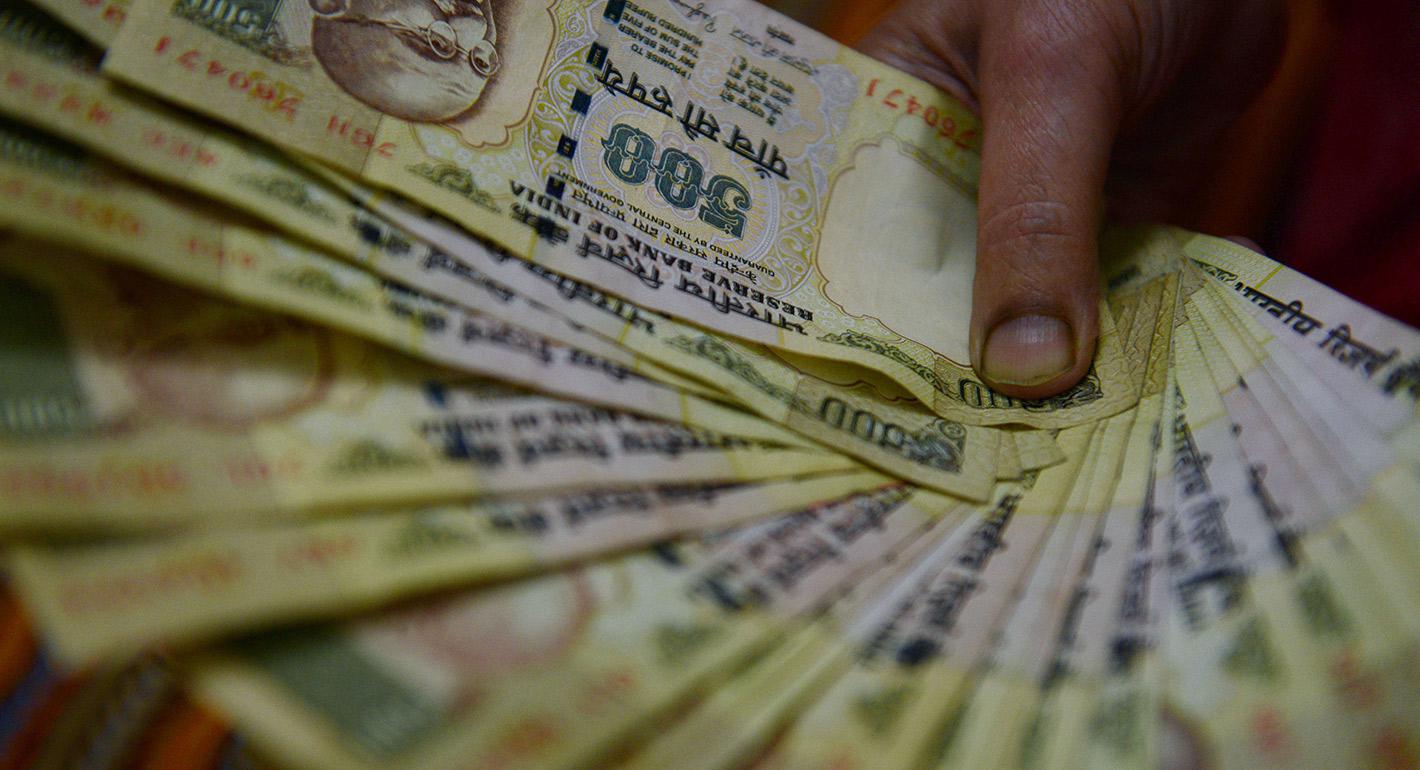
As India’s economy recovers from the coronavirus pandemic, Indian businesses need efficient financial structures to regain their ground. Key reforms to India’s Insolvency and Bankruptcy Code could fill these gaps.

Anirudh Burman
Access to cross-border data is an integral piece of the law enforcement puzzle. India is well placed to lead the discussions on international data agreements subject to undertaking necessary surveillance reforms.

Smriti Parsheera, Prateek Jha
After the coronavirus pandemic wanes, how will China’s reorientation of the Belt and Road Initiative to address global health concerns influence its relationships with South Asian countries?


Deep Pal, Rahul Bhatia