• Research
  • About
  • Experts
Carnegie India logoCarnegie lettermark logo
{
  "authors": [
    "Bayram Balci",
    "Thomas Liles"
  ],
  "type": "other",
  "centerAffiliationAll": "dc",
  "centers": [
    "Carnegie Endowment for International Peace"
  ],
  "collections": [],
  "englishNewsletterAll": "ctw",
  "nonEnglishNewsletterAll": "",
  "primaryCenter": "Carnegie Endowment for International Peace",
  "programAffiliation": "russia",
  "programs": [
    "Russia and Eurasia"
  ],
  "projects": [],
  "regions": [
    "Caucasus",
    "Georgia"
  ],
  "topics": [
    "Religion"
  ]
}

Source: Getty

Other

Muslims in Europe: Georgia

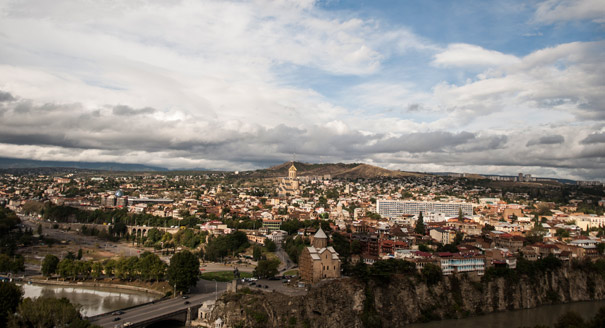
Despite the relatively small number of Muslims in Georgia, issues related to Islam and Muslims have taken on an increasingly high profile in recent years.

Link Copied
By Bayram Balci and Thomas Liles
Published on Oct 30, 2015

Source: Yearbook of Muslims in Europe

Despite the relatively small number of Muslims in Georgia, issues related to Islam and Muslims have taken on an increasingly high profile in recent years. 2014 witnessed continued public debate over the permissibility of ethnic Georgian Sunni Muslims to establish and preserve religious institutions.

Global events and transnational links also caused resonance. The participation of ethnic Kist, Georgian citizens in the so-called Islamic State of Iraq and Syria (ISIS), on the one hand, stoked fears of Salafi radicalisation among Georgia’s Kists, who are closely related to the Chechens, reside primarily in the Pankisi Gorge, and have traditionally adhered to Islam. On the other hand, Turkish and Iranian religious actors continued to develop links with Georgia’s Sunni and Shi‘i communities, respectively.

Meanwhile, institutional and legal developments prompted state actors to become increasingly involved in managing Muslim issues. The Administration of Muslims of All Georgia (AMAG)—a state-supported Muslim organisation created by the government of former President Mikheil Saakashvili in 2011—underwent personnel changes and asserted greater control over Muslim persons and property in Eastern Georgia. Similarly, the creation of a new State Agency for Religious Issues gave the state a stronger legal basis for coordinating Muslim affairs....

This chapter originally appeared in the Yearbook of Muslims in Europe, Volume 7.

About the Authors

Bayram Balci

Former Nonresident Scholar, Russia and Eurasia Program

Balci was a nonresident scholar in Carnegie’s Russia and Eurasia Program, where his research focuses on Turkey and Turkish foreign policy in Central Asia and the Caucasus.

Thomas Liles

Authors

Bayram Balci
Former Nonresident Scholar, Russia and Eurasia Program
Thomas Liles
ReligionCaucasusGeorgia

Carnegie India does not take institutional positions on public policy issues; the views represented herein are those of the author(s) and do not necessarily reflect the views of Carnegie, its staff, or its trustees.

More Work from Carnegie India

  • Commentary
    How Are Various Countries Responding to China’s Belt and Road Initiative?

    Pitched as a new Silk Road sweeping from Asia to Europe, China’s enormous Belt and Road Initiative is an ambitious, multinational infrastructure project. Experts from four Carnegie global centers explain other countries’ perspectives.

      • Alexander Gabuev
      • +4

      Paul Haenle, Dmitri Trenin, Alexander Gabuev, …

  • Commentary
    Raja Mandala: Saudi Arabia and the Ghosts of 1979

    The ideas of religious moderation and social modernization have been steadily pushed on the defensive in the four decades since 1979. Any effort to reverse 1979, therefore, must be welcomed in the Subcontinent.

      C. Raja Mohan

  • Article
    Buddhism: A New Frontier in the China-India Rivalry

    Buddhism has become part of a broader soft power rivalry between China and India for greater influence in Asia.

      Jayadeva Ranade

  • Commentary
    Raja Mandala: The Odd Triangle

    Tibet is at the very heart of the Sino-Indian disputation over territorial sovereignty and much else over the last six decades.

      C. Raja Mohan

  • Commentary
    Raja-Mandala: Faith and Diplomacy

    Purposeful engagement with religious communities around the world can increase the efficacy of India’s international relations, but only when handled with great care and diplomatic competence.

      C. Raja Mohan

Get more news and analysis from
Carnegie India
Carnegie India logo, white
Unit C-4, 5, 6, EdenparkShaheed Jeet Singh MargNew Delhi – 110016, IndiaPhone: 011-40078687
  • Research
  • About
  • Experts
  • Projects
  • Events
  • Contact
  • Careers
  • Privacy
  • For Media
Get more news and analysis from
Carnegie India
© 2026 Carnegie Endowment for International Peace. All rights reserved.