

Commentary
Alexander Baunov
{
  "authors": [
    "Alexander Baunov"
  ],
  "type": "commentary",
  "centerAffiliationAll": "",
  "centers": [
    "Carnegie Endowment for International Peace",
    "Carnegie Russia Eurasia Center"
  ],
  "collections": [],
  "englishNewsletterAll": "",
  "nonEnglishNewsletterAll": "",
  "primaryCenter": "Carnegie Endowment for International Peace",
  "programAffiliation": "",
  "programs": [],
  "projects": [],
  "regions": [
    "Middle East",
    "Syria",
    "Russia"
  ],
  "topics": [
    "Security",
    "Foreign Policy"
  ]
}
Source: Getty
Russia sees the renewal of diplomacy on Syria as a chance to lose the status of international pariah. It has found relevance by getting involved in a crisis where Western strategy is full of holes.
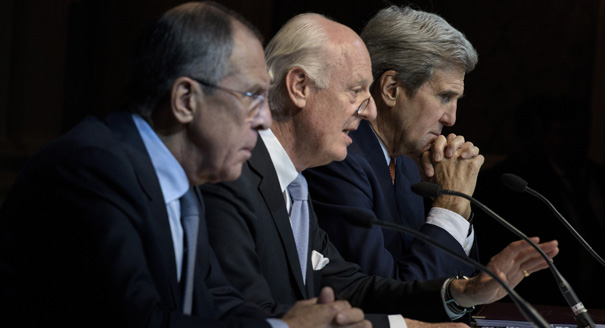
For Russia the recent diplomatic talks on Syria in Vienna reflected the kind of world it likes to see—a latter-day version of the nineteenth-century Concert of Europe. It was a vision of a multilateral world order in which several major powers came together to do a deal, but no single one was in the ascendant.
For this very reason, the October 30 talks—and U.S. acquiescence to Russia’s role in them— have been criticized. President Obama is being attacked, by domestic critics and much of the Sunni world, for giving Russia a role in the first place. The West is doing a terrible job as the global board of directors, the critics say, and Obama is failing as its chairman.
But Obama’s alleged weakness may actually be a sign of strength. Russia’s new role may be a convenient way to fill gaps in the United States’ failing Syria strategy.
How did Russia end up getting involved in Syria? Quite simply, to avoid complete international isolation, Russia had to prove it could help solve a problem that it didn’t create.
It is easy to rule an isolated country, but Putin has no desire to be an international pariah governing a hermetically sealed state. Ruling a country of the enormous size of Russia gives one the prospect of a place in the global elite. That ambition is laid out in Russia’s latest national security concept. Even though it was authored by the prickly counter-intelligence chief Nikolai Patrushev, the document explicitly rejects the notion that the country should seek isolation.
Simply waiting for the conversation to change was not an option. In early 2014, the West didn’t want to talk to the Russian leadership at all after its intervention in Ukraine. Then it engaged Moscow through Minsk-2, the Normandy Process, and talks on “special status” for the Donbas region. Russia could have remained in this Ukraine-focused cocoon indefinitely. There had to be a way out.
Where could Russia be relevant? If it was to play a part in resolving someone else’s crisis, it had to be absolutely indispensable. The world is full of crises in which Russia has no reason to get involved. There is not much use in sending your only aircraft carrier to the South China Sea or dispatching paratroopers to Nigeria to fight Boko Haram.
The Iranian nuclear issue, in which even Obama praised Russia’s constructive role despite the Ukraine crisis was a different story. And now Syria is on the table.
The fact that the question was even asked as to whether the Vienna talks were a “diplomatic success for Russia” was significant in itself. After four years of destructive conflict in Syria, the meeting marked a moment when substantive discussions were heard, with not just Russia and the United States, but also Iran and Saudi Arabia sitting at the table.
Russia won agreements on many of the points on its agenda. The list of named terrorist organizations operating in Syria will be expanded, which means that ISIS will not be the only name on it. There was a commitment to keep Syria’s state institutions intact.
The Americans have said several times that if Russia was serious about winning the fight against ISIS it would have joined the already existing coalition. But the chances are that it wouldn’t have been accepted in the alliance.
More importantly, the coalition already has a conductor. In Russia’s worldview, where there is a conductor, there is no need for an orchestra. Russia wants multi-polarity—a chamber orchestra concert where there is no conductor.
So the world order reflected at the Syria talks in Vienna resembles the one of Putin’s dreams. It was a concert of 19 global and regional powers, including some actively hostile to one another, who had proved themselves as musicians.
It was not quite the era after the Congress of Vienna, where the mere possession of power conferred legitimacy. But Russia could take some satisfaction in the formulations on the Assad regime. Despite its “bad behavior,” it was conceded that Assad should at least have a role in determining the country’s future. For the Russian leadership, which hates being left out of the conversation—or any talk of regime change, that was very welcome.
Recently, Barack Obama hit home with the observation that Russia was an important regional power with a GDP roughly equal to that of Spain. And yet, Russia is still projecting power outside its region and proving that GDP is not everything.
No Western leader is using the word “cooperation” in relation to Russia, but contacts are much closer than the bitter rhetoric being exchanged between Moscow and Washington might suggest. Obama and Putin had a one-on-one meeting for the first time in two years in New York. Secretary of State John Kerry and Foreign Minister Sergei Lavrov meet practically every week and worked together on the Vienna talks. High-ranking officials now routinely call one another. The Normandy Four summit was relatively successful, and there is tactical cooperation between the states to avoid military incidents.
Some might say this is not real cooperation but merely, as in the Cold War, operational agreements to avoid conflict. That may be true, but Putin and many others in Russia regard this arrangement as infinitely better than the situation only six months ago, when the mere fact of Kerry visiting Putin in Sochi was described as “sensational.”
It may be that Russia’s unexpected intervention in Syria helped the Western coalition to rethink a plan which was no longer attainable—but which they could not abandon without losing face.
If that is the case, Obama’s approach is a sign of strength, not weakness. A strong politician is not afraid of appropriating elements of someone else’s strategy if his own is not working.
Russia’s military involvement in Syria and the new diplomatic efforts to end the civil war confirm that Russia’s political significance exceeds its GDP—not that anyone doubted that. But it also shows Russia the limits of its global reach—that it can make an impact in the world only in places where Western policy is full of holes that need covering.

Senior Fellow, Editor-in-Chief, Carnegie Russia Eurasia Center
Baunov is a senior fellow and editor-in-chief at the Carnegie Russia Eurasia Center.
Recent Work
Alexander Baunov
Alexander Baunov
Carnegie India does not take institutional positions on public policy issues; the views represented herein are those of the author(s) and do not necessarily reflect the views of Carnegie, its staff, or its trustees.

This piece examines India’s response to U.S. sanctions and tariffs, specifically assessing the immediate market consequences, such as alterations in import costs, and the broader strategic implications for India’s energy security and foreign policy orientation.
Vrinda Sahai
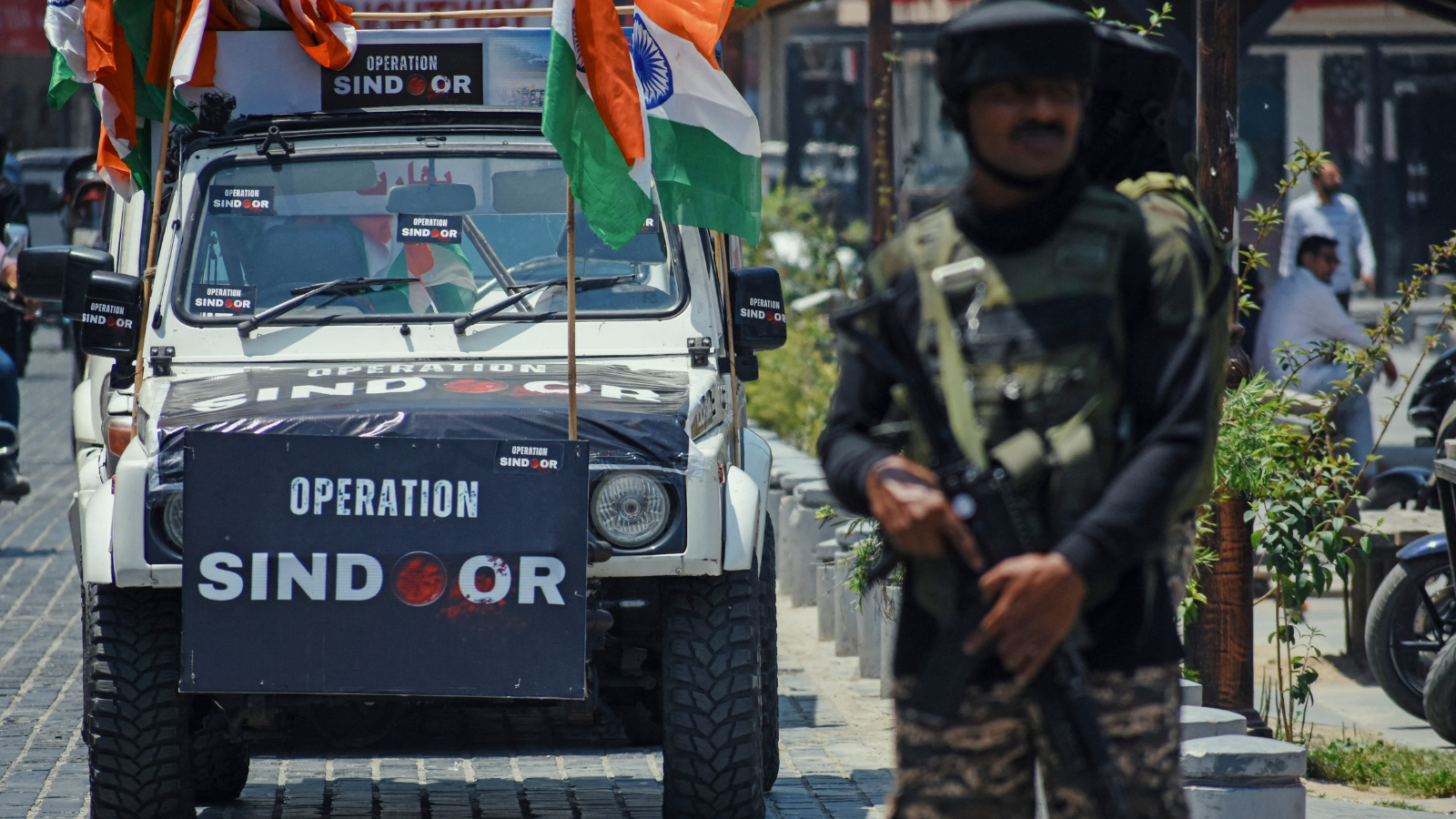
The India-Pakistan conflict that played out between May 6 and May 10, 2025, offers several military lessons. This article presents key takeaways from Operation Sindoor and breaks down how India’s preparations shaped the outcome and what more is needed to strengthen future readiness.

Dinakar Peri
This book offers a comprehensive analysis of India's evolving relationship with sovereignty in a complex global order. Moving beyond conventional narratives, it examines how the sovereignty principle shapes India's behavior across four critical domains—from traditional military power to contemporary data governance.

Rudra Chaudhuri, Nabarun Roy
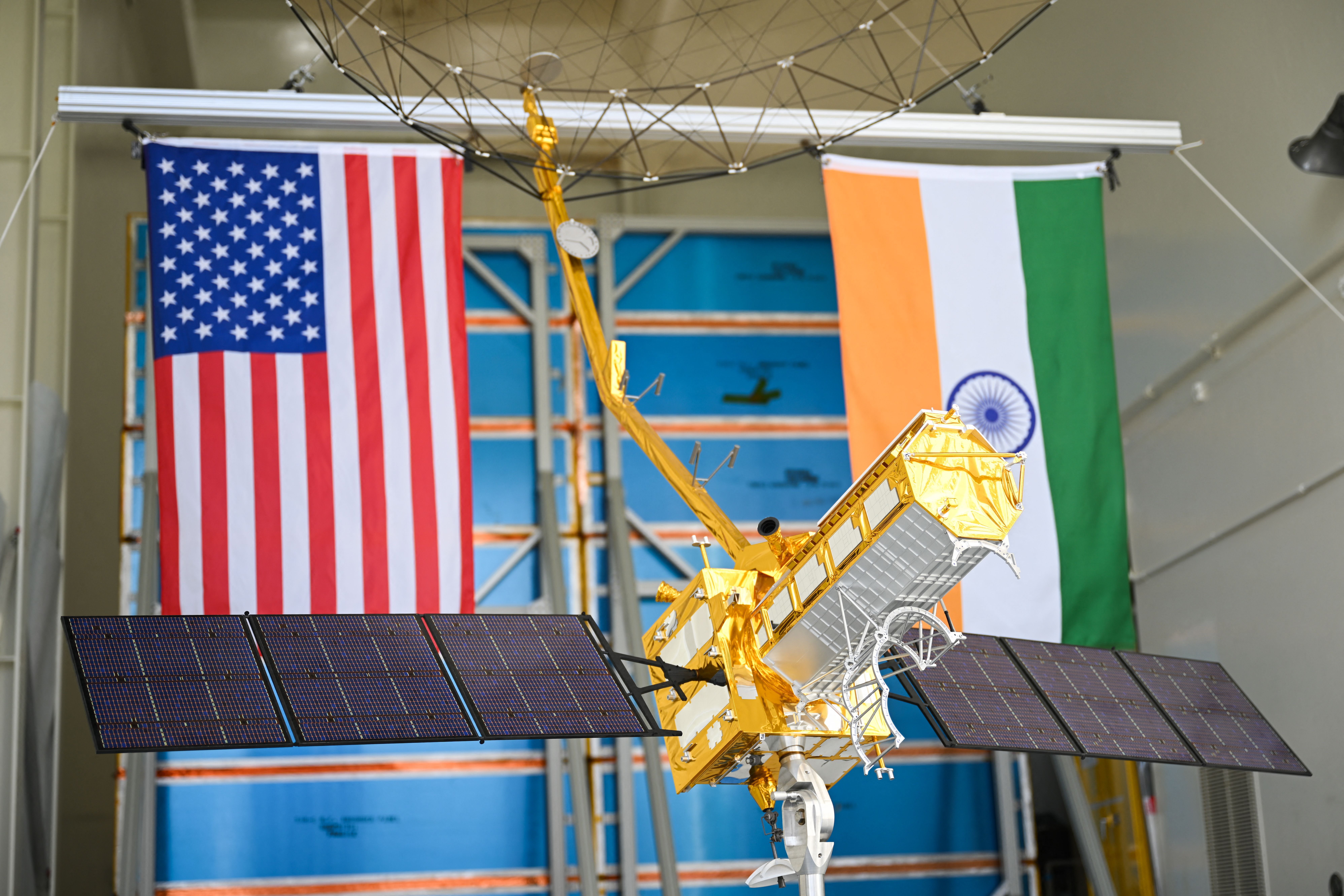
On July 30, 2025, the United States announced 25 percent tariffs on Indian goods. While diplomatic tensions simmered on the trade front, a cosmic calm prevailed at the Sriharikota launch range. Officials from NASA and ISRO were preparing to launch an engineering marvel into space—the NASA-ISRO Synthetic Aperture Radar (NISAR), marking a significant milestone in the India-U.S. bilateral partnership.

Tejas Bharadwaj
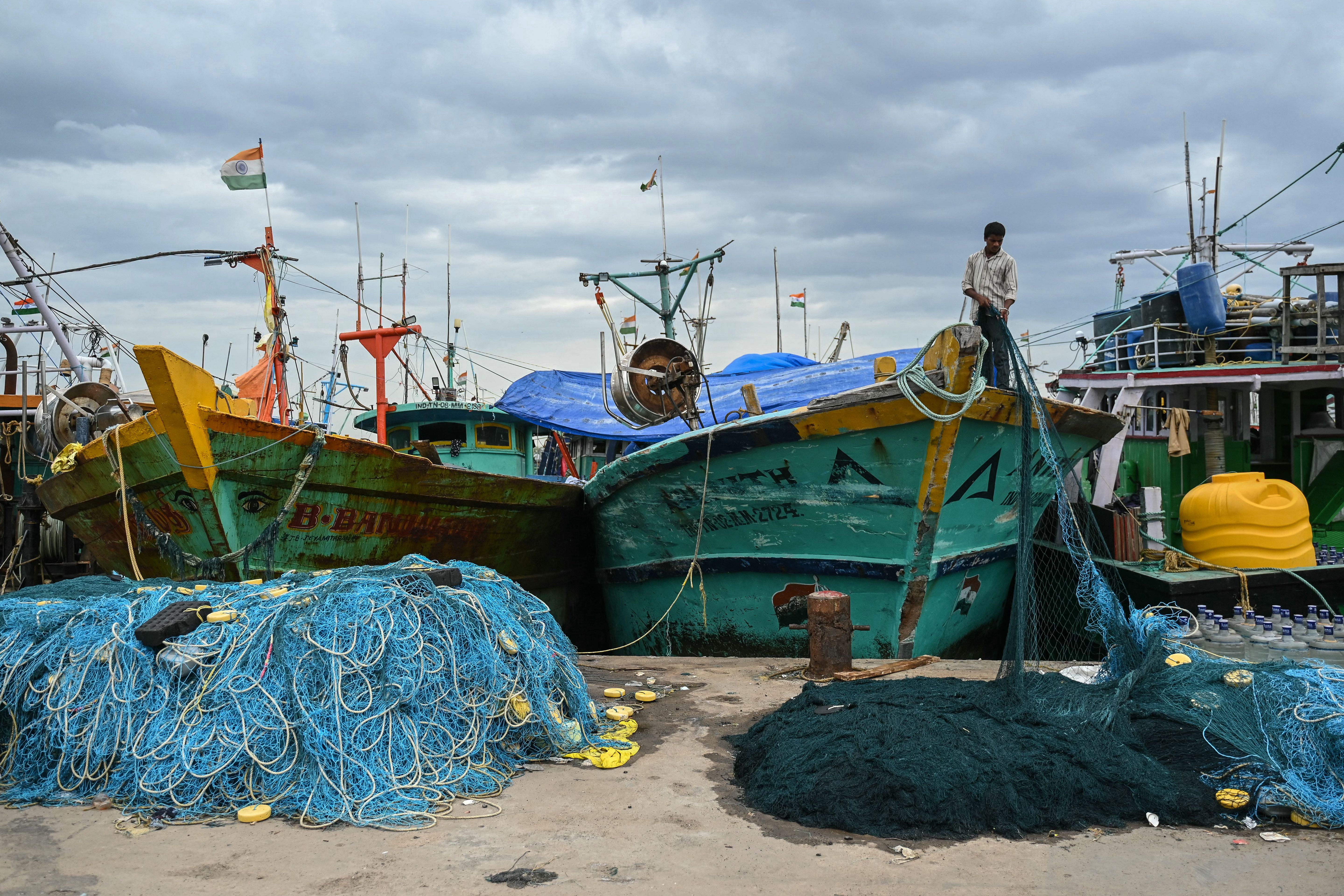
This article examines the scale and impact of Chinese IUU fishing operations globally and identifies the nature of the challenge posed by IUU fishing in the Indian Ocean Region (IOR). It also investigates why existing maritime law and international frameworks have struggled to address this growing threat.

Ajay Kumar, Charukeshi Bhatt