

Article
C. Raja Mohan, Darshana M. Baruah
{
  "authors": [
    "C. Raja Mohan"
  ],
  "type": "legacyinthemedia",
  "centerAffiliationAll": "dc",
  "centers": [
    "Carnegie Endowment for International Peace",
    "Carnegie India"
  ],
  "collections": [],
  "englishNewsletterAll": "ctw",
  "nonEnglishNewsletterAll": "",
  "primaryCenter": "Carnegie India",
  "programAffiliation": "SAP",
  "programs": [
    "South Asia"
  ],
  "projects": [],
  "regions": [
    "South Asia",
    "Pakistan",
    "India"
  ],
  "topics": [
    "Foreign Policy"
  ]
}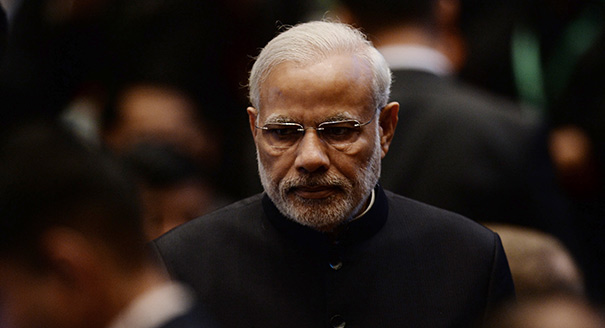
Source: Getty
Delhi’s entrenched pessimism on Pakistan is not in tune with the interests of a large number of political constituencies that want a more relaxed relationship between the two countries.
Source: Indian Express
The conventional wisdom in Delhi is that a serious engagement with Pakistan is not worth the trouble. It is no surprise, therefore, that Prime Minister Narendra Modi’s bold outreach to Pakistan has generated little enthusiasm among Delhi’s talking heads. But look beyond Delhi, and you might notice considerable support — including from many of the PM’s sworn political adversaries.
Consider, for example, the reactions to Modi’s Christmas Day para-drop on Lahore. The Congress party was quick to scoff at the government’s flip-flops on Pakistan. It is plain that the Congress is merely doing what the BJP did to it during the decade-long UPA rule.The NDA, which initiated the peace process with Pakistan under far more difficult circumstances, was quick to attack Prime Minister Manmohan Singh for staying the course that his predecessor, Atal Bihari Vajpayee, had set for Pakistan.
Ignore the revenge politics of the Congress, and the picture gets very interesting. There is probably no political formation in the country that is more hostile to the PM and his ideological “parivar” than the Communist parties. But the CPI and CPM were among the first to welcome Modi’s Pakistan initiative. The Indian communists, after all, are programmatically committed to finding peace with Pakistan.
In Uttar Pradesh and Bihar, Mulayam Singh Yadav, Lalu Prasad and Nitish Kumar are equally committed to good neighbourly relations with Pakistan. As the inheritors of Ram Manohar Lohia’s socialist legacy, these “backward” leaders have long championed secularism at home and normalisation of relations with Pakistan.
Nitish Kumar, who is emerging as a rallying figure for the anti-BJP forces in the heartland, made a very impressive visit to Pakistan as chief minister of Bihar in 2012. President Asif Ali Zardari hosted him for a banquet and there was much talk of Pakistan learning from Bihar’s turnaround under Nitish Kumar.
Turn your gaze to the states bordering Pakistan in the north-west, and you will find near unanimous political support for Modi’s outreach to Nawaz Sharif. In the Kashmir valley, the ruling People’s Democratic Party, the opposition National Conference and the separatist groups have all supported Modi’s effort to renew the dialogue with Pakistan.
In Punjab, the Shiromani Akali Dal, the BJP’s long-standing political partner, has long sought normalisation of relations with Pakistan. Parkash Singh Badal, the veteran Akali leader and chief minister of Punjab, was on the bus that took Prime Minister Atal Bihari Vajpayee across the Wagah border in February 1999.
At the end of 2012, Deputy Chief Minister Sukhbir Singh Badal had visited Lahore and unveiled an agenda for comprehensive cooperation between the two Punjabs. But as military tensions on the border escalated soon after, the Akali hopes turned sour.
Much credit for promoting cooperation across the Radcliffe Line in Punjab should go to the Congress leader, Captain Amarinder Singh, who was chief minister during 2002-07, for launching a very promising set of exchanges with the provincial government in Lahore. No wonder, the captain’s response to Modi’s Pakistan surprise visit was very different from the churlishness of Congress leaders in Delhi.
In Punjab, which paid with its blood for the Partition of the province and the subcontinent, there is great yearning today for reconciliation.
That sentiment extends to Haryana, which was once part of undivided Punjab. When the peace process began to gain traction in 2004, the then chief minister of Haryana, Omprakash Chautala, visited Pakistan to seek greater transborder cooperation.
Modi can easily build on the aspirations in the western states by encouraging the chief ministers of Gujarat, Rajasthan, Punjab and Haryana — to establish contact and communication with their counterparts in Sindh, Punjab and Khyber Pakhtunkhwa. All of them either belong to the BJP or its allies.
Jammu and Kashmir, of course, is in a category all of its own. The BJP, which is ruling the state in coalition with the PDP, is already committed to a substantive agenda of cooperation with Pakistan Occupied Kashmir.
The common minimum programme of the two parties issued earlier this year wants to enhance “people to people contact” across the LoC, take “travel, commerce, trade and business across the LoC to the next level” and open “new routes across all three regions to enhancing connectivity.”
What comes across is a very important political fact: Delhi’s entrenched pessimism on Pakistan is not in tune with the interests of a large number of political constituencies that want a more relaxed relationship between the two countries.
If he can unleash these positive forces and check the sceptics in his own party, Modi might generate a strong domestic support base for his Pakistan initiative. That in turn would make it a lot easier for the PM to handle the many imponderables in engaging Pakistan and experiment with a range of new diplomatic initiatives.
This article was originally published in the Indian Express.
Former Nonresident Senior Fellow, Carnegie India
A leading analyst of India’s foreign policy, Mohan is also an expert on South Asian security, great-power relations in Asia, and arms control.
Recent Work

C. Raja Mohan, Darshana M. Baruah


Alexander Gabuev, Paul Haenle, C. Raja Mohan, …
Carnegie India does not take institutional positions on public policy issues; the views represented herein are those of the author(s) and do not necessarily reflect the views of Carnegie, its staff, or its trustees.

This piece argues that India’s central challenge is not managing a single flashpoint but resolving the underlying tension between expansion and institutional coherency of the BRICS grouping.

Vrinda Sahai
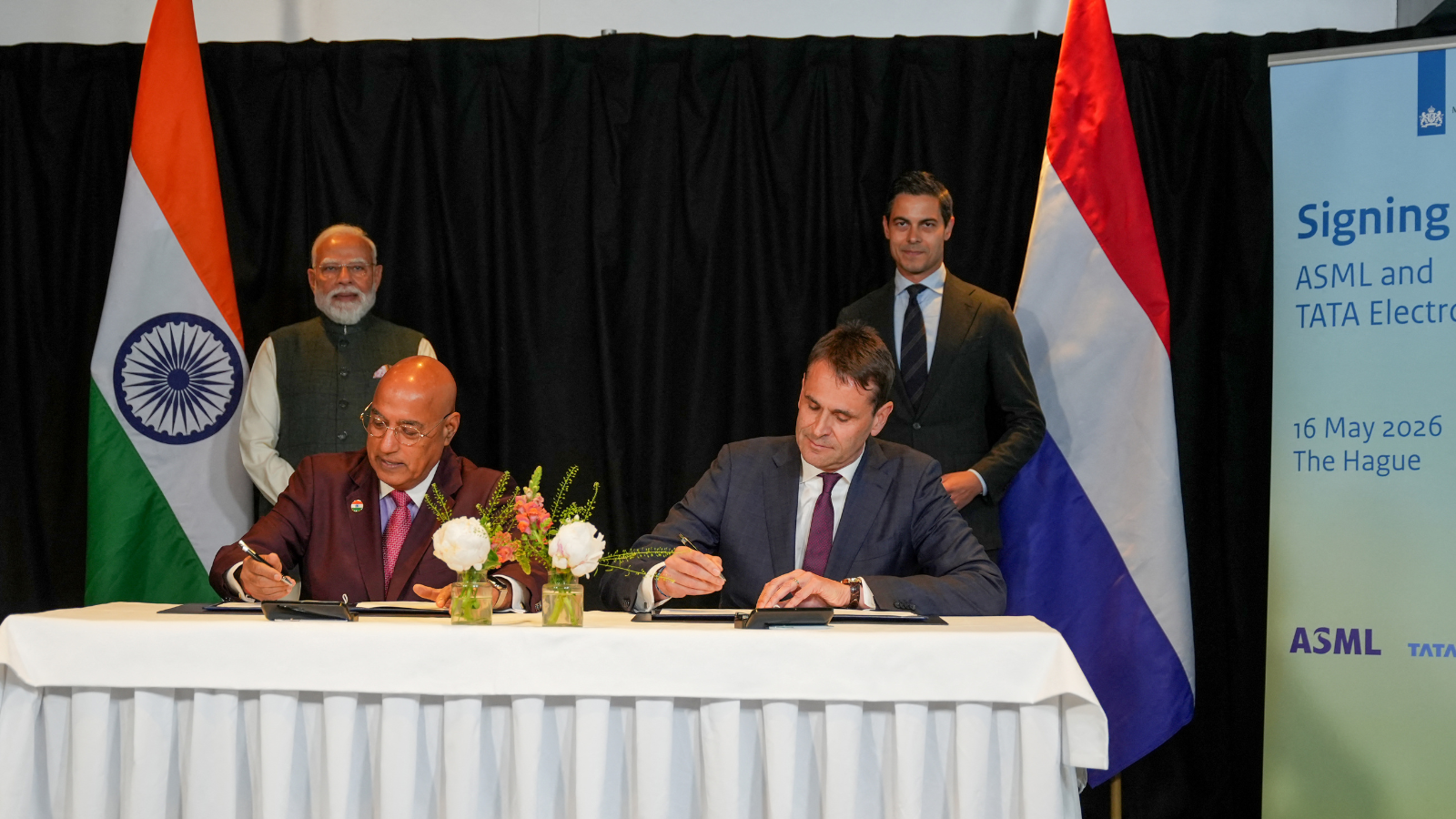
The ASML MoU with Tata Electronics is an indicator of how far the Indian semiconductor ecosystem has come. This ecosystem has been years in the making and represents real commercial logic.

Konark Bhandari
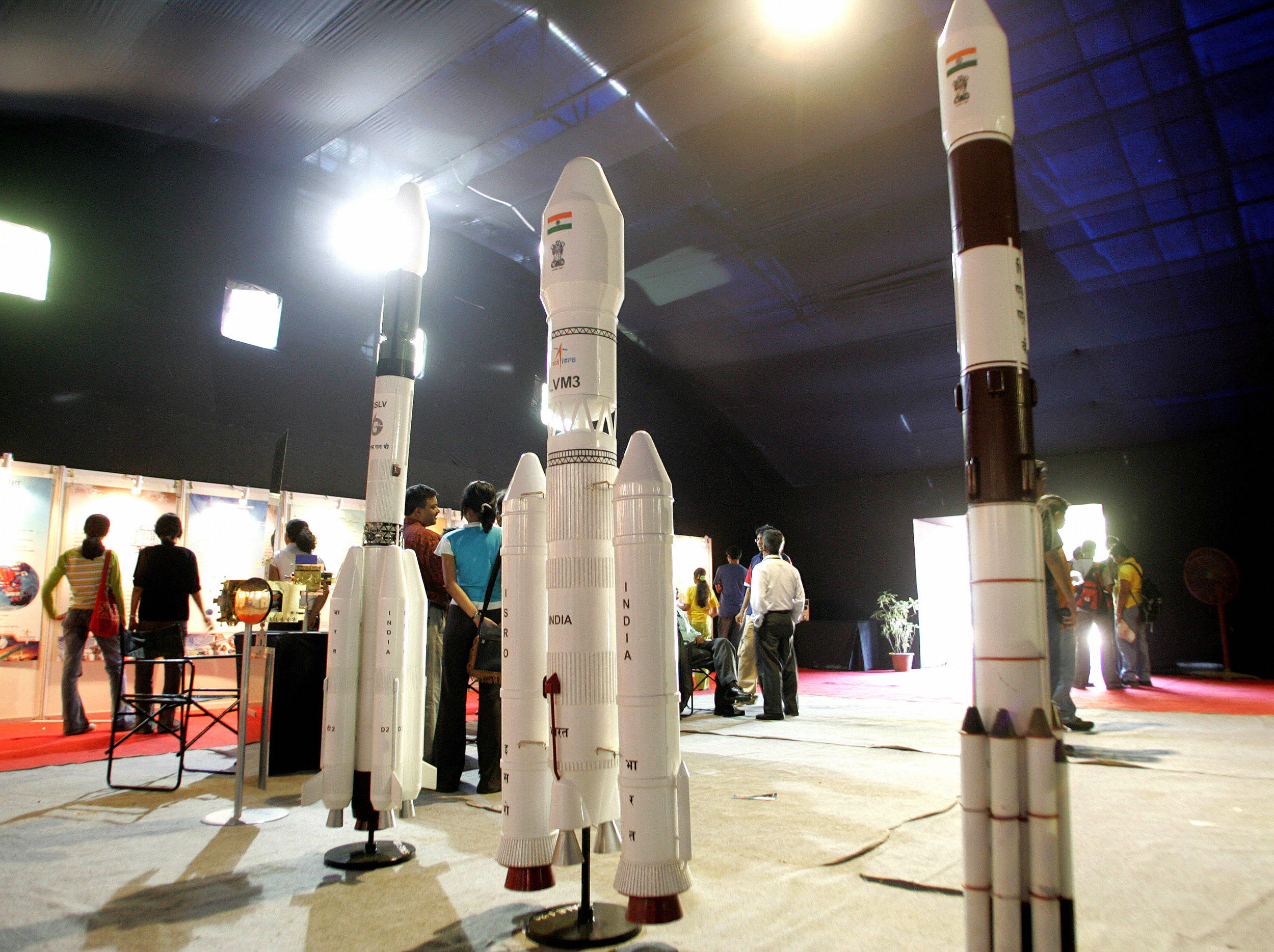
This paper examines the relationship between India’s evolving space policy and the corresponding growth in private space ventures. It analyzes both the enabling factors created by recent regulatory changes and the persistent challenges facing entrepreneurs in this capital-intensive, highly regulated industry.
Harshan Vazhakunnam

A partnership between India, a country of subcontinental size, and Africa, a continent of fifty-four countries, may seem asymmetric until one notes that both are home to nearly the same number of people—1.4 billion. This essay spells out the existing challenges to the partnership, its optimal potential, and the possible pathways to realize it over the next quarter-century.

Rajiv Bhatia

The U.S.–India semiconductor cooperation story is well-stocked with top-level strategic intent. What remains unresolved, however, are some underlying challenges that will determine whether the cooperation actually functions. Three such friction points stand out.

Shruti Mittal