

Research
- +5
Alper Coşkun, Fatih Ceylan, Tacan İldem, …
{
  "authors": [
    "Sinan Ülgen"
  ],
  "type": "other",
  "centerAffiliationAll": "dc",
  "centers": [
    "Carnegie Endowment for International Peace",
    "Carnegie Europe"
  ],
  "collections": [
    "Transatlantic Cooperation"
  ],
  "englishNewsletterAll": "ctw",
  "nonEnglishNewsletterAll": "",
  "primaryCenter": "Carnegie Europe",
  "programAffiliation": "EP",
  "programs": [
    "Europe"
  ],
  "projects": [],
  "regions": [
    "Europe",
    "Western Europe",
    "Iran"
  ],
  "topics": [
    "Foreign Policy",
    "Security"
  ]
}
Source: Getty
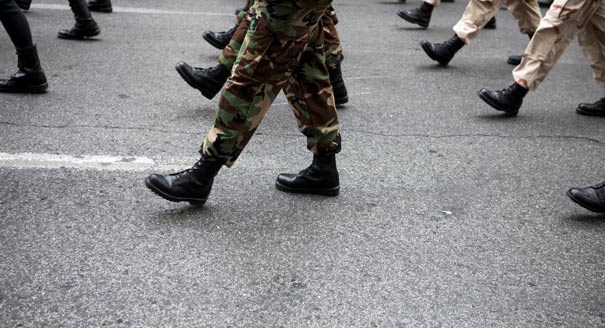
By focusing on a limited number of key areas and recalibrating its ambitions, the EU may have a more tangible impact on global affairs.
Source: European Union Institute for Security Studies
The European Union adopted its first European Security Strategy (ESS) in 2003, at a time when, for the most part, a seemingly sustainable and favourable status quo had come to prevail in its neighbourhood. Against the backdrop of the post 9/11 environment, the Second Gulf War and revelations about Iran’s clandestine nuclear programme, the main threats to Europe were identified as transnational terrorism, failed states, regional conflicts, and the proliferation of weapons of mass destruction, along with organised crime emanating from the Western Balkans. Although many of these threats still persist, their nature, as well as the security environment that Europe is facing, has altered significantly since then. The new EU Global Strategy on Foreign and Security Policy (EUGS), should therefore be shaped by the changing nature of the security challenges facing the EU.
For Europe the repercussions have been manifold. For one, the conflicts, as well as the global jihadist movement and threat posed by the ‘foreign fighters’ phenomenon, are now much closer to Europe. As such, European states are directly exposed to the fallout from these conflicts – refugees, domestic religious and political radicalisation, transnational terrorism and returning foreign fighters, among others. Thus for Europe, human security issues are being transformed into homeland security issues. Europe must strategise policies, formulate responses and develop tools to tackle internal and external human security issues. The first fundamental conclusion to draw from these developments is that the EUGS has to revisit and reorder the list of perceived threats and recommended responses with an emphasis on the issue of human security.
The EU’s eastern neighbourhood has had to contend with a resurgent Russia that has annexed parts of Georgia and Ukraine, and is now in direct confrontation with transatlantic interests in Syria. In order to assert its influence over its perceived hinterland, Russia has utilised its military, economic, energy, cyber and hybrid resources and capabilities. Russia’s aggressive political and military posture presents a direct threat to EU member states in eastern Europe and the Baltics. Compared to the early years of the previous decade, the EU is now compelled to think more in terms of hard security and develop responses to the perceived threat from its large eastern neighbour which for the foreseeable future appears to be intent on consolidating its presence in the region.
A third observation regarding the EUGS relates to the requirements of budget austerity. European austerity measures enacted after the 2008 crisis, which included the lowering of defence budgets in many cases, have limited Europe’s military capabilities. These binding constraints are leading European policymakers to reassess the future role of Europe in managing global and regional conflicts. Therefore a renewed and more realistic ‘job description’ should guide the new strategy. Equally important will be the agreed content on the transatlantic alliance.
Due to the challenges emanating along both its flanks, Europe finds its security interests converging with those of the US. This represents another divergence from the 2003 ESS which was drafted and reiterated amidst harsh criticism of Washington’s unilateralism and military interventionism – most egregiously on display with the 2003 Iraq War. Thus strengthened transatlanticism should underpin the EU’s strategic thinking; furthermore, this emphasis on an improved security relationship with the US and NATO is clearly likely to be more acceptable to European polities in light of the security developments of the last few years.
Bearing in mind the ambitious self-perception of the EU as a global actor that was articulated in the 2003 ESS, the sobering lesson since then has been that while the EU may play a leading role globally in some affairs (such as the push for clean energy) its capability to influence the security environment is limited. The Union therefore needs to recalibrate its ambitions and its mission statement. By focusing on a limited number of key areas, the EU may actually have a more tangible impact on global affairs.
By scaling down its self-appointed goals, Europe would not necessarily abandon its other ambitions. The EU may and should develop ways of relegating responsibility, collaborating with external actors and other international organisations, or simply promote ways in which its members may find arrangements to work on a given task without involving the entire Union in order to push for the fulfilment of its foreign policy and security agenda beyond its immediate neighbourhood.
This article was originally published by the European Union Institute for Security Studies (EUISS).

Senior Fellow, Carnegie Europe
Sinan Ülgen is a senior fellow at Carnegie Europe in Brussels, where his research focuses on Turkish foreign policy, transatlantic relations, international trade, economic security, and digital policy.
Recent Work

Alper Coşkun, Fatih Ceylan, Tacan İldem, …
Carnegie India does not take institutional positions on public policy issues; the views represented herein are those of the author(s) and do not necessarily reflect the views of Carnegie, its staff, or its trustees.

In any defense establishment, change is an ongoing process. However, despite the best of intentions, existing bureaucracies, bound by habit and years of socialization, have their limits in implementing transformative change.

Anit Mukherjee

After the chill in ties between 2020 and 2024 that brought India–China relations to their lowest point in several decades, the two countries have engaged each other afresh. This paper argues that there are predominantly four imperatives guiding India’s approach to China, and they exist in an order of priority.

Saheb Singh Chadha

This piece argues that India’s central challenge is not managing a single flashpoint but resolving the underlying tension between expansion and institutional coherency of the BRICS grouping.

Vrinda Sahai
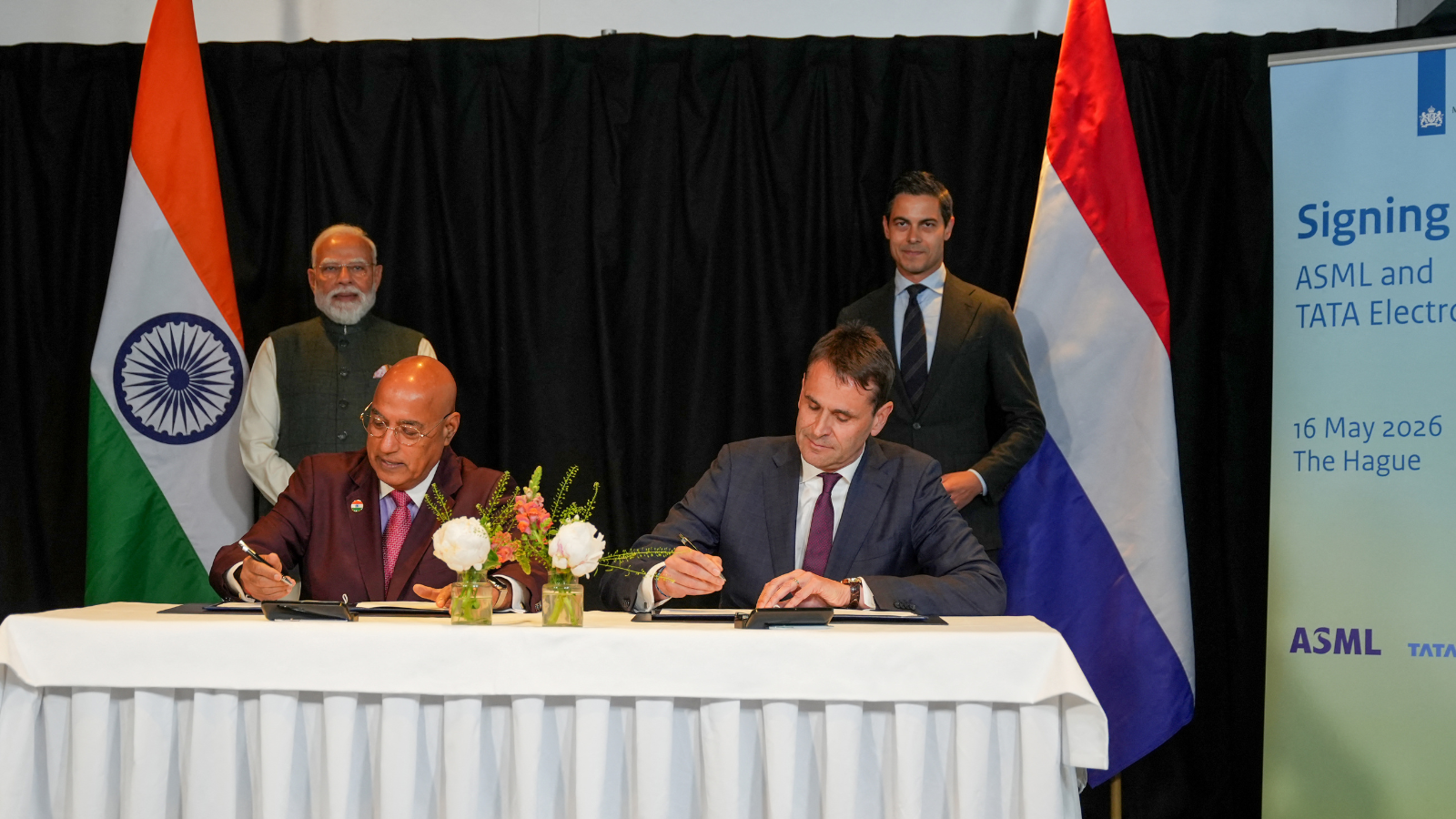
The ASML MoU with Tata Electronics is an indicator of how far the Indian semiconductor ecosystem has come. This ecosystem has been years in the making and represents real commercial logic.

Konark Bhandari

A partnership between India, a country of subcontinental size, and Africa, a continent of fifty-four countries, may seem asymmetric until one notes that both are home to nearly the same number of people—1.4 billion. This essay spells out the existing challenges to the partnership, its optimal potential, and the possible pathways to realize it over the next quarter-century.

Rajiv Bhatia