
This piece argues that India’s central challenge is not managing a single flashpoint but resolving the underlying tension between expansion and institutional coherency of the BRICS grouping.
Vrinda Sahai
{
"authors": [
"Ukraine Reform Monitor Team"
],
"type": "other",
"centerAffiliationAll": "dc",
"centers": [
"Carnegie Endowment for International Peace",
"Carnegie Europe"
],
"collections": [
"Ukraine Reform Monitor"
],
"englishNewsletterAll": "ctw",
"nonEnglishNewsletterAll": "",
"primaryCenter": "Carnegie Endowment for International Peace",
"programAffiliation": "russia",
"programs": [
"Russia and Eurasia"
],
"projects": [
"Reforming Ukraine"
],
"regions": [
"Eastern Europe",
"Ukraine"
],
"topics": [
"Political Reform",
"Economy",
"Security",
"Foreign Policy"
]
}Source: Getty
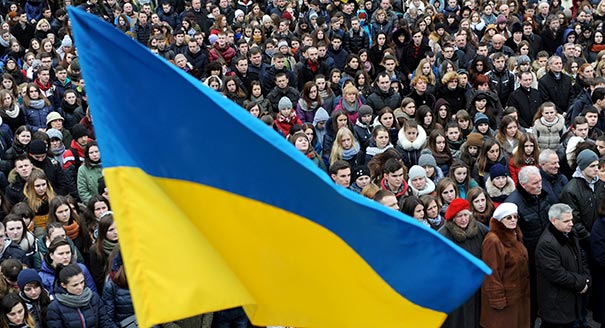
Ukraine is in danger of repeating its experience after the 2004 Orange Revolution, when reformers won the vote in national elections but failed to govern effectively.
The Ukraine Reform Monitor provides independent, rigorous assessments of the extent and quality of reforms in Ukraine. The Carnegie Endowment has assembled an independent team of Ukraine-based scholars to analyze reforms in four key areas. This fifth memo covers the period from mid-February to mid-April 2016. The monitor is supported in part by a grant from the Open Society Foundations.
At the start of 2016, Ukraine plunged into a major political crisis that paralyzed both the executive and the legislative branches. The governing reform coalition that was propelled to power in 2014 came apart, torn by long-simmering rivalries and mutual accusations of corruption.
The consequences for Ukraine have been severe. The IMF had been holding up a package of financial assistance even before the crisis erupted, and the government paralysis has created a standoff until Kyiv demonstrates its commitment to, in the words of IMF Managing Director Christine Lagarde, “improving governance and fighting corruption, and reducing the influence of vested interests in policymaking.” Although a new prime minister has been appointed and a new coalition formed, the government’s reformist reputation has been dealt a serious blow, and the country’s image abroad has been tarnished. Ukraine’s supporters now have a much harder task before them to make the case for EU financial and technical assistance. Ukraine is in danger of repeating its experience after the 2004 Orange Revolution, when reformers won the vote in national elections but failed to govern effectively and descended into endless cycles of acrimony and recrimination.
Since the Ukraine Reform Monitor began in summer 2015, the reform process has presented a mixed picture.
Ukraine Reform Monitor Team
Carnegie India does not take institutional positions on public policy issues; the views represented herein are those of the author(s) and do not necessarily reflect the views of Carnegie, its staff, or its trustees.
This piece argues that India’s central challenge is not managing a single flashpoint but resolving the underlying tension between expansion and institutional coherency of the BRICS grouping.
Vrinda Sahai
A partnership between India, a country of subcontinental size, and Africa, a continent of fifty-four countries, may seem asymmetric until one notes that both are home to nearly the same number of people—1.4 billion. This essay spells out the existing challenges to the partnership, its optimal potential, and the possible pathways to realize it over the next quarter-century.
Rajiv Bhatia
The India–EU Free Trade Agreement (FTA) is shaping up to be one of the most consequential trade negotiations, both economically and strategically. But, what’s in the agreement, what’s missing, and what will determine its success in the years ahead
Vrinda Sahai, Nicolas Köhler-Suzuki
On March 10, 2026, India’s Union Cabinet approved amendments to Press Note 3, a regulation that mandated government approval on all foreign direct investment (FDI) from countries sharing a land border with India. This amendment raises questions primarily about whether its stated benefits will materialize and if the risks have been adequately weighed. This piece will address the same.
Konark Bhandari
This piece argues that the present Indian strategy, based on opportunistic diversification and utilization of limited strategic reserves, remains inadequate when confronting supply disruptions. It evaluates India’s options in the short, medium, and long terms.
Vrinda Sahai





