

Article
C. Raja Mohan, Darshana M. Baruah
{
  "authors": [
    "C. Raja Mohan"
  ],
  "type": "legacyinthemedia",
  "centerAffiliationAll": "dc",
  "centers": [
    "Carnegie Endowment for International Peace",
    "Carnegie India"
  ],
  "collections": [],
  "englishNewsletterAll": "ctw",
  "nonEnglishNewsletterAll": "",
  "primaryCenter": "Carnegie India",
  "programAffiliation": "SAP",
  "programs": [
    "South Asia"
  ],
  "projects": [],
  "regions": [
    "United States",
    "North America"
  ],
  "topics": [
    "Political Reform"
  ]
}
Source: Getty
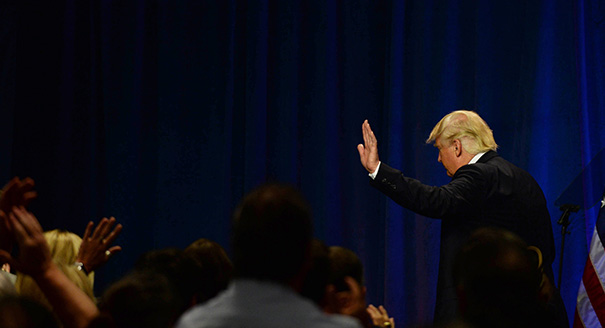
Win or lose, Donald Trump is likely to herald a major discontinuity in America’s political evolution.
Source: Indian Express
This week’s convention of the Republican Party, that will nominate Donald Trump as the party’s presidential nominee, will be a break from recent political tradition. In recent decades, nominating conventions in the US have become celebratory rituals that help rally the party behind its new face and showcase unity.
This year’s Republican convention in Cleveland, Ohio will, however, reflect deep divisions within the party. Many leading Republicans will not show up in Cleveland. In fact until last week, many of them were plotting to rob Trump of the nomination in a floor fight. Only a few of the party’s elected governors, senators and Congressmen have endorsed the party’s presidential nominee. Their absence will be more than made up by hostile protestors, who have dogged Trump’s campaign this year. Cleveland is taking all precautions to limit the confrontation between Trump’s supporters and opponents.
That there might be violence in Cleveland this week is a reflection of the deep tension within the American political class and the public. The last two occasions when the US witnessed such conflict was in the 1960s, at the Republican convention in 1964 and the Democratic one in 1968. The party’s resurgent conservatives ousted the Republican moderates in 1964 and the Vietnam war threatened to tear apart the Democratic Party in 1968. Since then, the conventions have largely been tame political affairs.
But Trump has shaken up both the parties. He has challenged many Republican principles in support of free trade and immigration. By appealing to the white working class, deeply affected by both trends, Trump is threatening to undermine some of the Democratic Party’s key support bases. Trump has presented the “party of the rich” as the champion of the underdog and has put great pressure on Hillary Clinton and the Democrats, long the party of the left.
Yet it appeared not too long ago that under Trump, the Republican Party was doomed to a political rout in the November elections. Trump’s alienation of women, minorities, the Wall Street, his quarrels with his own party establishment, and open contempt for the media suggested that Hillary Clinton was set for a landslide victory. But opinion polls in the past few weeks have shown that the race is tightening. Besides the economic disaffection, the resurgence of terrorism and racial violence at home are seen as boosting Trump’s chances.
Trump’s claim that he will temporarily ban Muslims from entering America were widely dismissed as outrageous. His own pick for vice president, Mike Pence, the governor of Indiana, had affirmed that any such move would be unconstitutional. But the charge that President Barack Obama and Hillary Clinton are unable, or unwilling, to confront Islamic terror may have begun to pay some dividend to Trump as the recent attacks — Orlando, Florida and Nice in France — generate deep public anxieties in the US.
Similarly, the recent killings of white policemen in Dallas, Texas, and Baton Rouge, Louisiana, tend to reinforce Trump’s claim that he will bring “law and order” back to cities in the US. Any liberal references to racism and structural violence against young black men, gives a powerful handle to Trump’s supporters to accuse Obama and Clinton as appeasers of the black minority.
Whatever the reasons, there is no disregarding the extraordinary rise of Trump in American politics over the past few months. With limited financial resources, an abrasive personality and an impossible agenda, Trump has overcome better-known and well-endowed rivals in the Republican Party, and is all set to challenge one of the most formidable political figures on the American political scene: Hillary Clinton.
Much of the world had uncritically accepted the US media’s derision and the country’s elite’s condescension towards Trump. Americans, of course, are free to describe their own politicians as buffoons. Those who are not Americans would be unwise to buy into that narrative. For the moment, what we do know is this: American politics has entered a very volatile phase. Eight years ago, the US elected a little-known African American senator from Illinois as the president. This year it has propelled a billionaire businessman and reality TV star, Trump, as the nominee of one of the world’s oldest political parties. The rest of the world does not have a vote in the US elections. But it will be deeply affected by the political churning in the US and its impact on the country’s economic and strategic policies. Even minor changes in US policies could have big consequences for some countries.
Win or lose, Trump is likely to herald a major discontinuity in America’s political evolution. Smart policymakers around the world will suspend traditional assumptions about America’s internal and external orientation. They would want to closely follow the current elections to assess the nature and extent of the unfolding American change. Those who get it right might better respond to the shift in American policies; but those who remain prisoners of their own myths about America are likely to pay a price.
This article was originally published in the Indian Express.
Former Nonresident Senior Fellow, Carnegie India
A leading analyst of India’s foreign policy, Mohan is also an expert on South Asian security, great-power relations in Asia, and arms control.
Recent Work

C. Raja Mohan, Darshana M. Baruah


Alexander Gabuev, Paul Haenle, C. Raja Mohan, …
Carnegie India does not take institutional positions on public policy issues; the views represented herein are those of the author(s) and do not necessarily reflect the views of Carnegie, its staff, or its trustees.

The U.S.–India semiconductor cooperation story is well-stocked with top-level strategic intent. What remains unresolved, however, are some underlying challenges that will determine whether the cooperation actually functions. Three such friction points stand out.

Shruti Mittal
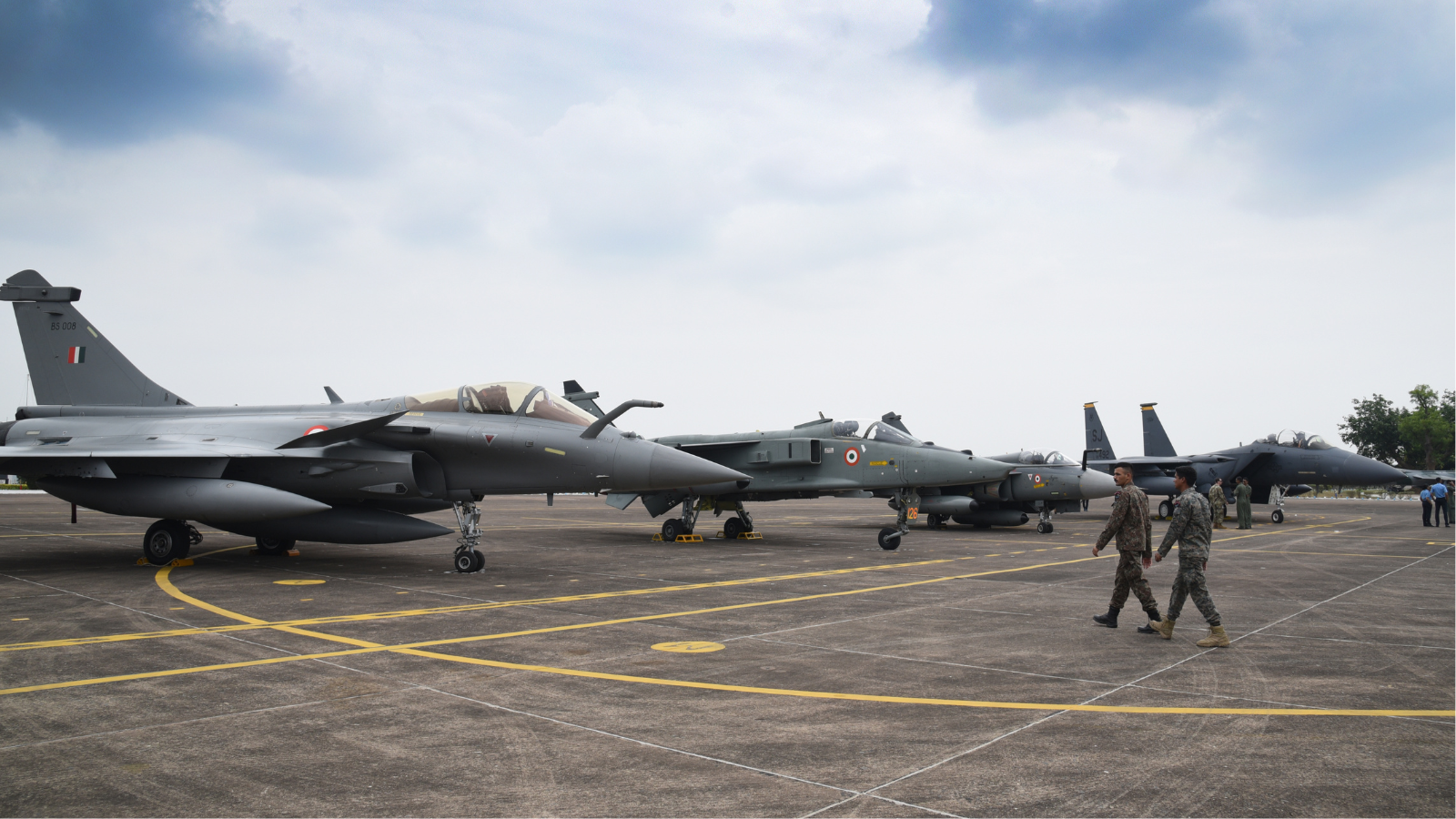
India and the United States are close to concluding a Reciprocal Defense Procurement Agreement (RDPA) that will allow firms from the two countries to sell to each other’s defense establishments more easily. While this may not remedy the specific grievances both sides may have regarding larger bilateral issues, an RDPA could restore some momentum, following the trade deal announcement.

Konark Bhandari
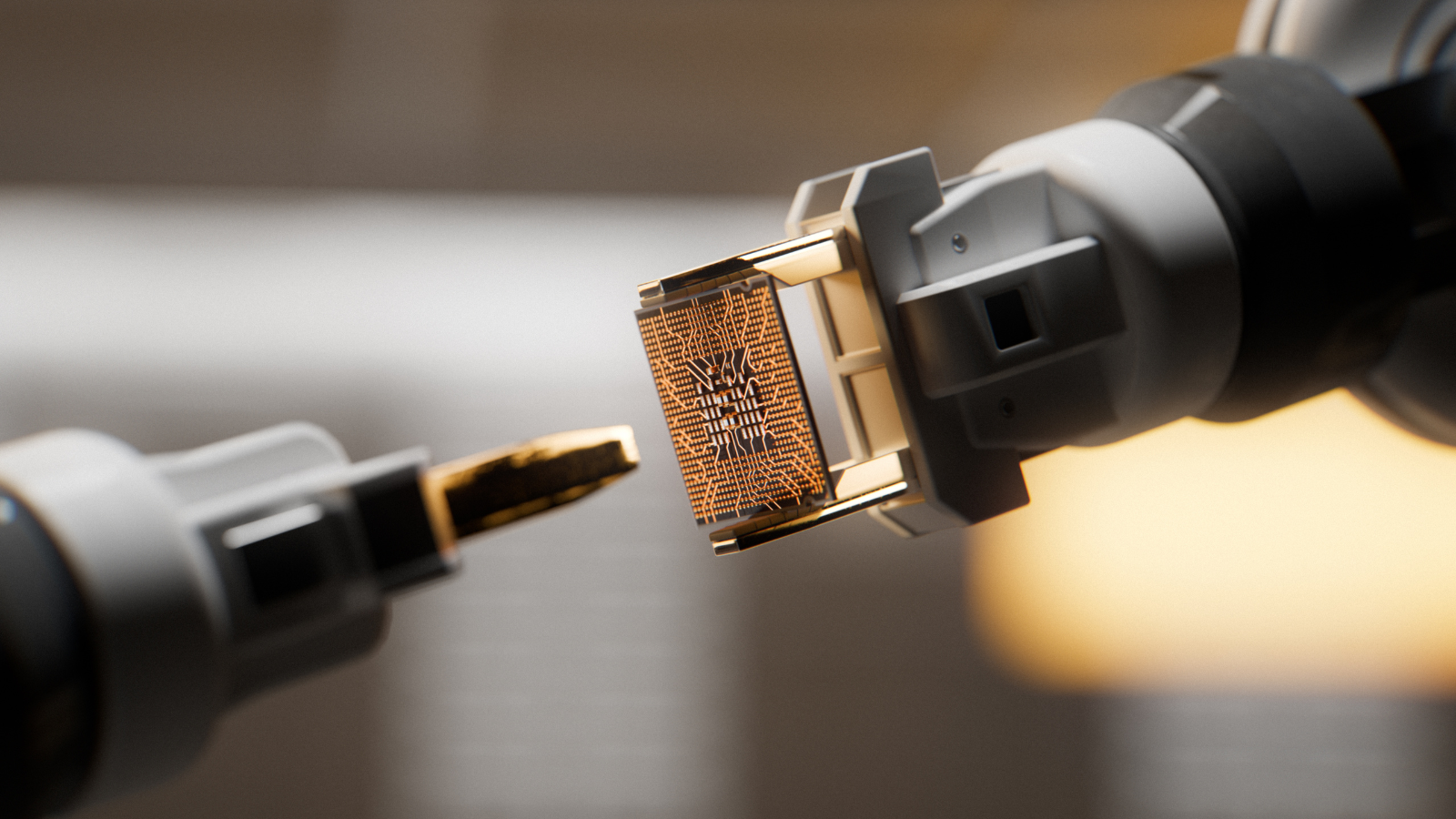
On the last day of the India AI Impact Summit, India signed Pax Silica, a U.S.-led declaration seemingly focused on semiconductors. While India’s accession to the same was not entirely unforeseen, becoming a signatory nation this quickly was not on the cards either.
Konark Bhandari

This piece examines India’s response to U.S. sanctions and tariffs, specifically assessing the immediate market consequences, such as alterations in import costs, and the broader strategic implications for India’s energy security and foreign policy orientation.

Vrinda Sahai
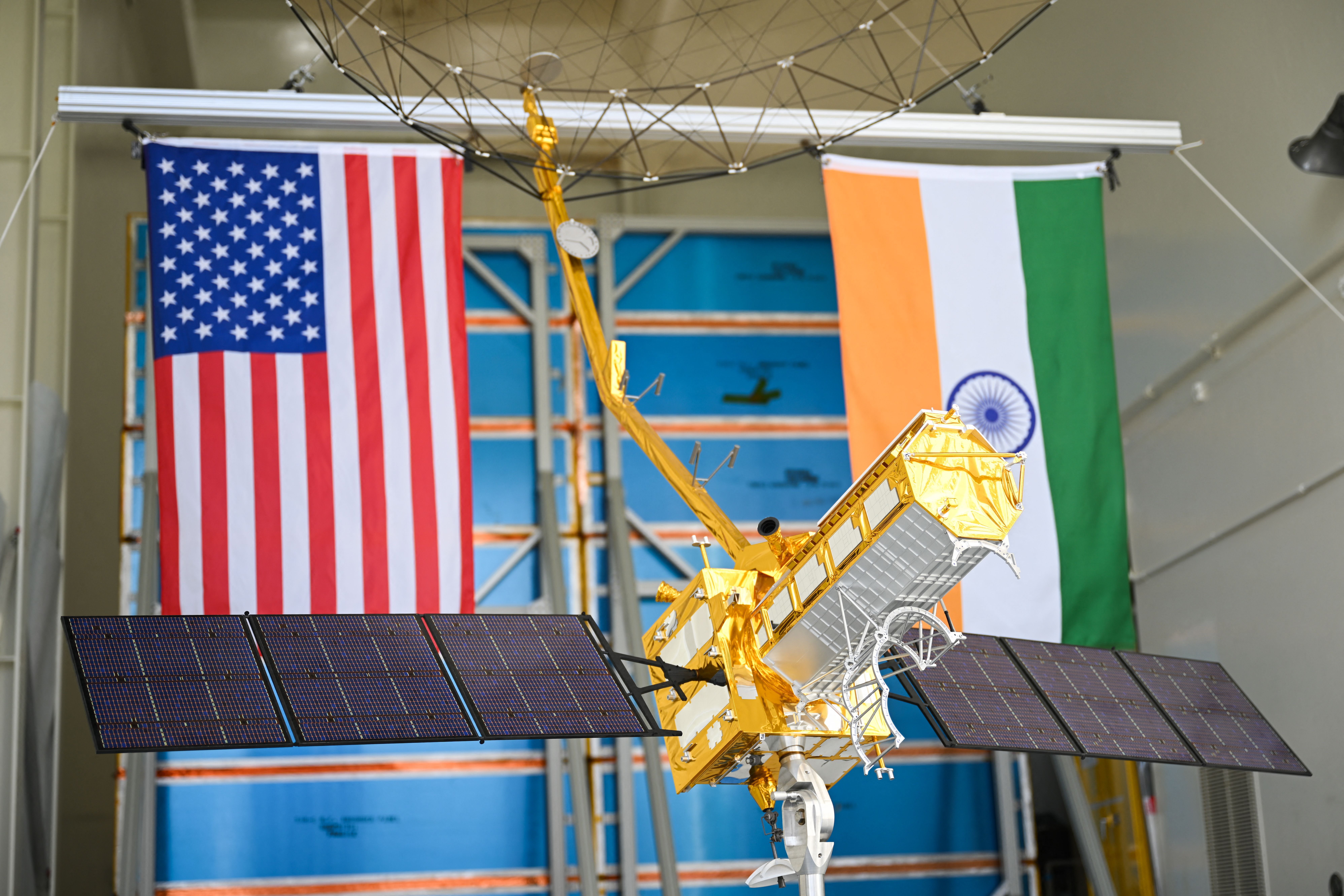
On July 30, 2025, the United States announced 25 percent tariffs on Indian goods. While diplomatic tensions simmered on the trade front, a cosmic calm prevailed at the Sriharikota launch range. Officials from NASA and ISRO were preparing to launch an engineering marvel into space—the NASA-ISRO Synthetic Aperture Radar (NISAR), marking a significant milestone in the India-U.S. bilateral partnership.

Tejas Bharadwaj