

Commentary
Andrei Kolesnikov
{
  "authors": [
    "Andrei Kolesnikov"
  ],
  "type": "commentary",
  "centerAffiliationAll": "",
  "centers": [
    "Carnegie Endowment for International Peace",
    "Carnegie Russia Eurasia Center"
  ],
  "collections": [
    "Inside Russia"
  ],
  "englishNewsletterAll": "",
  "nonEnglishNewsletterAll": "",
  "primaryCenter": "Carnegie Endowment for International Peace",
  "programAffiliation": "",
  "programs": [],
  "projects": [],
  "regions": [
    "Russia"
  ],
  "topics": [
    "Political Reform"
  ]
}
Source: Getty
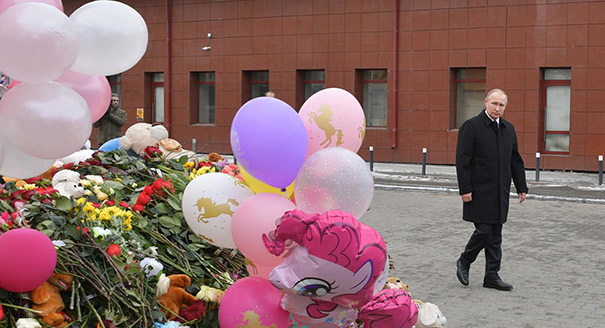
Putin drew several conclusions from the mass protests of 2011-2012. They convinced him that the mandate he received from “the people,” is much more important than the views of the small and overly outspoken segment of progressive citizens.
Source: Moscow Times
Tensions over Crimea and a flurry of new appointments in the upper echelons of government have made many wonder if President Vladimir Putin is planning snap presidential elections, bringing them forward from the planned 2018.
The case for is as follows: the economic situation is dire and, although the euphoria over the annexation of Crimea has not fully worn off yet, the people’s mood could change abruptly. It gets tiring to have to dream up a new war every month just to keep the people united against some common enemy. The decision to move parliamentary elections forward from December this year to September also went off without a hitch.The active reshuffling of senior government posts also points to likely early elections. The old guard is sent into retirement — some in disgrace, as with former Customs head Andrei Belyaninov, and some with honor, like former presidential administration head Sergei Ivanov, who was transferred nonetheless to a specially invented and humiliating new post as the special representative to the president for ecology and transport.
Putin is sending his ruling elite a signal: cut down on the stealing and do not show off your wealth because it reflects poorly on your patron in the Kremlin. The people are feeling the effects of the crisis, and corruption among members of the establishment irritates them greatly.
But despite all of this, there are reasons to suggest that Putin is planning to hold off elections as long as he can.
The crisis is certainly giving way to a long-term economic downturn. Indicators are gradually but steadily falling, while the growth rates for GDP and production hover near zero. It is a very painful and unpleasant situation. The majority of the population, however, has adapted to the crisis and continues to draw hope from the news that Russia has regained its status as a great power. Leaders can definitely use that and their “import substitution” story to keep the people quiet until 2018.
What’s more, despite the fact that no one is waiting for a strategy and vision of the future from the president, Putin must still have some sort of platform when he runs for re-election. It isn’t possible to create one quickly, so what is the hurry?
If the parliamentary elections in September go off as planned — that is, without major scandals — they will add legitimacy to the system so that leaders can say, “Look, we even hold fair elections and are not afraid of competition!” So why rush into presidential elections?
And most importantly, why would Putin himself want early elections? So that he can have one less year in power? As things stand now, he has a full 18 months before his next term begins, and then another six long years at the helm. Why become a lame duck earlier than necessary?
Putin drew several conclusions from the mass protests of 2011-2012. They convinced him that the mandate he received from “the people,” i.e. ordinary Russians, is much more important than the views of the small and overly outspoken segment of progressive citizens. After returning to the Kremlin, he therefore focused on silencing the voices of that stratum of Russian society. Now they are quiet, and no large-scale protests are anticipated.
And that means there is no need to hold early elections.
Former Senior Fellow, Carnegie Russia Eurasia Center
Kolesnikov was a senior fellow at the Carnegie Russia Eurasia Center.
Recent Work
Andrei Kolesnikov
Andrei Kolesnikov
Carnegie India does not take institutional positions on public policy issues; the views represented herein are those of the author(s) and do not necessarily reflect the views of Carnegie, its staff, or its trustees.
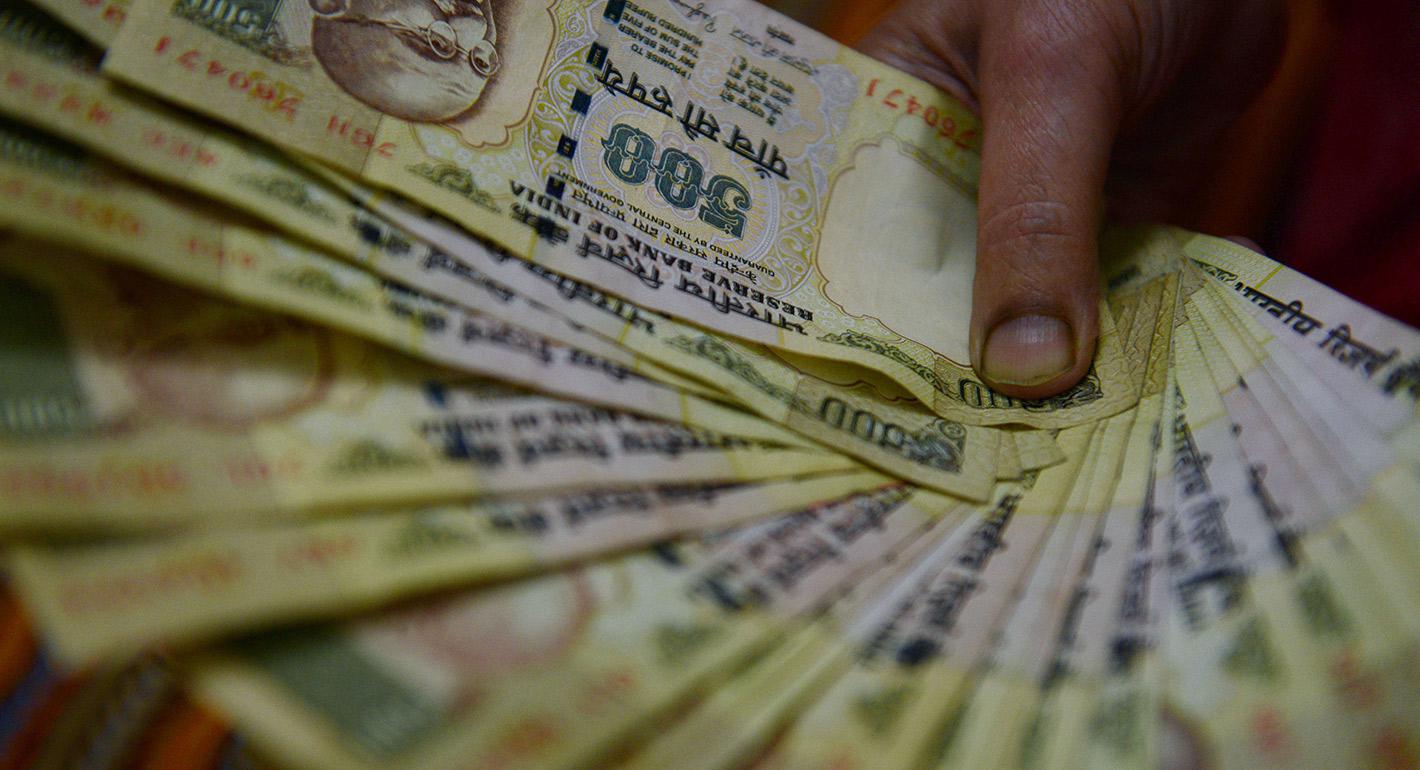
As India’s economy recovers from the coronavirus pandemic, Indian businesses need efficient financial structures to regain their ground. Key reforms to India’s Insolvency and Bankruptcy Code could fill these gaps.
Anirudh Burman
Access to cross-border data is an integral piece of the law enforcement puzzle. India is well placed to lead the discussions on international data agreements subject to undertaking necessary surveillance reforms.
Smriti Parsheera, Prateek Jha
After the coronavirus pandemic wanes, how will China’s reorientation of the Belt and Road Initiative to address global health concerns influence its relationships with South Asian countries?
Deep Pal, Rahul Bhatia
Early in the outbreak, government researchers forecast several high-risk scenarios that were downplayed or ignored in public messaging.
Gautam I. Menon
Governments around the world are turning to new forms of digital surveillance to monitor the spread of the coronavirus, though they are mostly using existing laws to do so.
Anirudh Burman