

Paper
Renée DiResta, Rachel Kleinfeld, Margot Treadwell
{
  "authors": [
    "Rachel Kleinfeld"
  ],
  "type": "other",
  "centerAffiliationAll": "",
  "centers": [
    "Carnegie Endowment for International Peace"
  ],
  "collections": [],
  "englishNewsletterAll": "",
  "nonEnglishNewsletterAll": "",
  "primaryCenter": "Carnegie Endowment for International Peace",
  "programAffiliation": "",
  "programs": [],
  "projects": [],
  "regions": [
    "North America",
    "United States"
  ],
  "topics": [
    "Democracy",
    "Security",
    "Military",
    "Foreign Policy"
  ]
}
Source: Getty
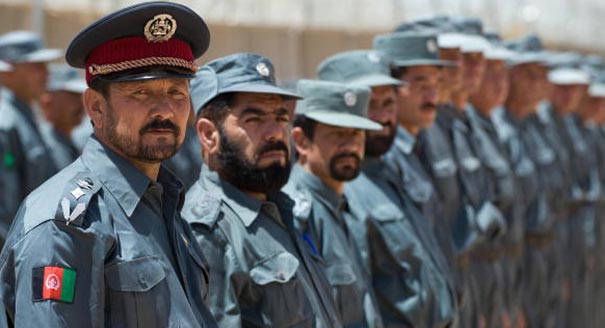
U.S. security requires building effective partnerships in fragile states. The next administration should prioritize security sector assistance improvements.
U.S. efforts to improve police and military capacity accelerated after 9/11, when the United States began to see weak, fragile, or failed states as reservoirs of insecurity and committed to helping strengthen their ability to fight internal threats before they crossed borders.1 Meanwhile, as part of a lighter-footprint approach to global engagement, building the capacity of partner states – many of them fragile – became a way for the United States to address the growing number of crises without directly committing troops.2
U.S. security assistance (the term used by civilian agencies) and security cooperation (the Department of Defense nomenclature) involves many U.S. agencies, as the most recent presidential directive on security sector assistance (SSA), PPD-23, recognizes.3 Since only 1 in 5 violent deaths worldwide is now caused by civil or interstate war, SSA encompasses law enforcement support in addition to military support.4 In Guatemala, for instance, more people die violently today than did during any year of the 36-year civil war, one of the multiple causes behind the surge of forcibly displaced Central Americans on U.S. borders.5
Proliferating actors, sprawling authorities, and conflicting objectives make it nearly impossible to render an accurate account of the scale of America’s SSA. What is clear, however, is that the United States is increasingly relying on this tool, spending an estimated $18.5 billion on SSA in 2014 – two to three times more than it did 20 years ago.6
Unfortunately, there is no correlation between increased SSA and stability in fragile states.7 Studies show that in the absence of minimal state capacity and societal inclusiveness, SSA fails. Improving SSA effectiveness requires changes to both strategy and implementation.
Senior Fellow, Democracy, Conflict, and Governance Program
Rachel Kleinfeld is a senior fellow in Carnegie’s Democracy, Conflict, and Governance Program, where she focuses on issues of rule of law, security, and governance in democracies experiencing polarization, violence, and other governance problems.
Recent Work
Renée DiResta, Rachel Kleinfeld, Margot Treadwell
Political Violence Researchers, Rachel Kleinfeld, ed., Dalya Berkowitz, ed.
Carnegie India does not take institutional positions on public policy issues; the views represented herein are those of the author(s) and do not necessarily reflect the views of Carnegie, its staff, or its trustees.

In any defense establishment, change is an ongoing process. However, despite the best of intentions, existing bureaucracies, bound by habit and years of socialization, have their limits in implementing transformative change.

Anit Mukherjee

How is AI reshaping space security, creating governance challenges, and where does international diplomacy stand today?


Tejas Bharadwaj, Almudena Azcárate Ortega

After the chill in ties between 2020 and 2024 that brought India–China relations to their lowest point in several decades, the two countries have engaged each other afresh. This paper argues that there are predominantly four imperatives guiding India’s approach to China, and they exist in an order of priority.

Saheb Singh Chadha

This piece argues that India’s central challenge is not managing a single flashpoint but resolving the underlying tension between expansion and institutional coherency of the BRICS grouping.

Vrinda Sahai

A partnership between India, a country of subcontinental size, and Africa, a continent of fifty-four countries, may seem asymmetric until one notes that both are home to nearly the same number of people—1.4 billion. This essay spells out the existing challenges to the partnership, its optimal potential, and the possible pathways to realize it over the next quarter-century.

Rajiv Bhatia