

Article
Marc Pierini
{
  "authors": [
    "Marc Pierini"
  ],
  "type": "legacyinthemedia",
  "centerAffiliationAll": "dc",
  "centers": [
    "Carnegie Endowment for International Peace",
    "Carnegie Europe"
  ],
  "collections": [
    "Turkey’s Transformation"
  ],
  "englishNewsletterAll": "ctw",
  "nonEnglishNewsletterAll": "",
  "primaryCenter": "Carnegie Europe",
  "programAffiliation": "EP",
  "programs": [
    "Europe"
  ],
  "projects": [],
  "regions": [
    "Europe",
    "Türkiye",
    "Middle East",
    "Iran"
  ],
  "topics": [
    "Foreign Policy",
    "Political Reform",
    "Democracy"
  ]
}
Source: Getty
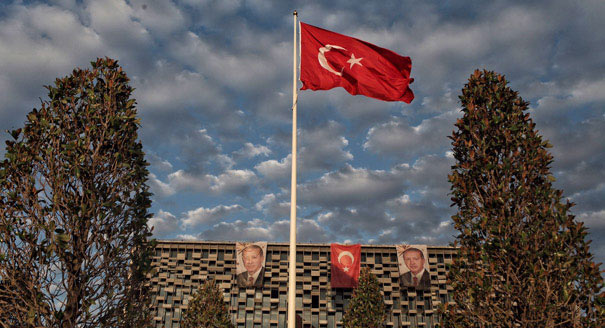
The Turkish leadership and several EU governments are currently in the middle of a diplomatic spat of rare magnitude.
Source: NRC Handelsblad
The Turkish leadership and several EU governments are currently in the middle of a diplomatic spat of rare magnitude. But the real challenge is the outcome of the April 16th referendum.
The reason for Ankara’s fiercely nationalist and hostile narrative is well known. The ruling AKP is not unanimous about a “yes” vote on April 16th. Worse, its ally the nationalist party MHP is leaning toward a “no”. As AKP leaders fear they will lose this crucial referendum, every vote counts. To ramp up the nationalist narrative, European electoral campaigns provide a battleground of choice.
The sad irony of the situation is that, while opponents to the AKP draft constitution cannot campaign freely in Turkey (some are in jail and freedom of expression is severely restricted under the state of emergency), EU governments are asked that a one-man-rule constitution which contradicts EU principles be promoted on European soil.
Europeans have clearly said that terms such as “excuses”, “sanctions”, “banana republic”, “fascist”, “supporter of terrorism” and “Nazi” are utterly unacceptable. No one should be surprised that Ankara has engineered negative unanimity among EU leaders and citizens. Yet, despite the Europe-wide outrage, the deluge of criticisms from Ankara should be met with dignified silence. It, after all, reflects primarily Ankara’s deep fear of losing a crucial vote on April 16th.
The EU was painfully constructed in the past 67 years from the devastation left by war, ethnic cleansing, racism and the Nazi rulers. For my generation of Europeans, hurling the word “Nazi” at German and Dutch leaders hurts deeply, it negates the values and principles on which the entire European Union was built. And despite the many EU woes, because of our own dreadful populists, these values and principles remain very dear to hundreds of millions of us, including many Turks who have become citizens of our countries. The Turkish leadership is ill-advised to criticize these principles for its own electoral gains.
Let’s remember that, in 2004, Turkey had embarked upon a journey to be part of the liberal democratic system governing EU countries. Later, it gradually distanced itself from its core principles as soon as they appeared to be impediments to the absolute power structure sought by the AKP leadership, especially after the direct presidential election of August 2014.
What is now at stake should be named: the one-man-rule system with no checks and balances and no rule-of-law presented to the voters in the April 16th referendum is undemocratic and EU-incompatible. It will estrange Turkey from the democratic world and will put the accession process on hold until better times.
This is not about a Turkey-EU marriage turned bitter, it is a fundamental watershed. Turkey’s ruling party has been unable to implement a religious-conservative political and societal revolution through democratic means in the past 14 years for the simple reason that the Turkish society’s diversity is immensely resilient. It now seeks do so through a new constitution introducing an authoritarian presidential system where coexistence of different lifestyles will have no place. This is a stark choice for Turkish voters to make.
Many policymakers are asking how the EU should reorganize its relationship with Turkey in this difficult context. Cutting off relations if indeed not an option, but there are other avenues.
The strong EU-Turkey trade, direct investment and technology relationship should continue for a simple reason: the EU represents 50% of Turkey’s total external trade and 75% of Foreign Direct Investment inflows (and the associated technology). The EU-Turkey Customs Union has brought immense benefits for both sides: it brought Turkey’s industry up to EU standards and integrated it in major production networks (Fiat, Ford, Renault) while the European counterparts benefitted from a dynamic workforce, a commitment to excellence and cheaper production costs. The Customs Union should be modernized in the coming months and years and may even become the centerpiece of EU-Turkish relations.
This will usher in a more transactional relationship, where the goal of aligning Turkey on the EU’s rule of law architecture may be definitively lost. Those citizens of Turkey who aspired to adhering to a European-style liberal democratic system will feel left alone, which will constitute a considerable political loss for the European Union.
Ultimately, there is a simple bottom line: the future of Turkey squarely belongs to those voting in the April 16th referendum. If these voters choose to adopt a one-man-rule system, it is their prerogative, but predictably Western democracies will frown and the Turkish Lira will plunge. If they don’t, it will be the responsibility of the Turkish leadership to go back to a properly working parliamentary system as per the existing constitution. The third possibility, i.e. a cancellation or postponement of the referendum, now rumored because the “no” vote may win, would represent the ultimate denial of democracy.
This article was originally published in Dutch by NRC Handelsblad.

Senior Fellow, Carnegie Europe
Marc Pierini is a senior fellow at Carnegie Europe, where his research focuses on developments in the Middle East and Turkey from a European perspective.
Recent Work
Marc Pierini
Marc Pierini
Carnegie India does not take institutional positions on public policy issues; the views represented herein are those of the author(s) and do not necessarily reflect the views of Carnegie, its staff, or its trustees.

After the chill in ties between 2020 and 2024 that brought India–China relations to their lowest point in several decades, the two countries have engaged each other afresh. This paper argues that there are predominantly four imperatives guiding India’s approach to China, and they exist in an order of priority.

Saheb Singh Chadha

This piece argues that India’s central challenge is not managing a single flashpoint but resolving the underlying tension between expansion and institutional coherency of the BRICS grouping.

Vrinda Sahai
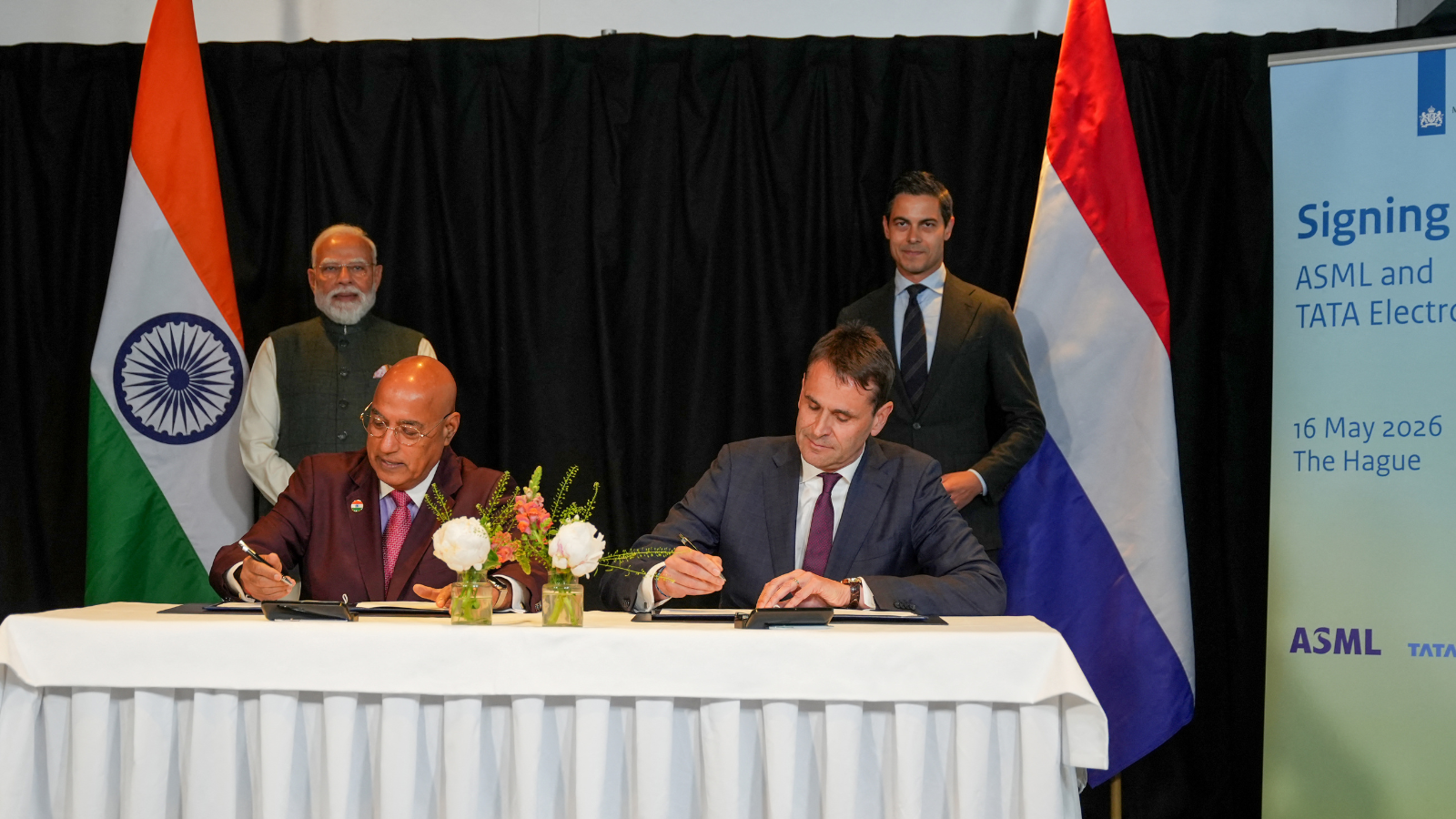
The ASML MoU with Tata Electronics is an indicator of how far the Indian semiconductor ecosystem has come. This ecosystem has been years in the making and represents real commercial logic.

Konark Bhandari

A partnership between India, a country of subcontinental size, and Africa, a continent of fifty-four countries, may seem asymmetric until one notes that both are home to nearly the same number of people—1.4 billion. This essay spells out the existing challenges to the partnership, its optimal potential, and the possible pathways to realize it over the next quarter-century.

Rajiv Bhatia

The India–EU Free Trade Agreement (FTA) is shaping up to be one of the most consequential trade negotiations, both economically and strategically. But, what’s in the agreement, what’s missing, and what will determine its success in the years ahead
Vrinda Sahai, Nicolas Köhler-Suzuki