

Other
Sarah Yerkes, Natalie Triche
{
  "authors": [
    "Sarah Yerkes"
  ],
  "type": "legacyinthemedia",
  "centerAffiliationAll": "dc",
  "centers": [
    "Carnegie Endowment for International Peace",
    "Malcolm H. Kerr Carnegie Middle East Center"
  ],
  "collections": [],
  "englishNewsletterAll": "menaTransitions",
  "nonEnglishNewsletterAll": "",
  "primaryCenter": "Carnegie Endowment for International Peace",
  "programAffiliation": "MEP",
  "programs": [
    "Middle East"
  ],
  "projects": [],
  "regions": [
    "Middle East",
    "Israel",
    "Palestine",
    "Levant"
  ],
  "topics": [
    "Political Reform",
    "Security",
    "Foreign Policy"
  ]
}
Source: Getty
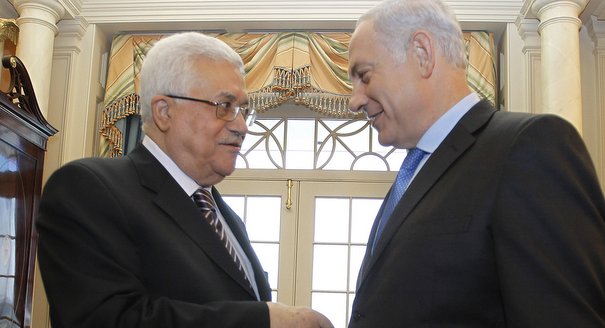
Israeli and Palestinian civil society activists keep fighting to close the divide between their societies despite myriad obstacles.
Source: ADL, BICOM, Fathom Journal
Since the prospects for peace reached a pinnacle during the period shortly after the Oslo Accords, sadly, those prospects have grown dimmer. But since the high point of the peace process, the policies of the past 25 years have steadily widened the physical and psychological chasm between Israelis and Palestinians. Today, even those who live on top of each other – quite literally in some cases – do not know each other and have almost no interaction. As a result, smaller and smaller numbers of Israelis and Palestinians voice support for a two-state solution. For the first time, the idea of a one-state solution has become part of the normal discourse.
Most troubling, leaders on both sides are increasingly attempting to marginalize and repress local activists fighting for a peaceful resolution to the conflict. Israel has cracked down on human rights NGOs while a chorus of influential Palestinian voices are pushing an “anti-normalization” agenda.
Despite this, Israeli and Palestinian civil society activists keep fighting. It is tempting on this anniversary to look back at the past 50 years in despair, but I retain hope. I do because the youngest generation of Israelis and Palestinians, despite knowing only conflict throughout their lives, is choosing to close the divide between them. Where their parents and grandparents have given up, young people are taking risks to meet each other, and to understand each other and are building the fabric necessary to someday bring about a resolution to a conflict that has lasted far too long.
My hope is that in another 50 years, when these kids are writing their own reflections, the story they tell will be a story of how they finally overcame the myriad factors driving them apart; how they fought against leaders incapable of overcoming their own petty political interests; and how when they reached the pit of despair in 2017, they figured out how to claw their way back to the light.
This article was originally published by the ADL, BICOM, and Fathom Journal.
Senior Fellow, Middle East Program
Sarah Yerkes is a senior fellow in Carnegie’s Middle East Program, where her research focuses on Tunisia’s political, economic, and security developments as well as state-society relations in the Middle East and North Africa.
Recent Work
Sarah Yerkes, Natalie Triche

Sarah Yerkes, Amr Hamzawy
Carnegie India does not take institutional positions on public policy issues; the views represented herein are those of the author(s) and do not necessarily reflect the views of Carnegie, its staff, or its trustees.

A partnership between India, a country of subcontinental size, and Africa, a continent of fifty-four countries, may seem asymmetric until one notes that both are home to nearly the same number of people—1.4 billion. This essay spells out the existing challenges to the partnership, its optimal potential, and the possible pathways to realize it over the next quarter-century.

Rajiv Bhatia

The India–EU Free Trade Agreement (FTA) is shaping up to be one of the most consequential trade negotiations, both economically and strategically. But, what’s in the agreement, what’s missing, and what will determine its success in the years ahead

Vrinda Sahai, Nicolas Köhler-Suzuki

This piece argues that the present Indian strategy, based on opportunistic diversification and utilization of limited strategic reserves, remains inadequate when confronting supply disruptions. It evaluates India’s options in the short, medium, and long terms.
Vrinda Sahai

Trump 2.0 has unsettled India’s external environment—but has not overturned its foreign policy strategy, which continues to rely on diversification, hedging, and calibrated partnerships across a fractured order.



Milan Vaishnav, ed., Sameer Lalwani, Tanvi Madan, …

This piece examines India’s response to U.S. sanctions and tariffs, specifically assessing the immediate market consequences, such as alterations in import costs, and the broader strategic implications for India’s energy security and foreign policy orientation.
Vrinda Sahai