

Article
C. Raja Mohan, Darshana M. Baruah
{
  "authors": [
    "C. Raja Mohan"
  ],
  "type": "legacyinthemedia",
  "centerAffiliationAll": "dc",
  "centers": [
    "Carnegie Endowment for International Peace",
    "Carnegie India"
  ],
  "collections": [],
  "englishNewsletterAll": "ctw",
  "nonEnglishNewsletterAll": "",
  "primaryCenter": "Carnegie India",
  "programAffiliation": "SAP",
  "programs": [
    "South Asia"
  ],
  "projects": [],
  "regions": [
    "United States",
    "South Asia",
    "India",
    "North America"
  ],
  "topics": [
    "Foreign Policy"
  ]
}
Source: Getty
If New Delhi wants to secure India’s interests in the turbulent Trump era, it must necessarily overcome the internal inertia against transactional diplomacy.
Source: Indian Express
Delhi tends to use the word “transactional” pejoratively. This is particularly true of the Indian discourse on the partnership with the United States. The political elite of independent India had convinced itself that foreign policy was mostly about articulating principles. It frowned upon the idea of deal-making for mutual benefit. This approach, coupled with the inability to see the world through the lens of power politics, has meant India’s international performance has always been sub-optimal.
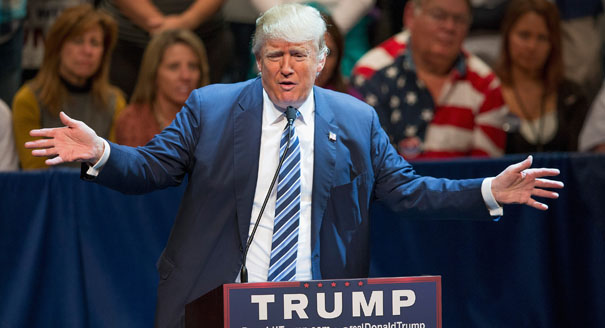
Delhi often complained that Washington, under Presidents George W. Bush and Barack Obama, was too focused on the quid pro quo in its engagement with India. But as Prime Minister Narendra Modi heads to Washington later this month — the trip is yet to be confirmed by the two governments — President Donald Trump makes Bush and Obama look like philosopher-kings who dealt in abstractions like promoting democracy and mitigating climate change.
If Delhi thought Bush and Obama were too transactional, it must now come to terms with a leader who is proud of his self-image as a deal-maker. The Art of the Deal — the title of a book that was published in Trump’s name three decades ago — is supposed to define the man and his method.
Adapting to Trump will not come easily to the Indian system that has refused to be transactional in its approach to the United States over the last two decades. In the process, it missed big opportunities in converting the goodwill of two presidents into tangible gains. Consider the historic civil nuclear initiative offered by Bush. Delhi spent years examining this gift horse in the mouth. Nor has it taken full benefit of the opportunities for defence cooperation with the US and its allies in the last few years. The inability to seize the fleeting moments of opportunity created by Indian diplomacy has long been a characteristic of India’s overall governance.
If Delhi wants to secure India’s interests in the turbulent Trump era, it must necessarily overcome the internal inertia against transactional diplomacy. Interest-based bargaining is at the heart of the dynamic interaction between sovereign states. This will now acquire greater salience, as Trump challenges America’s long-standing foreign policy assumptions and turns its traditional diplomacy inside out.
India’s difficulty in effectively combining power, principle and pragmatic diplomacy stands in contrast to China’s felicity in this domain. The communist elite of the People’s Republic of China had a much larger ideological burden than Delhi’s bourgeois ruling classes. Yet, the Chinese communists brought a certain realist sensibility to their diplomacy.
Chairman Mao Zedong fought a costly war with America in the Korean Peninsula during 1950-53. Less than two decades later, Mao embraced the US to counter the fraternal communist regime in the Soviet Union. Mao’s successor, Xi Jinping, demonstrates the same commitment to pragmatism.
No country was more vehemently targeted by Trump during the 2016 election campaign. He accused Beijing of raping the American economy, spoke of raising tariffs on imports from China, promised to designate it as a currency manipulator and confront its assertive policies in Asia. Barely five months after the election, Trump has turned 180 degrees and is now talking of “my friend, Xi Jinping”.
Behind Trump’s flip-flop was an extraordinary diplomatic effort by China to turn the new US president from a likely adversary into a potential partner. Sceptics say the deal is too fragile to survive Trump’s caprice and the complex political situation on the ground. Others will point to the fact that not all countries can bring the kind of economic resources and political leverage at China’s command to bear upon America.
But the Chinese effort does underline the value of pro-active diplomacy in coping with the current dynamic in Washington. Although pragmatism has often crept into Indian diplomacy since the end of the Cold War, it has not really overthrown the entrenched condescension in Delhi towards deal-making. With Trump, Delhi has no choice.
Like much of the world, Delhi is conscious of the fact that Washington is transiting through a surreal moment. Trump is running against America’s foreign policy establishment, both Democratic and Republican. He is yet to staff the government with political appointees who manage the higher echelons of the US government. His own inner circle is a divided house between the family, the internationalists and the nationalists.
Making matters worse is the larger political convulsions in America that produced the unanticipated victory for Trump. America’s internal turbulence is inducing an extraordinary volatility in the international system. Delhi has to deal not only with America’s uncertain trajectory under Trump, but also its consequences for India’s regional environment, ranging from the Suez to the South China Sea. Trump has injected much uncertainty into the management of global issues, from trade to climate change, from nuclear proliferation to migration.
Delhi needs to stay calm and be open to multiple outcomes from the current global turbulence generated by Trump. It must develop a more flexible, and yes, transactional approach, to its international relations. The NDA government has certainly been a lot less rigid than its predecessors, but has its work cut out in navigating the Trump disruption.
Former Nonresident Senior Fellow, Carnegie India
A leading analyst of India’s foreign policy, Mohan is also an expert on South Asian security, great-power relations in Asia, and arms control.
Recent Work

C. Raja Mohan, Darshana M. Baruah


Alexander Gabuev, Paul Haenle, C. Raja Mohan, …
Carnegie India does not take institutional positions on public policy issues; the views represented herein are those of the author(s) and do not necessarily reflect the views of Carnegie, its staff, or its trustees.

In any defense establishment, change is an ongoing process. However, despite the best of intentions, existing bureaucracies, bound by habit and years of socialization, have their limits in implementing transformative change.

Anit Mukherjee
As AI grows more sophisticated, as the supply chains that power it become more contested, and as access to frontier models becomes geopolitically charged, India must begin to ask a different set of questions. Not what applications it can build on someone else’s infrastructure but what the world needs.

Konark Bhandari

The Indian Ocean Region hosts one of the densest concentrations of subsea cables in the world. Yet, despite accounting for a significant share of global internet traffic, India’s participation remains limited.

Charukeshi Bhatt

How is AI reshaping space security, creating governance challenges, and where does international diplomacy stand today?


Tejas Bharadwaj, Almudena Azcárate Ortega

After the chill in ties between 2020 and 2024 that brought India–China relations to their lowest point in several decades, the two countries have engaged each other afresh. This paper argues that there are predominantly four imperatives guiding India’s approach to China, and they exist in an order of priority.

Saheb Singh Chadha