

Other
Michael D. Swaine
{
  "authors": [
    "Michael D. Swaine"
  ],
  "type": "other",
  "centerAffiliationAll": "dc",
  "centers": [
    "Carnegie Endowment for International Peace"
  ],
  "collections": [],
  "englishNewsletterAll": "asia",
  "nonEnglishNewsletterAll": "",
  "primaryCenter": "Carnegie Endowment for International Peace",
  "programAffiliation": "AP",
  "programs": [
    "Asia"
  ],
  "projects": [],
  "regions": [
    "North America",
    "United States",
    "East Asia",
    "China"
  ],
  "topics": [
    "Climate Change",
    "Foreign Policy"
  ]
}
Source: Getty
Authoritative and non-authoritative Chinese sources strongly oppose President Donald J. Trump’s decision to withdraw the United States from the Paris Climate Accords.
Source: China Leadership Monitor
In this issue of the Monitor, we examine Chinese views toward President Donald J. Trump’s decision of June 1, 2017, to withdraw the United States from the Paris Climate Accords, thus undermining a major area of Sino-American cooperation. Many observers have examined the implications of this action for U.S.-China-European relations and Chinese foreign policy in particular, often stressing how it will benefit China by giving Beijing the mantle of global leadership over efforts to address this major area of global governance.1
However, few if any observers have taken a detailed look at Chinese thinking on the matter, either before or after Trump’s decision occurred. Most Western commentary on Chinese views merely points out growing Chinese support for international efforts to combat climate change and an apparent desire to use Trump’s action to build international support for China as a responsible global leader. A less charitable view alleges that China is gleefully seeking to use the U.S. withdrawal from the Paris Accords to supplant the U.S. as the dominant global power.2
In fact, overall, based on the public record, Chinese views on the Paris Accords and U.S.-China cooperation in combating climate change are by and large extremely positive and in many instances fact-based and non-polemical. An examination of them confirms that Beijing clearly: a) accepts the dangers of climate change; b) recognizes the need to work closely with other nations to address the issue in a pragmatic way; and c) grasps the benefits for China of using the fight against climate change to not only strengthen global governance as a whole, but to also transition the Chinese economy to a more sustained level of long-term growth. As a result, Trump’s withdrawal from the Paris Accords is generally seen as an extremely disappointing and destructive action, of little benefit to China.
As in past CLM pieces, Chinese views are divided into authoritative and nonauthoritative statements and actions. This article ends with further thoughts on the possible significance of Chinese views on the U.S. withdrawal.
This article will be published by the China Leadership Monitor.
1 Javier C. Hernandez, “Turning Against Trump: How the Chinese Covered the Climate Pact Exit,” The New York Times, June 4, 2017, https://www.nytimes.com/2017/06/04/world/asia/china-media-climate-trump.html.
2 David E. Sanger and Jane Perlez, “Trump Hands the Chinese a Gift: The Chance for Global Leadership,” The New York Times, June 1, 2017, https://www.nytimes.com/2017/06/01/us/politics/climate-accord-trump-china-global-leadership.html.

Former Senior Fellow, Asia Program
Swaine was a senior fellow at the Carnegie Endowment for International Peace and one of the most prominent American analysts in Chinese security studies.
Recent Work
Michael D. Swaine
Michael D. Swaine
Carnegie India does not take institutional positions on public policy issues; the views represented herein are those of the author(s) and do not necessarily reflect the views of Carnegie, its staff, or its trustees.

India and the United States are close to concluding a Reciprocal Defense Procurement Agreement (RDPA) that will allow firms from the two countries to sell to each other’s defense establishments more easily. While this may not remedy the specific grievances both sides may have regarding larger bilateral issues, an RDPA could restore some momentum, following the trade deal announcement.

Konark Bhandari

On the last day of the India AI Impact Summit, India signed Pax Silica, a U.S.-led declaration seemingly focused on semiconductors. While India’s accession to the same was not entirely unforeseen, becoming a signatory nation this quickly was not on the cards either.
Konark Bhandari

This piece examines India’s response to U.S. sanctions and tariffs, specifically assessing the immediate market consequences, such as alterations in import costs, and the broader strategic implications for India’s energy security and foreign policy orientation.

Vrinda Sahai
This paper examines the evolution of India-China economic ties from 2005 to 2025. It explores the impact of global events, bilateral political ties, and domestic policies on distinct spheres of the economic relationship.

Santosh Pai
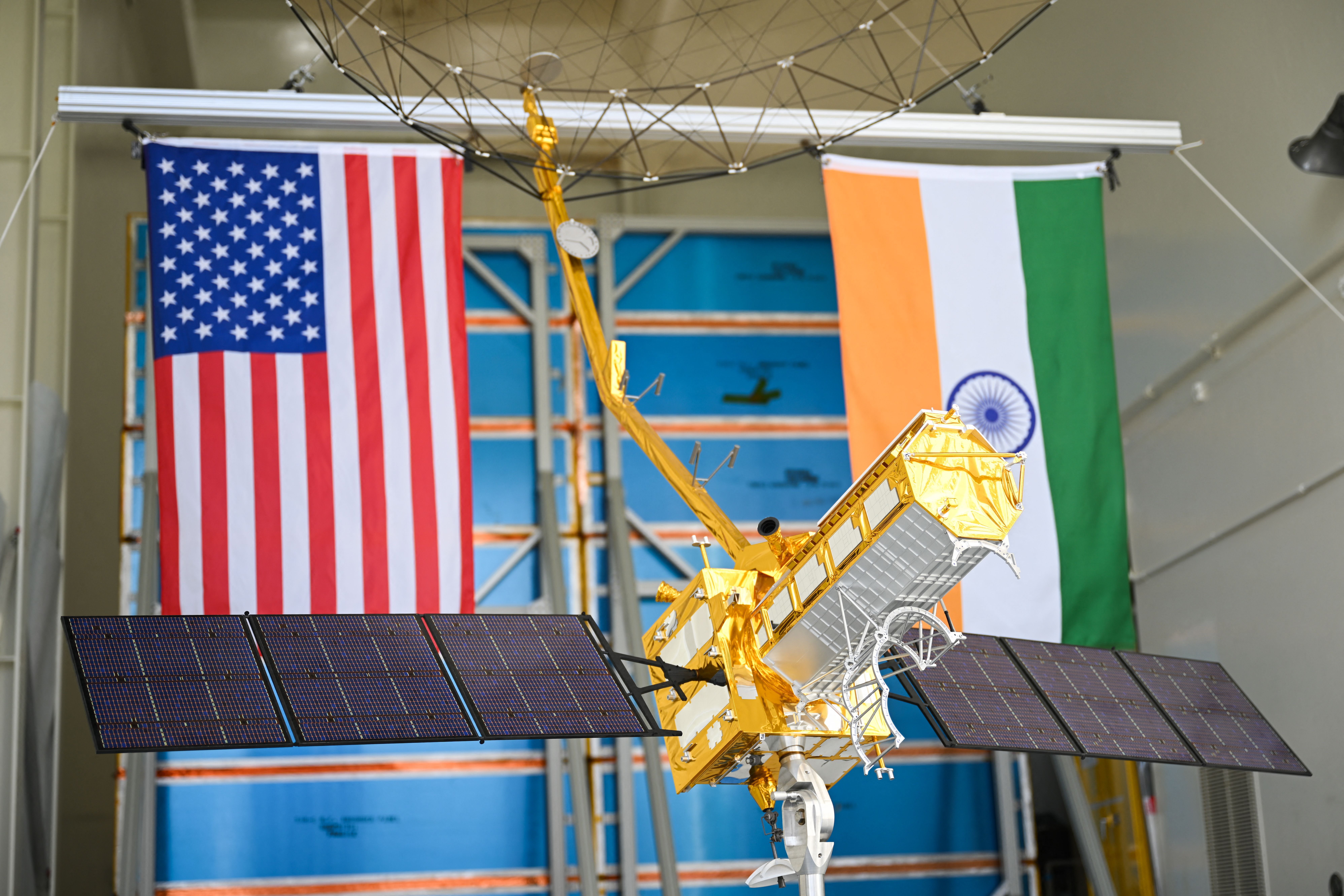
On July 30, 2025, the United States announced 25 percent tariffs on Indian goods. While diplomatic tensions simmered on the trade front, a cosmic calm prevailed at the Sriharikota launch range. Officials from NASA and ISRO were preparing to launch an engineering marvel into space—the NASA-ISRO Synthetic Aperture Radar (NISAR), marking a significant milestone in the India-U.S. bilateral partnership.

Tejas Bharadwaj